

AI optimization is the practice of structuring digital content so large language models and generative search engines analyze, credit, and explicitly cite your brand in synthetic answers. Unlike traditional SEO, which focuses on ranking links on a static search results page, AI optimization formats information specifically for the Retrieval-Augmented Generation (RAG) pipelines powering tools like ChatGPT, Google AI Overviews, Perplexity, and Bing Copilot.
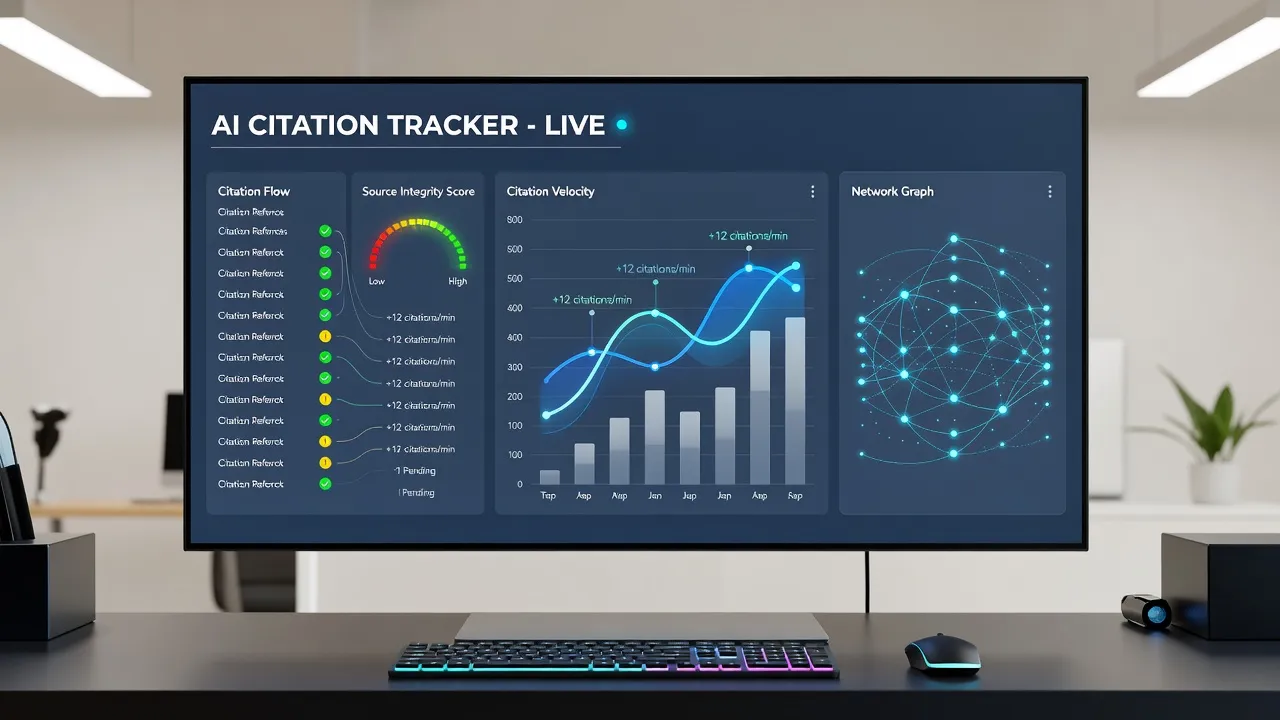
As of August 2026, the way discovery works online has shifted fundamentally. Old tactics like optimizing for a single focus keyword or chasing backlinks from low-quality directories are completely out of date. Today, generative models extract direct answers from high-trust web pages, rendering keyword density obsolete in favor of entity extraction and semantic completeness.
How can content get cited by AI chatbots?
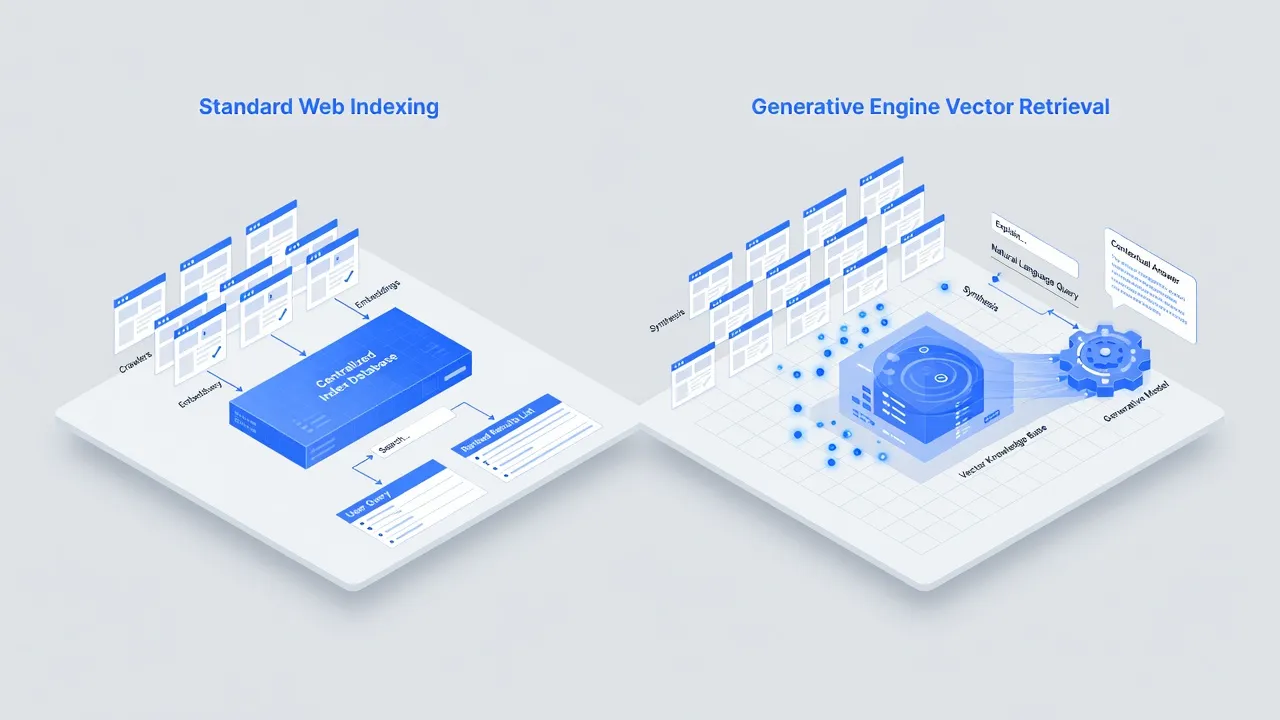
Content gets cited by AI chatbots when it provides direct, verifiable answers to specific sub-questions using structured data, clean formatting, and explicit third-party attribution. Large language models do not read web pages the way humans do; instead, they convert incoming user prompts into vector representations and search their index or live web feeds for relevant passages that minimize uncertainty.
To secure citations across generative platforms, your published assets need to clear three structural hurdles:
- Extractable lead statements: Place the core answer in the very first sentence beneath every section header so RAG software can lift the summary without reprocessing long paragraphs.
- Data density over fluff: Include concrete specs, pricing floors, dates, and named entities rather than broad qualitative statements.
- Semantic clarity: Use explicit HTML elements like
<p>,<table>,<ul>, and JSON-LD markup to signal relationships between concepts.
Managing this manual structuring across dozens of weekly articles is difficult for growing businesses. Platforms like PulseRank automate this entire organic workflow by building content strategies directly around the sub-questions generative engines process, publishing citation-ready articles complete with schema and structured tables directly to your site.
AI optimization vs. traditional SEO: Key differences in 2026
The shift from classic web indexing to artificial intelligence retrieval has changed the target metrics for digital marketing teams.
| Feature / Metric | Traditional SEO | Modern AI Optimization (GEO) | PulseRank Automated Workflow |
|---|---|---|---|
| Primary Goal | Top 3 rank in blue-link SERPs | Direct inline citation in generative answers | Automated generation of citation-ready articles |
| Content Unit | Keyword-targeted long-form pages | Answer-first modular passages | Sub-question optimized daily articles |
| Indexing Model | Web crawling & page rank link algorithms | Vector embedding & real-time RAG web search | Direct publishing with built-in schema & entity ties |
| Trust Signal | Anchor text & domain authority | Verifiable data points & schema alignment | Sourced third-party citations & structured tables |
| Reporting Focus | Keyword position & organic clicks | Share of Model (SoM) & AI citation visibility | Built-in Google Search Console & AI citation tracking |
Old optimization playbooks relied heavily on building high volumes of general blog posts. In 2026, those generic articles get ignored by generative models because they lack original facts or distinct semantic structure. If you want to understand how your existing footprint measures up, testing your site with an AEO GEO checker reveals where synthetic search engines fail to map your brand's core offerings.
How does schema.org structured data help content get cited by AI models?
Schema.org structured data provides AI models with machine-readable context that eliminates ambiguity surrounding your business entities, products, and facts. When an AI engine parses standard HTML, it infers meaning through natural language processing; when it encounters JSON-LD schema markup, it receives explicit definitions that can be fed directly into a knowledge graph.

To maximize your citation rate using structured data, focus on three primary schema types:
FAQPageandQuestionSchema: Explicitly maps user queries to direct textual answers, allowing RAG systems to match incoming prompt vectors with minimal processing overhead.OrganizationandBrandSchema: Establishes your company's canonical details, including official web properties, parent entities, and verifiedsameAslinks to primary sources like Wikipedia.ArticleorTechArticleSchema: Declares author attribution, publication dates, and explicit topics (aboutandmentions) so models know when and where the information was sourced.
The official guidelines at Schema.org stress using explicit entity identifiers rather than generic text values. Providing clear JSON-LD markup reduces hallucination risks for AI bots, making them far more likely to select your site as a cited baseline source.
What does Google advise for content to appear in AI Overviews/SGE?
Google advises publishers to focus on creators-first, helpful content that demonstrates strong EEAT (Experience, Expertise, Authoritativeness, and Trustworthiness) rather than optimizing for technical algorithmic tricks. According to official documentation on Google Search Central, content that ranks well in core organic web results is automatically eligible to appear inside AI Overviews.
While standard organic ranking remains a prerequisite, appearing consistently in AI Overviews requires specific formatting adjustments:
- State facts clearly at the start of sections: Avoid burying key conclusions beneath intro paragraphs or background context.
- Provide clear, unique evidence: Include first-party data, clear step counts, or updated specs. Google's generative models favor passages that supply net-new factual value.
- Maintain technical crawlability: Ensure your site allows
GooglebotandGoogle-Extendeduser agents to access and render your content without restrictive paywalls or heavy client-side JavaScript rendering issues.
For businesses balancing modern search approaches, combining traditional search strategy with artificial intelligence search formats is mandatory. Reviewing practical content marketing with SEO strategies helps bridge the gap between traditional organic visibility and generative engine inclusion.
What are Bing's best practices for AI citations for publishers?
Bing's best practices emphasize transparent attribution, clear page architecture, accurate schema markup, and robust indexation through Bing Webmaster Tools. Microsoft Copilot relies directly on the Bing index to generate conversational answers, pulling information from sites that present clear, authoritative facts.
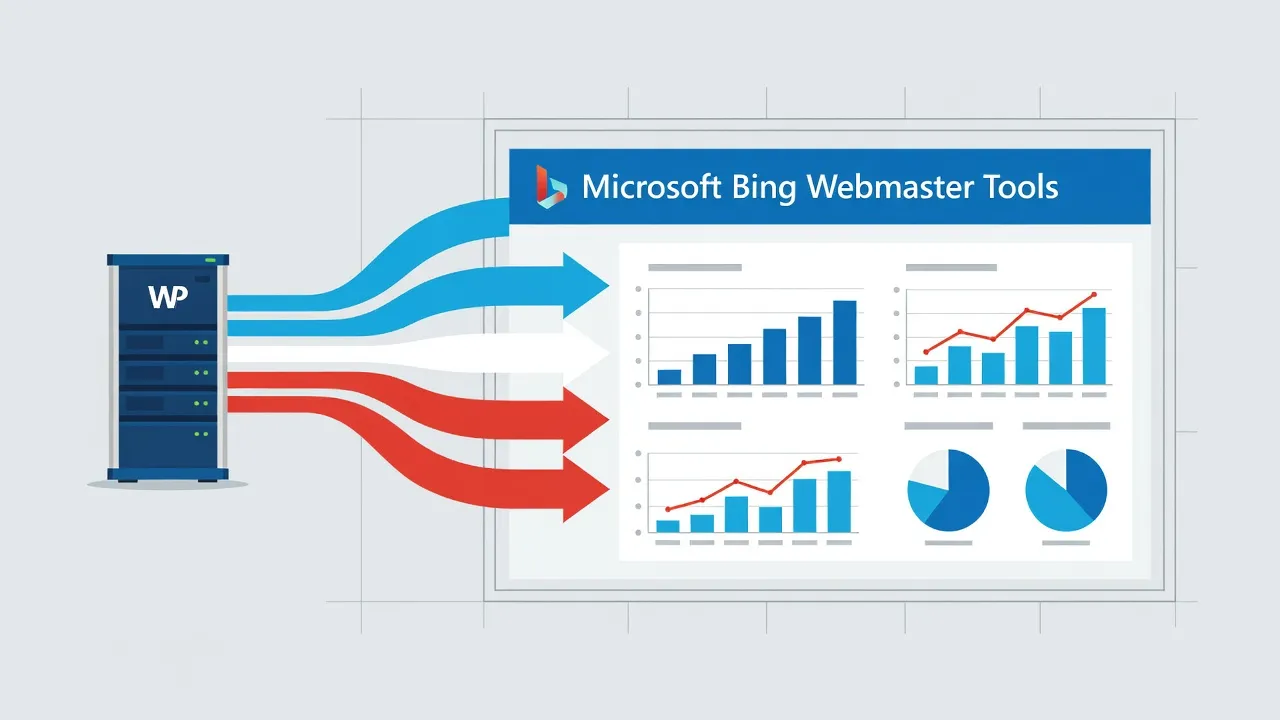
Published guidance in the Microsoft Bing Webmaster Guidelines highlights several actions publishers must take:
- Index pages instantly: Use IndexNow protocol to submit updated content immediately so Bing Copilot has real-time access to new information.
- Cite authoritative sources explicitly: Bing evaluates out-bound citations to determine whether a page is accurate or speculative.
- Optimize for conversational search: Format headings as direct questions using natural phrasing (e.g., "How long does X take?" rather than simple labels like "X Duration").
Publishers that ignore conversational sub-questions fall behind in Bing's generative results, even if they hold high traditional page authority scores.
How can content get cited by ChatGPT specifically?
Content gets cited by ChatGPT when OpenAI's crawlers (OAI-SearchBot and ChatGPT-User) can access, parse, and verify your material during real-time web retrieval passes. Unlike static pre-training data updates, live ChatGPT search citations rely on direct web scraping performed when a user submits a query requiring up-to-date facts.
To ensure your web properties are fully optimized for ChatGPT citations:
- Allow OpenAI Web Crawlers: Do not block
User-agent: OAI-SearchBotorUser-agent: ChatGPT-Userin yourrobots.txtfile. Blocking these agents prevents real-time search extraction entirely, as detailed in OpenAI's official developer documentation. - Implement direct answer blocks: Start every primary section with a 40 to 80-word summary that directly resolves the primary query.
- Establish strong domain co-citations: ChatGPT relies heavily on entity reputation. When third-party authoritative sites mention your brand alongside your niche keywords, ChatGPT connects your company entity to those specific prompt categories.
If your agency handles multi-client growth, offering specialized answer engine optimization services allows you to deliver measurable generative visibility for clients alongside traditional organic ranking metrics.
How do knowledge panels and knowledge graphs affect AI content attribution?
Knowledge panels and knowledge graphs serve as the baseline source of truth that AI models use to verify factual claims before generating a cited response. Large language models compare extracted web content against structured repositories like Wikidata and Google's Knowledge Graph to confirm whether an entity is real, credible, and correctly defined.
If an AI engine finds a contradiction between your page's claim and its underlying knowledge graph, it usually ignores your content to prevent output hallucinations.
To strengthen your presence across generative engine knowledge graphs:
- Claim canonical entity profiles: Ensure your business has verified entries on Google Business Profile, Crunchbase, and primary industry directories.
- Maintain absolute entity consistency: Use identical Name, Address, Phone (NAP), pricing ranges, and founder details across all online channels.
- Link to authoritative entity sources: In your site's JSON-LD schema, use the
sameAsproperty to point directly to your Wikipedia page, official social profiles, or government registration records.
Building this web of consistent factual points makes it safe for generative tools to quote your brand directly, without risking inaccurate outputs.
Building a automated AI optimization workflow with PulseRank
Staying ahead in generative search requires publishing structured, fact-dense content constantly. Manual research, drafting schema, checking sources, and publishing single articles can easily take hours per piece.
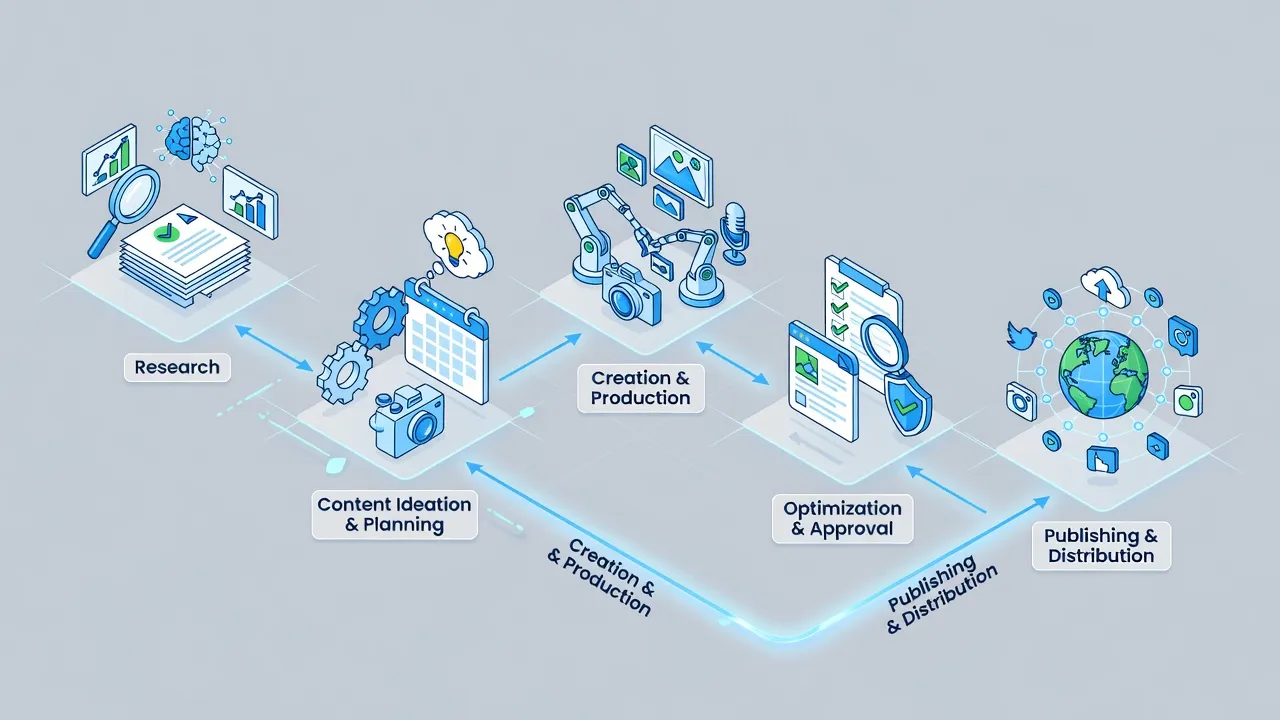
PulseRank solves this manual bottleneck by running your entire organic strategy on autopilot for $499 per month:
- Daily citation-ready content: Automatically drafts and publishes one fully structured article every day straight to WordPress, Shopify, Wix, or Git.
- Native AEO/GEO structure: Every piece features sub-question targeted H2s, zero-click summary leads, clean JSON-LD schema, and sourced third-party facts.
- Integrated performance suite: Track classic positions alongside generative engine citations using built-in Google Search Console and AI citation tracking dashboards.
Instead of subscribing to separate keyword tools, content writers, schema generators, and tracking platforms, a unified engine gives your business everything needed to earn visibility in AI search.
Frequently Asked Questions
What is the main difference between SEO and AI optimization?
SEO focuses on ranking web pages in traditional search engine results pages using blue links, keywords, and domain authority. AI optimization focuses on structuring content so generative models and AI chatbots extract, summarize, and cite your specific facts inside conversational search results.
Is keyword research still useful for AI search optimization?
Yes, but the way you use keywords has changed. Instead of focusing on simple search volumes or repeating keyword phrases, AI search requires mapping topic clusters and identifying the specific conversational sub-questions users ask chatbots.
How quickly do AI engines index new content?
AI engines using live search bots can crawl and cite new content within minutes if it is accessible to their web scrapers and submitted via protocols like IndexNow. However, inclusion in baseline model training sets can take longer depending on update cycles.
Can blocking AI web crawlers in robots.txt hurt traditional search rankings?
Blocking user agents like OAI-SearchBot or ByteSpider prevents those specific AI tools from citing your site in live conversations, but it does not affect your standard Google web search rankings unless you accidentally block core crawlers like Googlebot.
How do data tables help content get cited by generative models?
Data tables organize information into clear key-value pairs or structured matrices. AI retrieval engines extract tabular data efficiently because it reduces semantic ambiguity compared to long, unstructured text paragraphs.
How many external links should an article include for GEO?
You should include at least three to five outbound links to distinct, authoritative third-party domains. Generative models prioritize content that anchors its claims to checkable external sources like official documentation or recognized research bodies.
Does AI content generation hurt organic visibility?
AI-generated content does not inherently hurt visibility if it is factually accurate, structured properly, and delivers unique value to readers. Search engines penalize low-quality, repetitive fluff regardless of whether a human or an AI wrote it.