

For most businesses trying to grow organic traffic, the choice of AI SEO optimization tools comes down to one critical variable: whether you need a tool that optimizes content sentence by sentence or a platform that automates your entire search strategy end-to-end. If you only need real-time NLP grading inside an editor, standalone assistants like Surfer SEO or Clearscope work best. If you need a fully hands-off engine that researches keywords, creates a content schedule, writes articles, and tracks AI citations, an all-in-one platform like PulseRank is the logical choice.
Choosing an AI tool solely based on brand popularity often leads to wasted budget. Some platforms excel at technical site audits, while others focus on generative text or optimizing for generative search engines (GEO). Matching the tool to your primary operational bottleneck saves both money and engineering time.

Which AI SEO tools do marketers and SEO professionals actually use?
Professional marketers and agency teams primarily use a stacked combination of traditional crawler databases like Ahrefs or Semrush alongside specialized AI content optimization tools like Surfer SEO, Clearscope, and MarketMuse. Rather than relying on a single app, mature marketing teams separate technical data collection from natural language processing (NLP) analysis.
To understand why this division exists, look at how the workflow breaks down in modern growth teams:
- Data-heavy keyword research: Traditional tools pull from massive databases of historical clicks to analyze search volume, backlink profiles, and domain authority.
- On-page NLP optimization: Specialized AI content tools scan live search results, analyze the top 20 ranking pages, and extract term frequencies to build an editor-based content score.
- Generative drafting and publishing: Teams use specialized writing tools to expand outlines into complete drafts before pushing them to a content management system (CMS).
For businesses that want to eliminate this fragmented workflow, selecting an end-to-end generative engine optimization tools solution reduces software management overhead significantly.
How do Surfer SEO, Clearscope, and MarketMuse compare?
Surfer SEO focuses on accessible page-level NLP scoring for writers, Clearscope prioritizes clean content grading with enterprise usability, and MarketMuse specializes in deep topical authority mapping across entire websites. While all three analyze search engine results pages (SERPs) to give terms recommendations, their ideal user bases differ based on price and strategic focus.
Here is how their core functionality breaks down:
- Surfer SEO: Integrates heavily with writing environments like Google Docs and Jasper. As of October 2026, its entry-level Essential plan starts at $89/month, making it a popular option for boutique agencies and freelancers.
- Clearscope: Designed for high-volume enterprise editorial teams that want an uncluttered scoring interface. According to Clearscope's official pricing page, its Essentials plan starts at $170/month and includes unlimited sharing views for external writers.
- MarketMuse: Analyzes a site's entire content inventory rather than just individual URLs. It highlights content gaps where a domain lacks topical depth compared to competitors, with plans outlined on the MarketMuse pricing portal starting around $149/month.
If your team is evaluating how to build a scalable content generation strategy, choosing between these three tools comes down to whether you prioritize writer accessibility (Surfer), simple editorial workflow (Clearscope), or domain-wide gap analysis (MarketMuse).
What AI features does Ahrefs offer for SEO?
Ahrefs offers AI features that focus on automated keyword categorization, intent matching, AI search query tracking, and writing assistance for meta tags and content outlines. Rather than pivot entirely into a long-form article generator, Ahrefs integrates artificial intelligence directly into its existing competitive research infrastructure.
Key AI capabilities available in the platform include:
- AI Keyword Clustering: Automatically groups thousands of raw search terms into parent topics based on SERP similarity.
- Search Intent Classification: Uses machine learning models to label queries as informational, transactional, or navigational without manual review.
- AI Content Helper: Provides real-time suggestions within the platform to adjust target headings based on top-ranking competitors.
For technical teams that depend on backlink indexing, details detailed on the Ahrefs AI product feature directory highlight how machine learning accelerates data extraction across massive link graphs.
How does Jasper integrate with Surfer SEO?
Jasper integrates with Surfer SEO by embedding Surfer's real-time Content Editor directly inside Jasper's AI writing canvas. This native connection lets writers generate AI text while simultaneously monitoring a live target keyword density score.
To connect and use the integration, teams typically follow these steps:
- Log into both active accounts and authorize the Surfer add-on inside Jasper settings.
- Open a document in Jasper and toggle on "SEO Mode" in the top navigation bar.
- Customize your target search phrase inside the embedded Surfer sidebar panel.
- Draft or generate text in Jasper while watching the real-time NLP score update automatically.
This integration saves writers from copying text back and forth between draft windows, though maintaining both active software subscriptions increases monthly overhead.
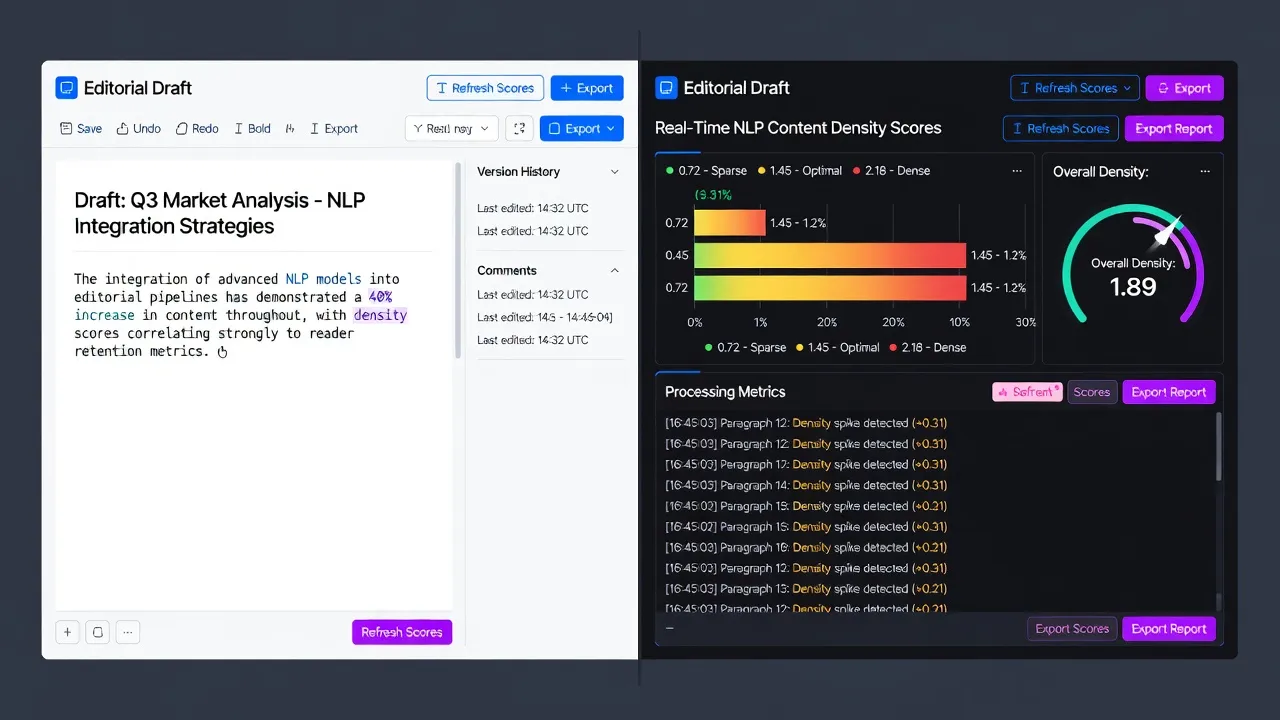
The Top 6 AI SEO Optimization Tools Ranked for 2026
Evaluating AI SEO software requires looking past sales claims and evaluating real software constraints. Below are the top six platforms ranked by how efficiently they help businesses turn target search terms into organic revenue.
1. Surfer SEO
Surfer SEO is best for content creators and freelance writers who need real-time page-level term optimization. It analyzes current search engine results and creates a custom word count, heading, and image recommendation target for every target keyword.
- Why it made the list: Its visual scale (0 to 100) makes on-page optimization clear for external contractors who know little about technical SEO.
- Key trade-off: Surfer excels at optimizing individual documents, but it does not publish articles to your website or build strategic content calendars automatically.
2. Clearscope
Clearscope is best for enterprise editorial teams that prioritize clean interface design and simple content grading. It uses advanced natural language processing models to grade content drafts against competitive search results.
- Why it made the list: The editor is virtually free of clutter, allowing writers to focus purely on topic coverage and readability.
- Key trade-off: Clearscope carries a higher entry price tag ($170/month) than basic drafting assistants while offering limited technical site audit features.
3. PulseRank
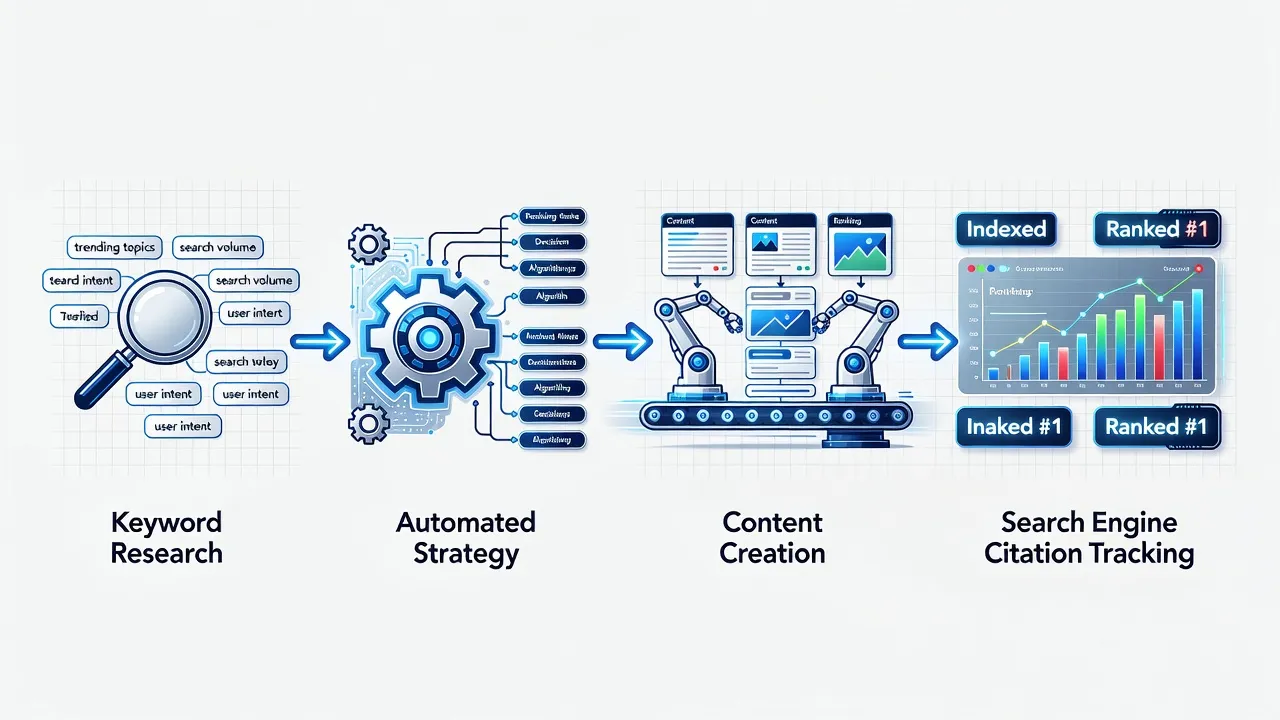
PulseRank is best for small-to-medium businesses and growth agencies that want an end-to-end organic content operation managed in a single platform. Instead of requiring users to connect separate keyword tools, editors, and publishing plugins, PulseRank handles the full pipeline automatically.
- Why it made the list: PulseRank researches your keyword pool, plans a 30-day strategy, generates full articles with images and schema, and publishes directly to your CMS while tracking both Google rankings and AI citations.
- Key trade-off: PulseRank is designed for businesses ready to maintain a consistent output of one article per day, which may exceed the needs of sites looking for simple, occasional edits.
4. MarketMuse
MarketMuse is best for content strategists who need to analyze domain-level content depth and authoritative coverage. It audits your entire website to identify topics where your domain lacks authority compared to top industry competitors.
- Why it made the list: It helps prevent keyword cannibalization by showing exactly which pages on your site need updates or consolidation.
- Key trade-off: The platform has a steep learning curve and requires dedicated strategist time to parse its technical recommendations properly.
5. Jasper
Jasper is best for marketing teams that need a general-purpose AI writing assistant for short-form copy, social media, and initial blog drafts. It offers dozens of templates tailored to broad marketing needs beyond search engine optimization.
- Why it made the list: It features versatile style controls and brand voice training capabilities.
- Key trade-off: Jasper requires pairing with a dedicated SEO grader (like Surfer) to ensure generated copy ranks for competitive search queries.
6. Ahrefs
Ahrefs is best for technical SEO specialists and link builders who require deep competitor intelligence alongside AI keyword analysis. It maintains one of the web's largest backlink databases while continually rolling out machine learning enhancements.
- Why it made the list: Unmatched keyword research data volume and competitive backlink tracking.
- Key trade-off: It is not an automated content writer or publishing engine; it provides the research data that human strategists must execute manually.
Feature Comparison Matrix: AI SEO Optimization Tools
Selecting the right software depends heavily on what your existing team can execute manually. The table below outlines how these leading options compare across key functional categories as of October 2026.
| Tool | Primary Focus | Content Execution Model | Pricing Structure | Unique Advantage |
|---|---|---|---|---|
| Surfer SEO | Page-level NLP scoring | Manual writer guided by live editor grades | Starts at $89/mo | Seamless browser extensions and document integrations |
| Clearscope | Enterprise content grading | Writer-focused text optimization editor | Starts at $170/mo | Highly accurate NLP recommendations with simple grade metrics |
| PulseRank | End-to-end content operation | Fully automated research, writing, publishing & tracking | $499/mo flat rate | Complete organic execution including image creation, publishing, and GEO citation tracking |
| MarketMuse | Domain authority auditing | Topic map generation for manual editorial teams | Starts at $149/mo | Audits entire site architecture to identify structural content gaps |
| Jasper | General AI marketing copy | Prompt-based drafting assistant for copywriters | Starts around $49/mo | Wide variety of copy templates across ad, email, and web formats |
| Ahrefs | Link data & keyword research | Technical analytical insights for SEO specialists | Starts at $99–$129/mo | Deep backlink index paired with automated AI keyword clustering |
Why a Complete Organic Content Engine Beats Point Solutions
In my opinion, managing a stack of four or five separate point solutions creates unnecessary operational friction for growing businesses. When a business uses one tool for keyword discovery, another for NLP grading, a third for image sourcing, and a manual workflow for CMS publishing, content production stalls.
This fragmented approach introduces several predictable problems:
- Subscription Creep: Individual tool fees add up quickly across seats and API limits.
- Execution Bottlenecks: Writers spend hours formatting images, adding schema, and inserting internal links manually.
- Tracking Gaps: Google Search Console data sits disconnected from generative AI engine citation metrics.
If you are evaluating your internal workflow using an ai content reviewer setup, consolidating those steps into a unified system eliminates hours of manual formatting.
This is where a unified platform like PulseRank changes the equation for lean teams. Priced at $499 per month for a single flat plan with no per-user fees or credit metering, it replaces the entire fragmented stack. PulseRank builds a 30-day content calendar from your brand's keyword pool, drafts complete citation-ready articles with images and structured data, and publishes directly to WordPress, Shopify, Wix, or Git repositories.
Because it tracks both traditional Google Search Console rankings and modern AI citations in one view, business owners can clearly see which published pages generate real growth without managing multiple software vendors.
Frequently Asked Questions
What are AI SEO optimization tools?
AI SEO optimization tools are software applications that use machine learning and natural language processing to help websites rank higher in search engines. They assist with keyword research, content optimization, competitive analysis, and tracking how search engines parse content.
How do AI SEO tools help with Answer Engine Optimization (AEO) and GEO?
AI SEO tools optimize for Answer Engine Optimization and Generative Engine Optimization by structuring content to directly answer sub-questions asked by AI engines like ChatGPT and Perplexity. They incorporate clear data tables, sourced third-party facts, and schema markup that generative models extract for direct answers.
Can AI SEO tools replace human copywriters entirely?
No, AI SEO tools cannot completely replace human strategic oversight. While tools can automate keyword research, draft generation, and formatting, human oversight ensures brand voice consistency, factual integrity, and unique directional insight.
Are free AI SEO tools effective for growing business traffic?
Free AI SEO tools work well for basic keyword ideas or quick headline generation, but they lack the deep competitive SERP analysis and automated publishing workflows required to build organic search authority systematically.
How much do professional AI SEO tools cost per month?
Professional AI SEO software ranges from $49 per month for basic AI writing assistants to over $500 per month for enterprise-level topic modeling or complete automated content operations platforms.
What is the difference between traditional SEO tools and AI SEO tools?
Traditional SEO tools focus primarily on indexing historical web data like search volume, backlink profiles, and technical site crawling. AI SEO tools analyze natural language intent, content context, and automated term relationships to optimize text generation and semantic matching.
Do search engines penalize content created by AI SEO tools?
Google explicitly states that content is rewarded based on quality and helpfulness to users, regardless of how it is created. Content created using AI tools will rank well as long as it provides accurate, high-value information and avoids spammy generation tactics.