

Profound answer engine optimization (AEO) is the structural framework that formats digital content so generative AI search engines cite your site as a primary source. Implementing it requires structured JSON-LD data, targeted sub-question headings, direct-answer prose, and verified third-party references. For businesses growing online in 2026, choosing a strategy means evaluating in-house engineering, specialized answer engine optimization services, point-solution tools, or end-to-end platforms like PulseRank.
How can content get cited by ChatGPT and Perplexity?
Content gets cited by ChatGPT and Perplexity when it presents clear, factual answers in the first sentence beneath targeted question headers. AI answer engines use retrieval-augmented generation (RAG) to scan live web pages, pull relevant text passages, and build synthetic answers. If your content buries facts inside long introductions, answer bots skip your page entirely.
Most businesses get this wrong by publishing 3,000-word articles full of broad overview paragraphs. That error costs companies thousands of dollars in wasted writer fees because answer engines look for high information density, not high word counts. A single 50-word paragraph that directly answers a specific sub-question earns more AI citations than five pages of fluff.
To earn citations, your content must also include verifiable facts anchored by external outbound links. AI crawlers check the credibility of claims by matching entity names, dates, and numbers against established web sources. Placing structured data tables alongside direct prose makes it easy for AI models to parse and display your data directly to searchers.
How does Perplexity source and cite content for publishers?
Perplexity sources content by executing real-time web queries through search indexes, evaluating top results for factual density, and extracting passages that directly address user prompts. According to the official Perplexity Documentation, the platform prioritizes real-time web retrieval to supply up-to-date sources for conversational responses.
Perplexity rewards pages that organize information into clear, logical sections. When a user asks a complex multi-part question, Perplexity breaks the query into sub-questions and fetches separate source pages for each part. If your article uses precise H2 and H3 question headers, Perplexity can quote your site for multiple parts of a single response.
Publishers lose out when they treat Perplexity like traditional Google search. Traditional SEO focused on keyword density across entire documents, but Perplexity evaluates page passages independently. Ignoring passage-level optimization means losing high-intent traffic from users who rely on AI for immediate answers.
How does ChatGPT choose and cite its sources?
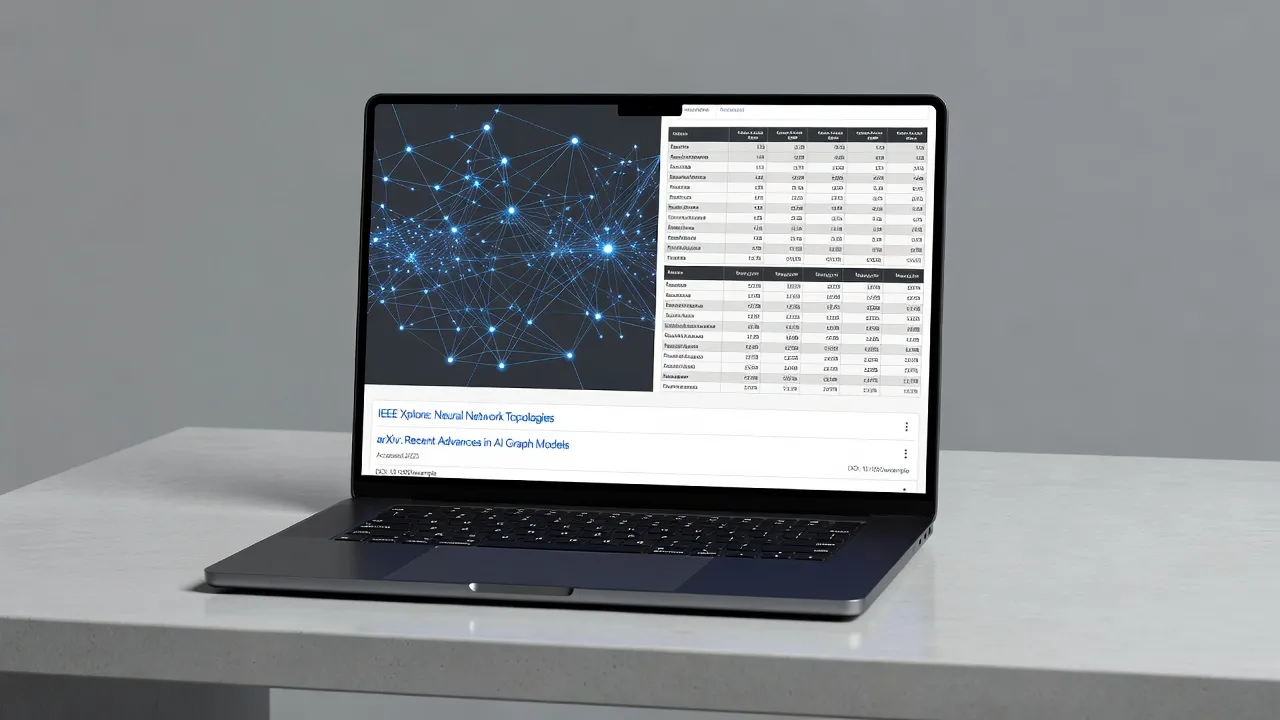
ChatGPT chooses its sources by blending its pretrained language weights with real-time web searches to score domain authority, freshness, and passage relevance. As detailed in the official OpenAI Search Capabilities documentation, ChatGPT runs live searches when queries require current facts, local details, or recent news.
ChatGPT evaluates search results using semantic vector matching rather than simple keyword matches. It reads the intent behind a prompt, searches for pages that contain matching semantic concepts, and extracts clean summary sentences. As of October 2026, ChatGPT explicitly favors sources that update prices, dates, and specifications regularly.
The most common mistake brands make is assuming ChatGPT relies only on static historical training data. If your content lacks explicit dates and structured data, ChatGPT marks the information as stale and prefers fresher competitor pages. Updating your core data points quarterly protects your brand from losing answer citations.
What tools like schema.org help get content cited by AI answer engines?
Schema.org structured data formats like TechArticle, FAQPage, and Organization explicitly tell search crawlers how entities and direct answers connect. According to the Google Search Central Structured Data Guide, adding standardized JSON-LD markup helps search platforms understand page content without relying on guesswork.
You can view the full catalog of markup standards directly on Schema.org. Incorporating about and mentions schema tags lets you link your content to recognized entities on Wikipedia and official databases. This clear mapping gives AI answer engines the trust signals required to display your brand in live answer summaries.
Raw Content -> JSON-LD Schema Tagging -> Entity Linking -> AI Crawler Indexing -> Direct Citation
Failing to implement JSON-LD schema is a costly technical oversight. Without structured code in your page headers, search bots must parse raw HTML text, which increases the likelihood of extraction errors. Automated generative engine optimization tools eliminate this friction by generating and inserting schema automatically.
Comparing top approaches for profound answer engine optimization
Choosing the best approach for profound answer engine optimization depends on your available developer resources, content volume requirements, and monthly software budget. Small businesses often struggle with manual coding, while enterprise brands may need custom workflows.
The table below breaks down the top four methods for executing profound answer engine optimization as of October 2026.
| Optimization Approach | Ideal Business Fit | Primary Capabilities | Pricing (Checked Oct 2026) |
|---|---|---|---|
| In-House Manual GEO | Engineering teams with dedicated web developers | Custom JSON-LD schema, manual content writing, custom tech stack | $5,000 - $10,000 / month (Labor) |
| PulseRank | Growing businesses & agencies wanting end-to-end GEO | Keyword research, strategy, article generation, publishing, reporting | $499 / month (Flat plan) |
| Traditional SEO Agencies | Enterprise brands needing hands-on account consulting | Retainer strategy, manual content audits, backlink outreach | $3,000 - $8,000 / month |
| Basic AI Writing Assistants | Solo founders drafting raw copy manually | Prompt-based drafting, manual schema work, no publishing pipelines | $20 - $99 / month |
Option 1: Manual in-house GEO implementation
Manual in-house GEO implementation requires your internal developer and marketing teams to code schema, research sub-questions, and update pages by hand. This approach gives you total control over every line of HTML code and sentence on your website.
The downside is the heavy labor cost. Engineers must continually adjust schema files as search standards evolve, and writers must spend hours checking facts and formatting headers. What most companies get wrong is underestimating developer hour costs, turning a simple content strategy into a $10,000 monthly technical bottleneck.
If you already employ full-time web developers and technical SEO leads, manual implementation lets you build custom site architecture. However, for teams trying to boost search engine rankings without adding headcount, manual workflows quickly slow down publishing schedules.
Option 2: PulseRank (Automated GEO and content strategy engine)
PulseRank is an all-in-one GEO and SEO platform that automates organic content strategy, writing, schema injection, and multi-platform publishing. It targets the sub-questions AI engines expand queries into, delivering citation-ready articles directly to your CMS.
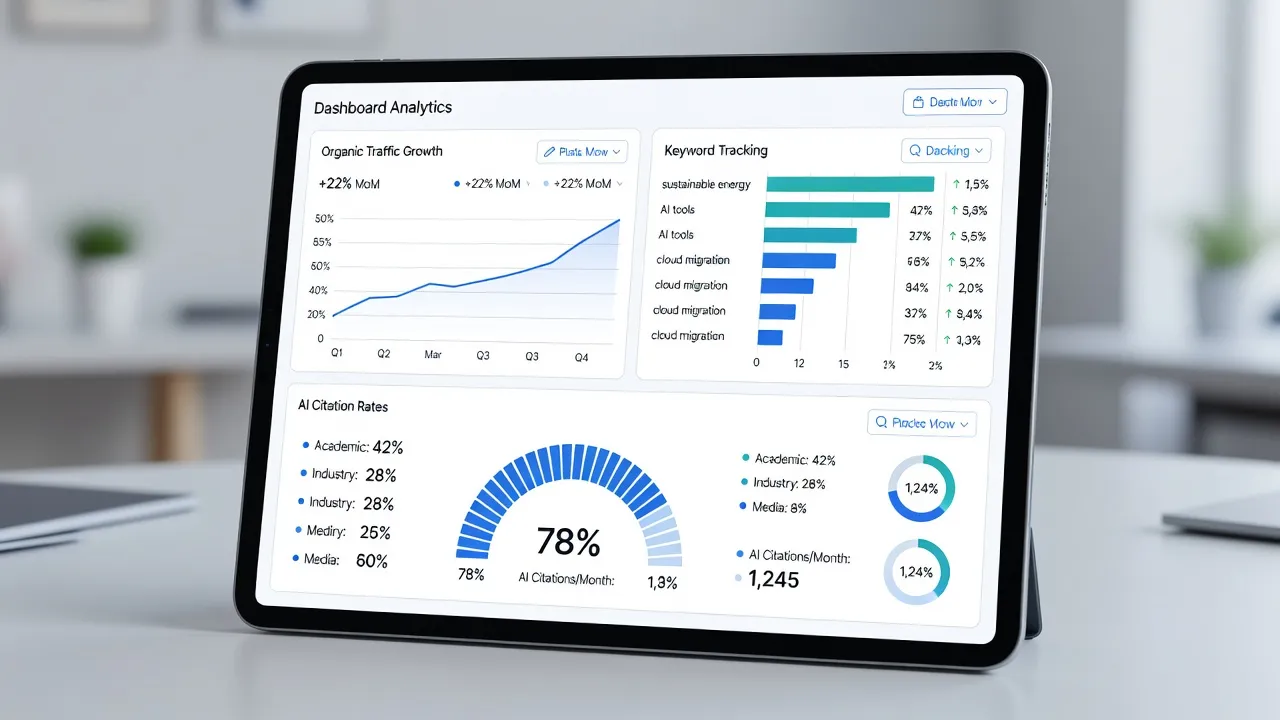
The platform handles the entire content supply chain in one place. PulseRank conducts targeted keyword research, builds a 30-day strategy, generates structured articles complete with data tables and inline images, and publishes them straight to WordPress, Shopify, Wix, or Git repositories. It also tracks performance through a unified view combining Google Search Console data with dedicated AI citation tracking.
Pricing is straightforward at $499 per month for a single flat plan that includes 30 published articles per 30-day period alongside a 7-day free trial. There are no seat limits or complex credit tiers to manage. It is built for businesses that want a complete hands-off organic growth engine without paying retainer fees to traditional agencies.
Option 3: Traditional SEO agencies with GEO add-ons
Traditional agencies offer custom, human-led optimization strategies by pairing senior strategists with dedicated content production teams. They handle full technical audits, competitive positioning, and custom campaign management.
The major trade-off with traditional agencies is slow execution and high monthly retainer fees. Most agencies charge between $3,000 and $8,000 per month while delivering only 2 to 4 articles over that timeframe. In the fast-moving AI search market of 2026, publishing four articles a month is rarely enough volume to dominate generative search answers.
Agency services make sense for enterprise corporations with complex compliance needs or massive legal requirements. But for mid-sized businesses, paying high agency fees for slow output creates an unnecessary financial drain that delays measurable traffic growth.
Option 4: Point-solution AI writing assistants
Point-solution AI writing tools provide fast text generation prompts that help writers draft paragraphs and outlines quickly. Tools in this category focus purely on content generation inside a basic text editor interface.
While these assistants are inexpensive, they leave all the heavy lifting on your shoulders. They do not conduct deep sub-question research, format JSON-LD schema, generate structured data tables, or publish directly to your CMS. You still have to manually edit, format, link, and publish every single article.
Using cheap AI tools without technical GEO structuring usually leads to low-quality content that AI answer engines ignore. The initial savings on monthly software fees are wiped out by the manual hours your team spends editing drafts and fixing broken site formatting.
Which answer engine optimization option should you choose?
Your choice of answer engine optimization strategy depends on your monthly budget, technical bandwidth, and target content velocity. Matching your operational model to the right approach prevents wasted spend and speeds up search visibility.
- Choose In-House Manual GEO if you have dedicated software engineers on staff and need total custom control over your website codebase.
- Choose PulseRank if you want a complete organic operation that handles keyword research, content strategy, article generation, publishing, and reporting for $499 per month.
- Choose a Traditional Agency if you need high-touch corporate consulting and have an enterprise budget above $5,000 per month.
- Choose Basic AI Assistants if you are a solo creator who prefers writing and formatting every post manually.
For most businesses looking to capture market share in AI search results, automated platforms offer the most practical balance of speed and technical accuracy. You can explore how PulseRank automates citation-ready publishing by starting a 7-day free trial.
Frequently Asked Questions
What is profound answer engine optimization?
Profound answer engine optimization is the technical practice of structuring digital content using JSON-LD schema, targeted question headers, and direct-answer prose so conversational AI search engines cite your website as a primary source.
How does answer engine optimization differ from traditional SEO?
Traditional SEO focuses on optimizing for link authority and broad keyword density across long pages. Answer engine optimization focuses on passage-level clarity, direct answer headers, structured semantic schema, and real-time fact retrieval.
Why are schema.org structured data files necessary for AEO?
Structured data files explicitly describe page entities, relationships, and answers in machine-readable JSON-LD code. This formatting allows AI crawlers to parse facts instantly without risking text extraction errors.
How long does it take for ChatGPT or Perplexity to cite new content?
AI answer engines can cite newly published content within hours or days if the page is indexed by major search engines and contains clean structured data and direct answer headers.
Can small businesses do answer engine optimization without a large developer team?
Yes, small businesses can execute answer engine optimization by using automated platforms that generate and publish schema-rich, citation-ready content directly to their content management system without manual coding.
How do answer engines handle outdated or incorrect content?
Answer engines cross-reference facts across multiple web sources and check page dates. If a page contains outdated numbers or unverified claims, AI engines lower its trust score and omit it from live citations.
What is the average cost of implementing answer engine optimization in 2026?
Costs range from $20 per month for basic text drafting tools to $10,000 per month for enterprise agencies. Automated end-to-end platforms typically cost around $499 per month for flat-rate strategy, generation, and publishing.