

Semantic AI is an architecture that uses mathematical vector embeddings and knowledge graphs to help computers understand the context and intent of human language rather than just matching keywords. Unlike traditional lexical search engines that scan for exact text hits, semantic AI maps concepts into high-dimensional numerical space to deduce meaning, tone, and logical relationships across documents.
If your business relies on organic web traffic or internal document search, this distinction changes how customers discover you. Modern search engines and AI assistants no longer evaluate pages by counting keyword density. They analyze semantic relationships to answer conversational queries, extract structured entities, and summarize complex topics on the fly.
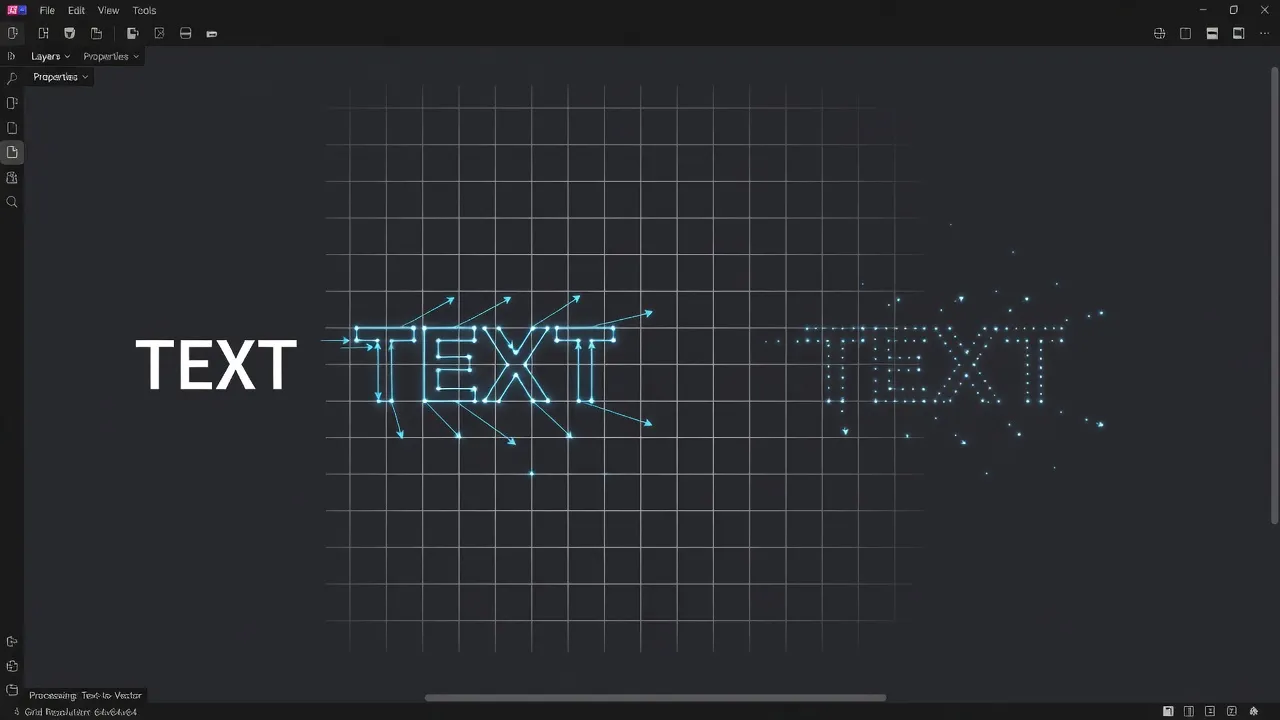
What criteria make a good vector database for retrieval-augmented generation (scalability, latency, metadata, hybrid search)?
A good vector database for retrieval-augmented generation (RAG) must deliver sub-100 millisecond query latency while maintaining strict metadata filtering and hybrid search capabilities at scale. Selecting the wrong database architecture creates performance bottlenecks that destroy user experience and balloon hosting costs.
When evaluating vector infrastructure for enterprise AI applications, four core technical criteria dictate long-term success:
- Hybrid Search Support: Pure vector search struggles with specific alphanumeric identifiers like part numbers or exact product SKUs. Top databases combine sparse keyword algorithms (like BM25) with dense vector distance metrics to maintain precision across all query types.
- Low Query Latency: Sub-millisecond vector indexing ensures chat assistants and search bars respond without lag. Real-time applications require Approximate Nearest Neighbor (ANN) algorithms that trade tiny fractions of accuracy for immense speed gains.
- Rich Metadata Filtering: Real-world queries rarely search the entire database at once. Systems must filter vectors by user ID, document permissions, date ranges, or categories before calculating vector distances to keep latency low.
- Horizontal Scalability: Storage requirements grow exponentially as documents are broken into smaller text chunks. Look for architectures that decouple storage from compute so you can scale RAM and disk space independently.
The biggest mistake I see small teams make is ignoring RAM overhead. Storing billions of high-dimensional vectors in memory gets expensive fast, so selecting an engine with disk-based indexing or vector compression (like product quantization) is essential for budget management.
How do Pinecone, Weaviate, Milvus, Qdrant, Chroma, and Zilliz compare as vector databases?
Pinecone, Weaviate, Milvus, Qdrant, Chroma, and Zilliz differ primarily in their deployment models, memory footprint requirements, and operational complexity. Choosing among them depends heavily on whether your engineering team prefers a hands-off cloud service or self-hosted open-source software.
The vector database ecosystem matured rapidly through 2026, offering clear trade-offs between speed, control, and maintenance overhead. The official Pinecone documentation highlights how serverless vector architectures separate index building from query serving to eliminate idle cluster costs.
| Vector Database | Deployment Type | Primary Strengths | Major Constraint / Limit |
|---|---|---|---|
| Pinecone | Fully Managed Cloud | Zero cluster management, serverless pricing, instant scaling | Proprietary closed-source code; no local self-hosting option |
| Weaviate | Open-Source / Cloud | Built-in GraphQL API, native hybrid search, modular ML models | High memory consumption when running large HNSW indexes locally |
| Milvus | Open-Source / Cloud | Enterprise cloud-native scaling, handles billions of vectors | Complex Kubernetes architecture requires dedicated DevOps engineers |
| Qdrant | Open-Source / Cloud | Written in Rust for maximum memory efficiency, strong payload filtering | Smaller community plugin ecosystem compared to older databases |
| Chroma | Open-Source / Local | Extremely easy python setup, ideal for prototyping and local LLMs | Lacks native multi-node horizontal scaling for enterprise loads |
| Zilliz | Fully Managed Cloud | Managed version of Milvus, high availability, enterprise security | Usage-based pricing scales quickly under heavy write volumes |
If you are prototyping a lightweight application or testing internal RAG workflows, Chroma offers the lowest setup barrier. However, if you expect production traffic with millions of records, managed services like Pinecone or Zilliz rule out the devops headaches of managing vector indexes manually.
How are enterprises adopting semantic AI platforms and vector databases (semantic kernel, OpenAI embeddings, Cohere, Anthropic, Elastic, Vespa)?
Enterprises adopt semantic AI platforms by combining embedding models from providers like OpenAI, Cohere, and Anthropic with orchestrators like Microsoft Semantic Kernel and hybrid search engines like Elastic or Vespa. This multi-layer stack allows companies to query proprietary business data securely without sending raw context to public models.
According to the official W3C RDF semantic standards, structuring semantic relationships requires consistent data models that bridge raw text and machine logic. In practice, enterprise adoption follows a distinct three-tier pipeline:
- Embedding Generation: Raw documents are processed through specialized embedding APIs. Cohere excels at multi-lingual embedding tasks, while OpenAI and Anthropic provide dense representations optimized for deep conversational context.
- Orchestration Layers: Frameworks like Microsoft Semantic Kernel manage the prompt pipelines, vector retrievals, and memory state between backend databases and front-end user interfaces.
- Hybrid Search Backend: Established search infrastructure providers like Elasticsearch incorporated dense vector storage alongside their proven keyword engines. As detailed in the official Elasticsearch vector search guide, hybrid search combines sparse and dense retrievable scoring to achieve optimal precision.
Beyond internal enterprise software, semantic AI has altered how web search engines evaluate online content. AI assistants evaluate web pages using the exact same vector representation techniques.
If your business wants to capture organic traffic from AI engines, manual content creation often fails to match semantic intent efficiently. Platforms like PulseRank solve this problem by automating keyword research, building a 30-day semantic content strategy, generating citation-ready articles with structured data, and publishing directly to your CMS for $499 per month. Implementing comprehensive ai optimization ensures your content satisfies both traditional search crawlers and generative answer models.
How does AWS Kendra perform for vector search?
AWS Kendra performs exceptionally well for enterprise document search by providing pre-built data connectors and built-in semantic ranking, but its high base cost rules it out for smaller businesses. Rather than requiring developers to manually build embedding pipelines and vector indexes, Kendra offers an end-to-end managed search service designed for corporate intranet repositories.
The official AWS Kendra Developer Guide explains how its internal machine learning engines parse unorganized data across Sharepoint, S3, Salesforce, and ServiceNow out of the box.
AWS Kendra Architecture:
- Enterprise Data Sources feed into Pre-built Connectors
- Pre-built Connectors feed into Semantic Indexing Engine
- User Query feeds into Semantic Indexing Engine
- Semantic Indexing Engine produces Ranked Answers
Despite its strong accuracy out of the box, Kendra comes with sharp operational limitations:
- Base Infrastructure Cost: As of September 2026, the Developer Edition starts around $1.40 per hour, which translates to over $1,000 per month before query volume charges. This price floor immediately disqualifies early-stage startups and low-budget projects.
- Customization Constraints: You cannot easily fine-tune underlying vector embedding algorithms or tweak index parameters. You are locked into Amazon's proprietary semantic ranking models.
- Index Limits: Scaling up document capacity requires stepping up to Enterprise editions, which multiply monthly baseline expenses quickly.
I recommend AWS Kendra primarily to large enterprises already heavily invested in the AWS ecosystem that need secure, instant search across vast document silos without hiring specialized machine learning engineers.
How does Google Vertex AI Matching Engine perform for vector search?
Google Vertex AI Vector Search (formerly Matching Engine) provides industry-leading query throughput and ultra-low latency for large-scale datasets, but its complex setup process creates a steep learning curve. Powered by Google's proprietary Tree-AH (Tree-Asymmetric Hashing) algorithms, it is built to search through billions of items in milliseconds.
The official Google Cloud Vector Search documentation demonstrates its ability to deliver high recall rates even under heavy concurrent query loads.
Vertex AI Vector Search Workflow:
- High-Dimensional Embeddings feed into Tree-AH Indexing
- Tree-AH Indexing feeds into GCP Deployed Endpoint
- Real-Time Application Query feeds into GCP Deployed Endpoint
- GCP Deployed Endpoint produces Sub-10ms Match
However, key structural requirements make Vertex AI Vector Search impractical for simpler projects:
- Deployment Complexity: Unlike plug-and-play APIs, setting up Vector Search requires configuring Google Cloud Storage buckets, building index artifacts, deploying index endpoints, and configuring VPC network peering.
- Batch Indexing Delays: Updating an existing index in real time requires streaming updates that take longer to process than traditional databases like Redis or Qdrant.
- Minimum Pod Overhead: Running an active index endpoint incurs continuous node charges regardless of query traffic, making it inefficient for intermittent or low-traffic workloads.
If your platform serves millions of users needing sub-10 millisecond similarity matches across huge catalogs, Vertex AI Vector Search is hard to beat. For straightforward web apps, its operational friction is usually a dealbreaker.
How does Redis (RedisVector) compare for vector similarity search?
RedisVector delivers sub-millisecond query performance by running vector similarity searches directly inside in-memory data structures, making it the fastest choice for real-time applications. By adding vector indexing capabilities to the existing Redis enterprise engine, developers can query vectors alongside traditional key-value pairs, hashes, and JSON documents.
Redis uses Hierarchical Navigable Small World (HNSW) and Flat indexing to achieve blistering retrieval speeds. However, running vector indexes entirely in RAM exposes major resource limitations:
- High Memory Costs: RAM costs significantly more per gigabyte than NVMe disk storage. Storing high-dimensional vector sets with millions of records in Redis can balloon your monthly hosting invoice dramatically.
- Persistence Overhead: While Redis supports disk snapshots, recovering massive vector indexes from disk after a restart takes noticeable time, leading to potential cold-start latency issues.
- Capacity Caps: Redis is designed for speed rather than cold archive storage. Attempting to use it as a primary long-term data warehouse for unstructured documents is a misuse of memory resources.
If your application already uses Redis for caching and requires ultra-fast semantic search across a modest dataset (such as user session contexts or recent chat histories), RedisVector is an ideal, high-speed solution.

Why small businesses must adapt their content strategy for semantic AI search engines
Small and medium-sized businesses must adapt their content strategy because generative search engines evaluate overall topical authority and conceptual intent rather than exact keyword matches. When prospective customers query AI search engines, answer engines aggregate responses from pages that offer structured facts, clear data tables, and explicit sub-question coverage.
Winning in this environment requires shifting from simple keyword target lists to complete semantic coverage. Search engines scan for authoritative content that directly answers conversational queries without fluff.
Managing this semantic requirements pipeline manually demands significant labor:
- Mapping out comprehensive semantic sub-questions across your product category.
- Structuring every article with direct answer leads, JSON-LD schema, and data tables.
- Continually tracking whether AI engines cite your brand or refer users to your competitors.
This is where specialized generative engine optimization tools streamline the entire publishing workflow. Using a single platform like PulseRank eliminates the need to stitch together separate keyword tools, AI writers, image generators, and reporting plugins. It conducts automated research, drafts citation-ready articles complete with sourced third-party links, generates alt-text visuals, and publishes daily to WordPress, Shopify, or Wix.
Furthermore, engaging professional answer engine optimization services ensures your website establishes the semantic depth necessary to secure citations in Google AI Overviews, Perplexity, and ChatGPT searches throughout 2026 and beyond.
Frequently Asked Questions
What is the main difference between semantic search and keyword search?
Keyword search matches exact text strings between user queries and web pages. Semantic search uses vector embeddings to understand the underlying context, intent, and meaning of the query, allowing it to find relevant results even when no words overlap.
Do I need a vector database to use semantic AI in my business?
No, you do not need to host a vector database if you are using pre-built semantic tools or managed platforms. You only need a dedicated vector database like Pinecone or Qdrant if you are building custom AI applications, internal document RAG systems, or proprietary search features.
How do vector embeddings turn text into numbers?
Vector embeddings process raw text through machine learning models that assign numerical values across hundreds or thousands of conceptual dimensions. Words or sentences with similar meanings end up close to each other in this high-dimensional mathematical space.
Why is hybrid search better than pure vector search?
Pure vector search excels at conceptual matching but struggles with specific product codes, proper names, or unique serial numbers. Hybrid search combines the contextual understanding of vector search with the exact precision of traditional keyword search algorithms like BM25.
What is retrieval-augmented generation (RAG)?
Retrieval-augmented generation is an AI architecture that fetches relevant documents from an external vector database and passes them to a language model as context. This allows AI models to answer questions accurately using your private business data without needing custom retraining.
How does semantic AI affect my website's Google rankings?
Modern search algorithms use semantic AI to evaluate whether your page fully answers a user's intent. Pages with vague information, missing context, or thin keyword stuffing rank lower than structured articles that provide direct answers, factual sources, and rich entity coverage.
What is the most cost-effective vector database for small projects?
Chroma and Qdrant offer excellent open-source tiers that can be hosted locally or run on small server instances at minimal cost. For hands-off cloud hosting, Pinecone's serverless tier offers a low-cost entry point because you only pay for active storage and queries.