
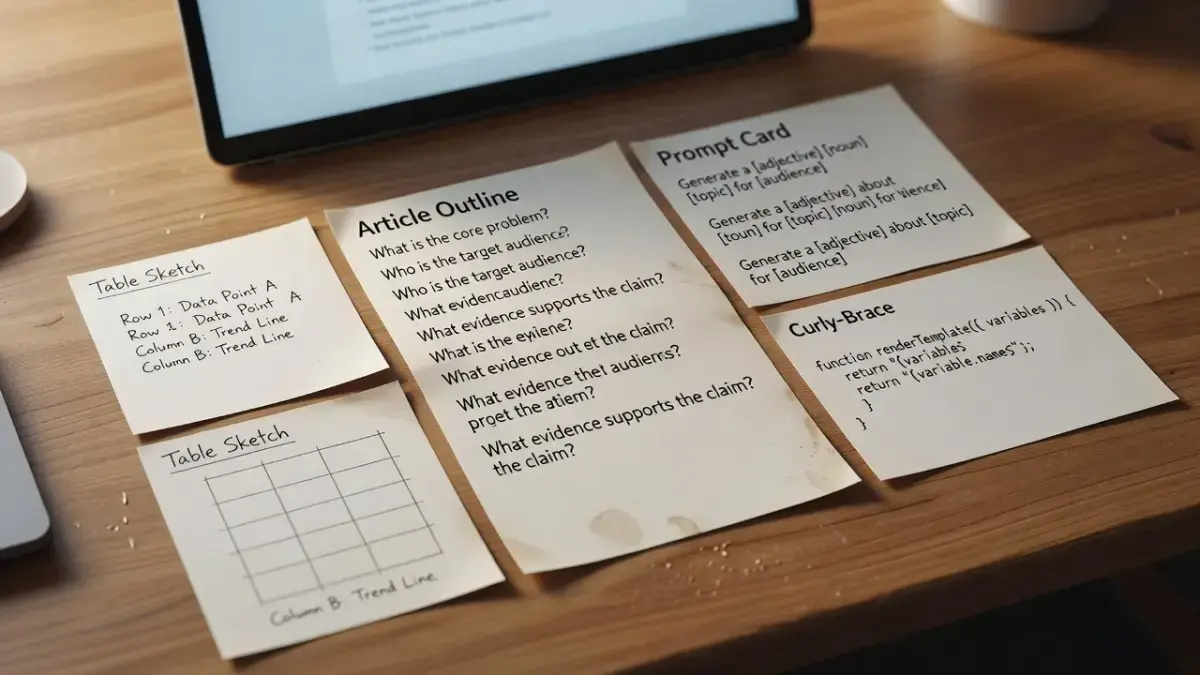
The best generative engine optimization templates are an answer-first article template, a query fan-out prompt and a comparison table template, used together on every page. Schema templates rank lower than you'd expect, because Google shows FAQ rich results only to well-known government and health sites, so your visible copy has to earn the AI citation.
Someone still has to fill these templates, publish the pages and check whether answer engines cite them. PulseRank writes one article a day against the sub-questions an engine expands your keyword into, then tracks whether those articles get cited.
All seven templates below come from my own weekly workflow: the fan-out prompt when I plan the month, the article and table templates when I draft, and the chain-of-thought and ReAct prompts when I audit and source.
What are the best prompt engineering templates for generative engine optimization?
The best prompt engineering templates for generative engine optimization turn one keyword into the questions an AI engine will ask, then force each answer to the top of its section. Most "GEO templates" sold as bundles are reworded blog outlines. The ones worth using are tied to how engines actually retrieve pages.
Google's AI features documentation says AI Overviews and AI Mode may use a "query fan-out" technique, running multiple related searches across subtopics to build one response. So your page competes on the sub-questions, not only the head term. Here's how the templates rank in my workflow as of November 2026:
| Rank | Template | What it produces | Best for | Main trade-off |
|---|---|---|---|---|
| 1 | Answer-first article template | Question H2s with a direct first-sentence answer | Every blog post or guide | Feels repetitive if headings aren't specific |
| 2 | Query fan-out prompt | 6-10 sub-questions per keyword | Planning a content calendar | LLM guesses need checking against real searches |
| 3 | Comparison table template | One row per option, real values only | "Best" and "vs" pages | Every cell needs a verified fact |
| 4 | Sourced-fact block | Claim + named source + deep link | Any page you want quoted | Slow to research properly |
| 5 | Article + FAQPage JSON-LD | Machine-readable page summary | Sites on WordPress, Shopify, Wix | No FAQ rich result for most businesses |
| 6 | Chain-of-thought audit prompt | Gap list per sub-question | Auditing existing pages | Long outputs, more tokens |
| 7 | ReAct research prompt | Sourced answers with URLs | Fact-checking before publishing | Needs a model with web or tool access |
Which prompt templates work best for SEO for generative AI?
The prompt templates that work best for SEO for generative AI are the ones that hold structure and sourcing fixed while the topic changes. A prompt that says "write a blog post about X" gives you a different shape every time. A template that defines the lead, the headers, the table and the source rules gives you pages an engine can parse the same way each time.
The reason this works has research behind it. The Princeton-led GEO paper on arXiv found that methods like adding citations, quotations and statistics can boost visibility in generative engine responses by up to 40%. So I'd put three rules into any SEO prompt:
- Lead rule: answer the question in the first sentence, under 30 words.
- Source rule: every statistic gets a named source and a link, or it gets cut.
- Header rule: headings match the way people phrase the search.
If you want the bigger picture on ranking in AI search before you pick templates, I've laid out how generative search ranking works in a separate guide.
1. The answer-first article template
The answer-first article template puts a direct answer under every heading so an engine can lift any section on its own. It's my top pick because every other template on this list plugs into it.
- What it is: a page skeleton with a bolded answer as the first sentence, question H2s, one data table, three or more sourced facts, and an FAQ.
- Why it made the list: answer engines quote passages, not pages. A section that opens with "It depends" gives them nothing to quote.
- Trade-off: if your headings are vague ("Pricing," "Features"), the template still produces generic pages.
This is the structure PulseRank applies to every article it writes: sub-question headings, a data table, sourced third-party facts, and internal links already in place.
2. The query fan-out prompt template
The query fan-out prompt expands one keyword into the sub-questions an AI engine is likely to research. I run it before writing anything:
You are planning a page for the keyword "[KEYWORD]" aimed at [AUDIENCE]. List 8 sub-questions an AI search engine would run to answer this query. Rank them by how often a buyer would ask them. For each, give the exact phrasing a person would type.
- Why it made the list: it mirrors the fan-out behavior Google describes in its own documentation.
- Trade-off: the model is guessing. I check the output against Google's "People also ask" box and Search Console queries before building headings from it.
3. The comparison table template
The comparison table template gives one row per option and a real value in every cell. Engines extract tables cleanly, so a table is often the most quotable thing on a "best" page.
- Columns I use: option, price with the month it was checked, the limit people hit first, best for, trade-off.
- Why it made the list: a row reading "$19/month, 5-client cap (checked Nov 2026)" is something an engine can cite. A row reading "Affordable" isn't.
- Trade-off: if you can't verify a value, you drop the column. Don't fill it with "Varies."
4. The sourced-fact block template
The sourced-fact block pairs each claim with a named source and a link to the exact page that makes it. The format is simple: "[Source] says [claim] ([link to the page, not the homepage])."
- Why it made the list: it applies the citation finding from the GEO paper directly to your copy.
- Trade-off: research time. A page with five real sources takes far longer than a page with none, and that's the point.
5. The content refresh prompt template
The content refresh prompt flags stale prices, dates and limits on a page that is already published. I feed it the page plus the queries the page ranks for:
Here is a published page and the search queries it ranks for. List every price, plan, limit and date on the page. Mark any that may be out of date as of [MONTH YEAR]. Then list the queries the page ranks for but never answers directly.
- Why it made the list: the second half finds pages that rank on page two for a question they never answer.
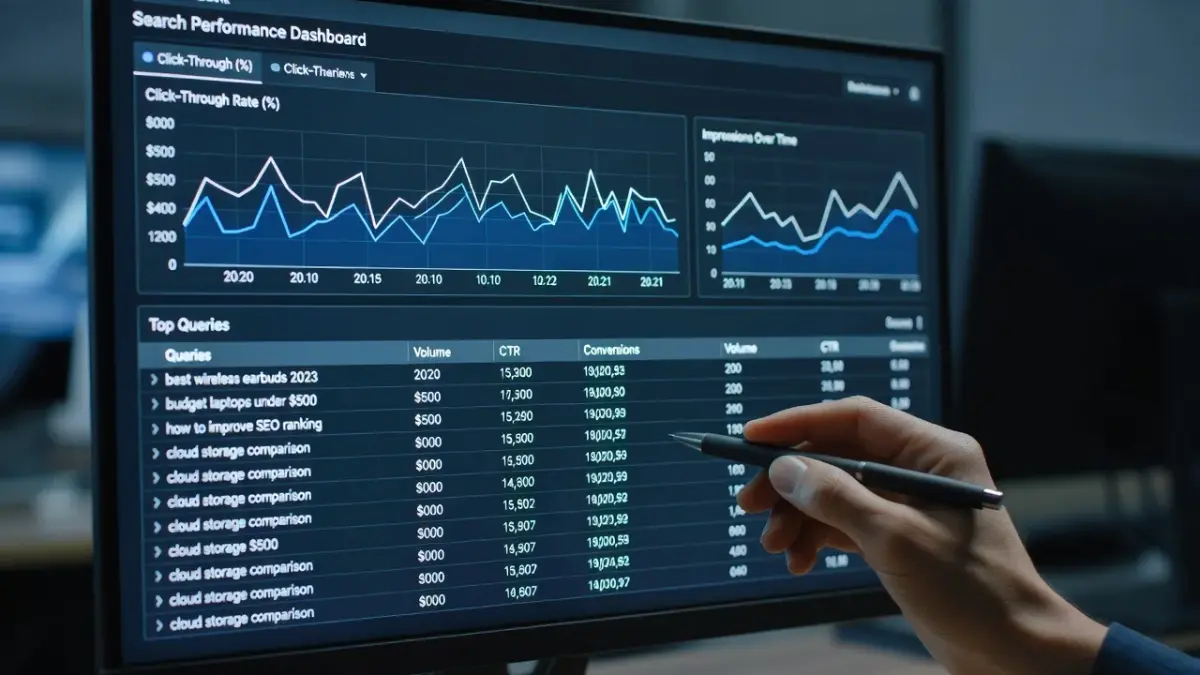
- Trade-off: you need query data to feed it. PulseRank's built-in Search Console view shows what each published article ranks for and where it's under-earning its position, which is the input this prompt needs.
What schema and structured data templates help with generative engine optimization?
The schema templates that help most with generative engine optimization are Article, Organization and BreadcrumbList, with FAQPage added only when it matches visible content. Schema won't make an engine cite you. It does make your author, dates and page type unambiguous.
Be realistic about FAQPage. Google's FAQPage documentation states that FAQ rich results are only shown for well-known, authoritative government and health websites. That has been the rule since August 2023. I still add it because the vocabulary at Schema.org's FAQPage type describes the page clearly to any parser.
Here's the minimal Article template I start from:
{"@context":"https://schema.org","@type":"Article","headline":"[TITLE]","datePublished":"[YYYY-MM-DD]","dateModified":"[YYYY-MM-DD]","author":{"@type":"Person","name":"[AUTHOR]"},"publisher":{"@type":"Organization","name":"[BRAND]"}}
One rule overrides the template. Google's general structured data guidelines require markup to reflect content visible on the page. Marking up FAQs your readers can't see is a policy problem.
What chain-of-thought prompt templates are recommended, with examples?
The chain-of-thought templates I recommend make the model work through a page one sub-question at a time before it rewrites anything. The technique comes from Wei et al.'s 2022 paper, which showed that prompting large models to produce intermediate reasoning steps improved their results on arithmetic and commonsense tasks.
For GEO, I use it as an audit prompt:
Audit this page for the keyword "[KEYWORD]". Work through these steps and show your reasoning for each:
- List the 6 sub-questions a searcher would ask.
- For each, quote the sentence on the page that answers it, or write NONE.
- For each quoted sentence, say whether it answers in the first sentence of its section.
- Only then, list the rewrites, most important first.
Why not skip straight to the rewrite?
Skipping the reasoning steps gets you a polished rewrite that misses the gaps. Step 2 is the useful part. A column of "NONE" tells you exactly which headings to add.
What does a ReAct prompt template with tool use look like?
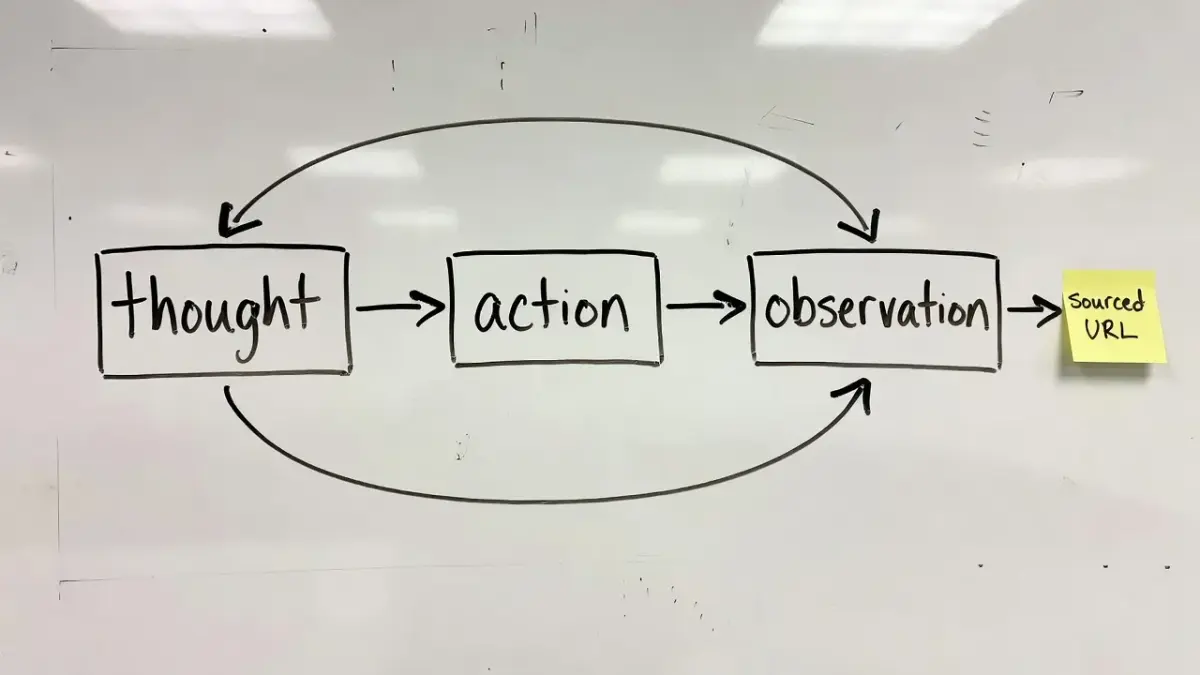
A ReAct prompt template alternates Thought, Action and Observation lines until the model has enough evidence to answer. The pattern comes from the ReAct paper by Yao et al., where the model used a simple Wikipedia API with search, lookup and finish actions to answer questions.
I use it to source facts before a page goes live:
Answer the question using the tools below. Use this format:
Thought: what you need to find next
Action: search[query] or fetch[url]
Observation: what the tool returned
(repeat as needed)
Final Answer: the fact, the source name, and the exact URL that states it.
If no page states it, write "UNSOURCED" and stop.
What makes the ReAct template safe for publishing?
The "UNSOURCED" exit line is what makes it safe. Without it, a model under pressure to answer will invent a plausible statistic. I'd rather cut a claim than publish one I can't link.
What should a prompt template library include, and what are its best practices?
A prompt template library should store each prompt with its purpose, variables, tested model, sample output and last-reviewed date. Without those fields you end up with forty near-identical prompts in a shared doc and no idea which one still works.
Each entry in my library has:
- Name and job: "Fan-out v3: plans sub-questions for one keyword."
- Variables: written one way, like
[KEYWORD]and[AUDIENCE], across every prompt. - Model tested: the model name and the month you tested it.
- Sample output: one real result, so teammates know what good looks like.
- Owner and review date: who fixes it when it drifts.
Best practices I'd hold to: test a new prompt on three different keywords before it enters the library, keep versions instead of overwriting, and retire prompts nobody has used in a quarter. My guide to writing prompts for content creation covers the prompt-writing side in more depth.
If you'd rather have these templates applied every day without maintaining the library yourself, start PulseRank's 7-day free trial and look at the 30-day content plan it builds from your keyword pool. Teams wanting hands-on help can also weigh agency and platform options for AI visibility.
Frequently Asked Questions
Are generative engine optimization templates free?
Yes, every template in this article is free to copy and adapt. The cost is the time to fill them with sourced facts and real values. Paid tools charge for doing that work, not for the template itself.
Do GEO templates work for ChatGPT and Perplexity, or only Google?
They work across engines because they target passage-level answers and citations, which every answer engine quotes. Google is the only one with published documentation on query fan-out, so I design headings around it first.
Is generative engine optimization different from SEO?
GEO builds on SEO rather than replacing it. Google's AI features documentation says pages need to be indexed and eligible for a snippet to appear as supporting links, so normal SEO basics still apply. GEO adds the focus on answer-first sections and sources.
Do I need an llms.txt file for AI search?
Not for Google. Its AI features documentation says there are no extra technical requirements for AI Overviews or AI Mode beyond standard Search eligibility. I'd spend that time on the answer-first template instead.
Can I use the same GEO template for every page?
Use the same structure, not the same headings. The lead, table and sourcing rules stay fixed, while the headings come fresh from each keyword's fan-out prompt.
Which tools help me track whether GEO templates are working?
You need two signals: Search Console query data for rankings and some form of AI citation tracking. I compared the options in my roundup of generative engine optimization tools.