

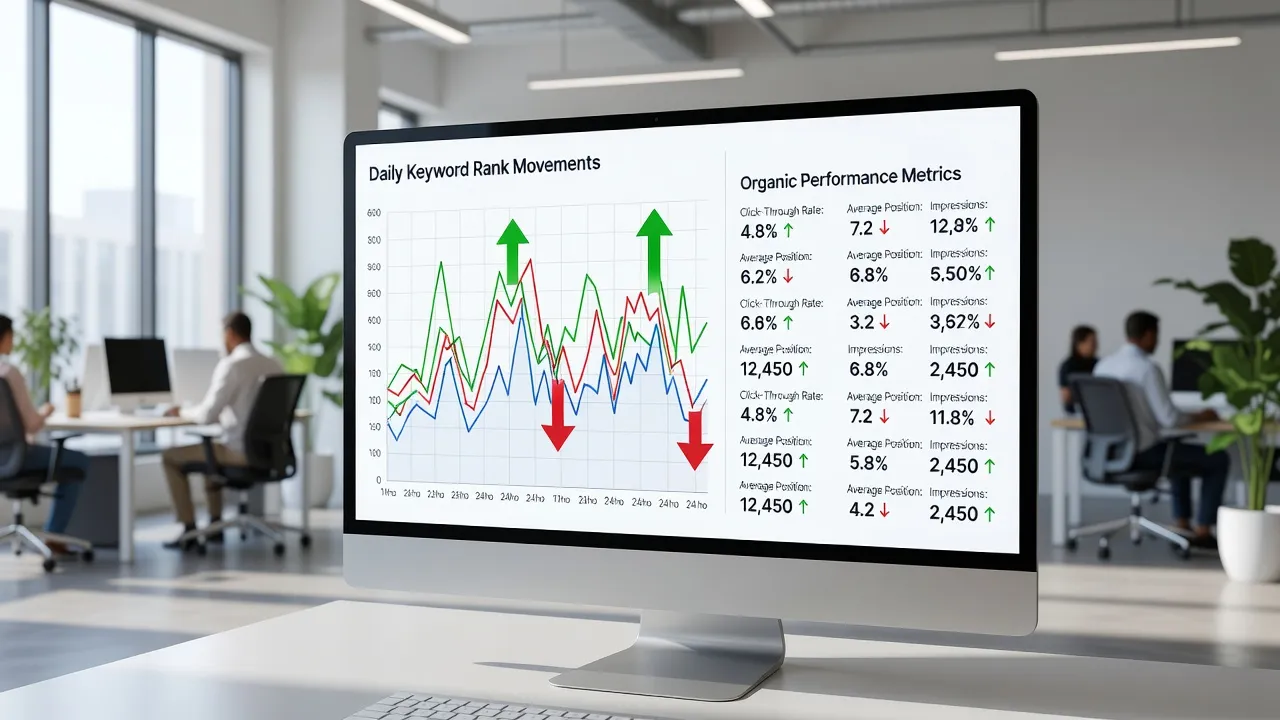
Daily rank tracking is the automated process of recording where your website ranks in search engine results pages (SERPs) every 24 hours to catch ranking drops, algorithm updates, and competitor moves before they harm your revenue. While weekly tracking works for quiet local markets, daily updates are essential for competitive industries where SERPs fluctuate rapidly.
Tracking positions on a 24-hour cycle reveals micro-shifts caused by algorithm rollouts, missing schema markup, or technical indexation issues. If you only check rankings once a week, an unindexed core landing page could burn seven days of sales before anyone notices.
What are the best rank tracking tools SEOs recommend?
The best rank tracking tools recommended by SEO professionals include PulseRank, AccuRanker, Ahrefs, SEMrush, and STAT Search Analytics. Each platform solves a distinct business operational bottleneck, ranging from enterprise-level daily SERP scraping to fully automated content execution based on rank data.
When choosing a platform, the main differentiator is how update frequencies are billed. Many traditional tools advertise daily tracking, but lock 24-hour refreshes behind higher subscription tiers or restrict daily updates to a tiny fraction of your total keyword pool.
The top rank tracking platforms recommended for 2026 fall into five main categories:
- PulseRank: Best for business owners who want daily rank tracking integrated directly with automated content creation and publishing.
- AccuRanker: Best for pure rank tracking performance, lightning-fast on-demand refreshes, and large keyword volume.
- Ahrefs: Best for all-in-one SEO analysis where rank tracking is paired with deep backlink exploration.
- SEMrush: Best for competitive research, local rank tracking, and broad digital marketing visibility.
- STAT Search Analytics: Best for large enterprises and agencies needing millions of daily localized SERP checks.
How do AccuRanker, Ahrefs, SEMrush, and Rank Ranger compare?
AccuRanker, Ahrefs, SEMrush, and Rank Ranger differ primarily in update speed, pricing structure, and whether daily rank tracking is included by default or offered as a paid add-on. While pure rank trackers like AccuRanker refresh positions automatically every 24 hours, all-in-one platforms like Ahrefs often default to weekly updates on lower-tier plans.
Understanding these pricing and credit traps is vital before signing a annual contract. For instance, paying for a keyword database you do not use just to access daily rank updates quickly inflates your monthly software costs.
| Rank Tracker | Primary Best Use Case | Update Frequency | Pricing Model (as of Sept 2026) | Key Limitation |
|---|---|---|---|---|
| PulseRank | Automated content publishing, rank tracking, and AI citation tracking | Daily (Automatic) | $499/month flat plan (includes 30 published articles/mo) | Built for organic publishing workflows rather than pure enterprise SERP research |
| AccuRanker | Speed-focused daily position tracking for agencies and in-house teams | Daily + On-demand refresh | Starts at ~$129/month for 1,000 keywords | Dedicated rank tracker only; no backlink auditing or content generation |
| Ahrefs | Backlink analysis paired with core keyword tracking | Weekly on basic plans; Daily available on top plans/add-ons | Starts at $129/month (lite plan with weekly updates) | Daily rank updates require higher-tier plans or paid add-on credits |
| SEMrush | Multi-channel digital marketing and localized position monitoring | Daily updates included in Position Tracking tool | Starts at $139.95/month (Pro tier, 500 keywords) | Keyword limits per project fill up quickly on entry-level plans |
| Rank Ranger | Custom white-label reporting and SERP feature tracking for agencies | Daily tracking standard | Starts at $79/month (200 keywords) | UI has a steep learning curve compared to modern modern software |
How does PulseRank perform for daily rank tracking?
PulseRank performs daily rank tracking by integrating directly with Google Search Console data while simultaneously monitoring AI answer engine citations. Instead of treating rank tracking as a passive metric on a chart, it bridges rank reporting with immediate content execution.
The platform tracks what each published piece ranks for and identifies pages that are under-earning their search position. It monitors traditional SERP ranks alongside generative search engines like Perplexity, ChatGPT, and Google Gemini.
PulseRank Platform
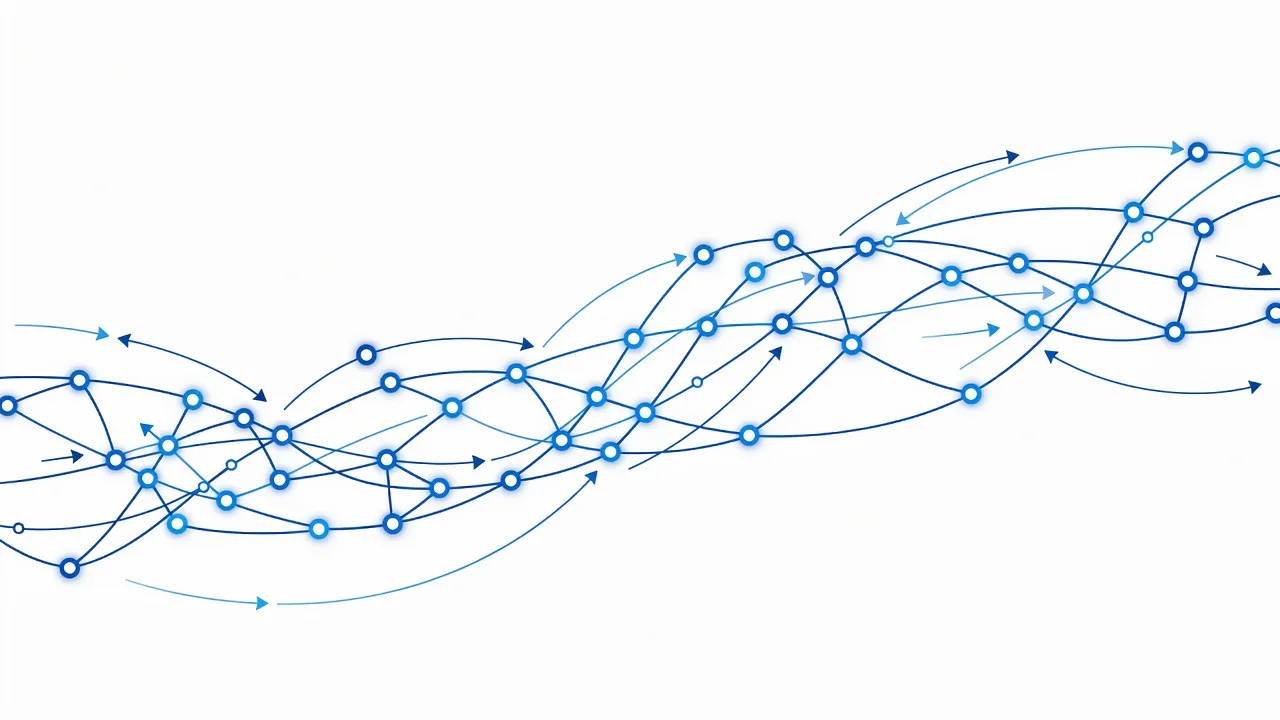
Keyword Research feeds into Daily Rank & AI Citation Tracking.
Daily Rank & AI Citation Tracking feeds into Content Strategy & Article Generation.
Content Strategy & Article Generation feeds into Auto-Publishing.
For $499 per month, PulseRank provides a flat plan that includes keyword research, content strategy, rank reporting, and 30 citation-ready articles published directly to platforms like WordPress, Shopify, Wix, or Git repositories. A 7-day free trial allows teams to test the workflow without upfront commitment.
If you want to monitor search engine rankings while systematically fixing pages that drop, combining tracking with execution saves hours of manual work.
How does AccuRanker perform as a rank tracking tool?
AccuRanker performs as one of the fastest and most accurate pure rank tracking tools on the market, refreshing keyword positions automatically every 24 hours. It allows users to trigger manual rank updates on demand whenever an algorithm update hits.
According to AccuRanker's official pricing page, plans start at roughly $129 per month for 1,000 keywords, with cost per keyword dropping as volume scales. The software does not limit the number of domain profiles or users you can add, making it popular for growing growth teams.
What are the main strengths of AccuRanker?
- Instant refresh button: You can manually update individual keyword positions on demand without waiting for the next 24-hour cycle.
- SERP feature tagging: It tracks over 50 SERP features, including featured snippets, local packs, video carousels, and PAA (People Also Ask) boxes.
- Tagging and segmenting: You can group keywords by landing page, search intent, product category, or internal campaign tags.
What is the primary trade-off with AccuRanker?
- No peripheral SEO tools: AccuRanker is strictly a rank tracker. It will not crawl your site for technical errors, analyze backlink profiles, or help you write new content.
How does Ahrefs Rank Tracker perform for position tracking?
Ahrefs Rank Tracker performs reliably as part of the broader Ahrefs ecosystem, though basic plans default to weekly update schedules rather than daily refreshes. It monitors your desktop and mobile rankings against competitors while tracking visibility metrics across 170+ countries.
As stated on the Ahrefs pricing documentation, entry-level plans start at $129 per month. However, getting daily rank tracking across your entire keyword list requires upgrading to higher subscription tiers or spending workspace credits on daily update add-ons.
| Component | Connects to |
|---|---|
| Keyword Dashboard | Competitor Comparison Graphs |
| Competitor Comparison Graphs | Optional Daily Add-On Credits |
| Weekly Update Default | Optional Daily Add-On Credits |
What makes Ahrefs Rank Tracker effective?
- Competitor benchmarking: Automatically pulls competitor rankings for your tracked keywords to show share of voice changes.
- Integration with Site Explorer: Clicking any tracked keyword immediately opens Ahrefs' deep backlink and SERP history analysis.
- Traffic value estimates: Calculates estimated monthly traffic value based on click-through rate (CTR) models and position data.
What is the pricing trap with Ahrefs?
- Update frequency friction: If you rely on true daily tracking across thousands of keywords, costs escalate rapidly due to credit consumption policies introduced in recent platform revisions.
How does SEMrush Position Tracking perform for rank tracking?
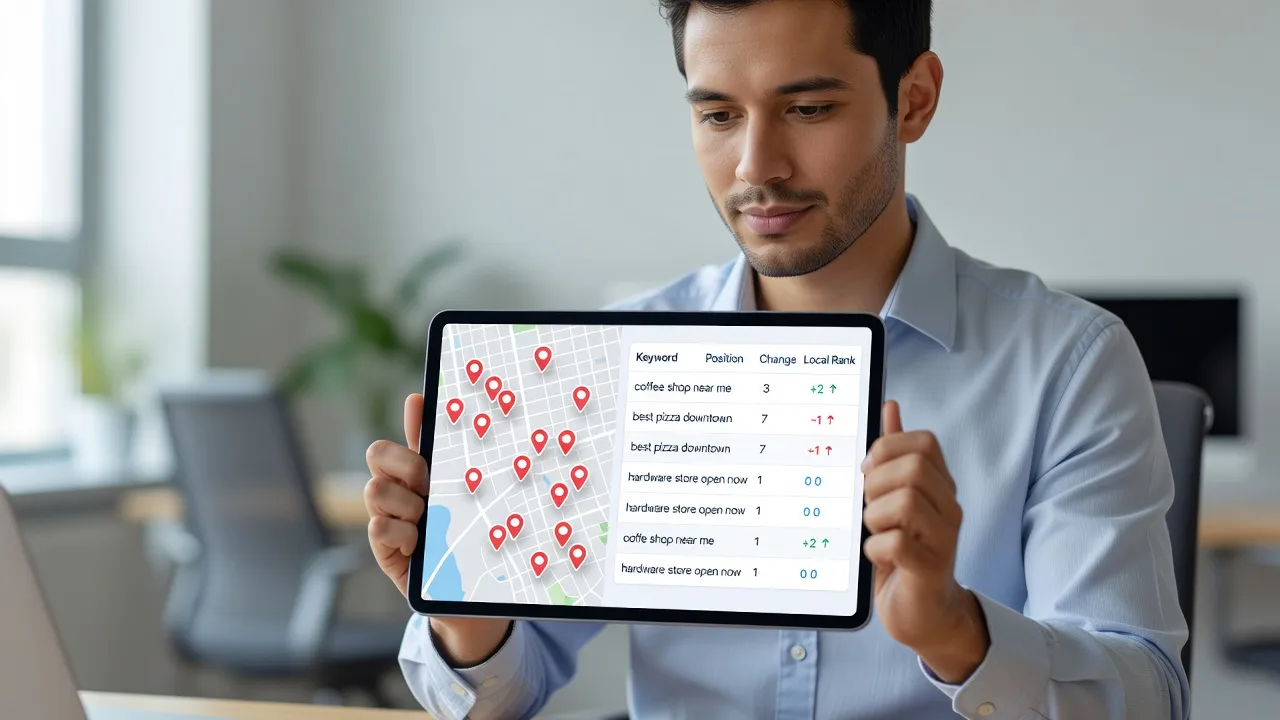
SEMrush Position Tracking performs exceptionally well for multi-location businesses, delivering daily updates across custom geographic locations down to the zip code level. It allows marketers to compare desktop and mobile rankings within a single unified dashboard.
Based on SEMrush's official plan overview, the entry Pro plan starts at $139.95 per month and includes tracking for up to 500 keywords updated daily. This makes it an accessible option for businesses that need daily data alongside competitor advertising intelligence.
Why do marketers use SEMrush Position Tracking?
- Granular geo-targeting: You can track daily positions at the country, state, city, or zip code level for hyper-local campaigns.
- Cannibalization detection: Identifies when multiple pages on your site compete for the same keyword and split ranking signals.
- Share of Voice (SoV) tracking: Calculates your brand's total search visibility compared to top organic rivals.
What is the main drawback of SEMrush?
- Strict keyword allowances: The 500-keyword limit on entry plans gets exhausted fast if you track multiple geographic locations or separate mobile and desktop devices.
How does STAT Search Analytics perform for rank tracking?
STAT Search Analytics performs as an enterprise-level daily rank tracking solution engineered to process massive datasets across global markets. Owned by Moz, STAT provides daily SERP tracking for enterprise sites that manage tens of thousands—or millions—of search terms.
As highlighted on Moz's STAT overview page, the platform is structured around customized volume enterprise pricing rather than fixed monthly user tiers. It outputs raw SERP data daily, giving analytics teams full access to HTML snapshots and local search trends.
Key advantages of STAT Search Analytics
- Massive scale: Built specifically to track enterprise sites with keyword portfolios exceeding 100,000 terms.
- Daily HTML SERP archives: Saves complete raw SERP HTML every 24 hours, allowing deep historical forensic SEO audits.
- Uncapped local tracking: Allows enterprise brands to track unlimited locations and device variations without tier penalties.
Key disadvantage of STAT Search Analytics
- Overkill for smaller businesses: The enterprise pricing floor and complex interface make it impractical for local businesses or small marketing teams.
Why is daily rank tracking necessary for modern businesses?
Daily rank tracking is necessary because Google rolls out thousands of minor search quality updates every year that cause sudden position changes. Waiting a week to review rank performance leaves your site exposed to prolonged traffic losses during major indexation shifts.
Tracking SERP movements on a 24-hour cycle allows marketing teams to react immediately to three core scenarios:
- Algorithm update impacts: When Google pushes an unannounced search core update, daily data helps you isolate which specific content clusters lost visibility.
- Technical SEO failures: If a deployment accidentally adds a
noindextag or breaks internal links, daily alerts catch the resulting drop in 24 hours. - Competitor launches: When a rival launches a massive link building campaign or content refresh, daily tracking shows their step-by-step gains before they steal your market share.
For agencies handling multiple client accounts, daily tracking is critical. Setting up dedicated agency rank tracking ensures client managers get automated alerts the moment a key account experiences sudden position volatility.
| Tracking Frequency | Rank Drop | Alert | Fix |
|---|---|---|---|
| Daily Tracking | Day 0 | Day 1 | Day 2 |
| Weekly Tracking | Day 0 | Day 7 | Day 7 |
With daily tracking, a rank drop triggers an alert on day 1 and a fix on day 2. With weekly tracking, a rank drop is not alerted until day 7, when the fix also occurs.
How does mobile rank tracking differ from desktop daily tracking?
Mobile rank tracking differs from desktop tracking because Google uses a mobile-first indexing system that delivers location-dependent search results based on user device and proximity. A page that ranks in position #2 on desktop may sit at position #7 on mobile due to local pack map blocks and visual ad layouts.
Mobile SERPs also feature different layout constraints, such as continuous scroll patterns and visual image carousels, which alter click-through rates dramatically.
When configuring daily updates, tracking both mobile and desktop views separately is essential. Dedicated mobile rank tracking ensures you measure actual screen real estate occupied on mobile screens rather than relying solely on desktop metrics.
How to set up an effective daily rank tracking strategy
Setting up an effective daily rank tracking strategy requires segmenting keywords into high-priority groups, setting custom alert thresholds, and tracking local device variations. Following a structured setup prevents data overload while keeping your marketing team focused on revenue-generating terms.
1. Categorize your keyword pool
Avoid dumping thousands of unorganized keywords into a tracking tool. Group terms into intent-based categories:
- Brand terms: Your company name, product names, and branded variations.
- High-intent commercial terms: Keywords with high buying intent (e.g., "best rank tracking software").
- Informational content terms: Blog posts, guides, and educational keyword targets.
2. Configure geographic and device settings
Select tracking locations based on where your customers actually live. If you run a multi-city service business, set up location-specific daily tracking for each core market.
3. Establish automated position alerts
Set up real-time notification rules to avoid staring at dashboards all day. Configure alerts for:
- Any tier-1 commercial keyword dropping out of the top 3 positions.
- Any landing page losing more than 5 positions in a single 24-hour cycle.
- Any page suddenly gaining a featured snippet position.
Frequently Asked Questions
What is daily rank tracking in SEO?
Daily rank tracking is the process of automatically checking and recording website positions on search engine result pages every 24 hours to monitor organic visibility trends.
Why is weekly rank tracking not enough for competitive keywords?
Weekly rank tracking misses day-to-day volatility caused by algorithm updates, seasonal search shifts, and technical errors, leading to delayed responses that can cost sales.
Does daily rank tracking impact website speed or server load?
No, rank tracking tools scrape search engine result pages directly from third-party proxy networks, so they never ping or slow down your web server.
What is the difference between rank tracking and Google Search Console performance reporting?
Google Search Console provides delayed average position data based on actual user impressions, whereas daily rank trackers query exact real-time positions for targeted keywords at specific locations.
How many keywords should a small business track daily?
Most small businesses should track between 100 to 500 core commercial and branded keywords daily, focusing on terms that directly drive leads, sales, or primary site traffic.
Can daily rank tracking tools monitor AI answer engine citations?
Modern platforms like PulseRank track traditional SERP positions alongside generative AI engines like Perplexity, ChatGPT, and Google Gemini to provide complete organic visibility metrics.