
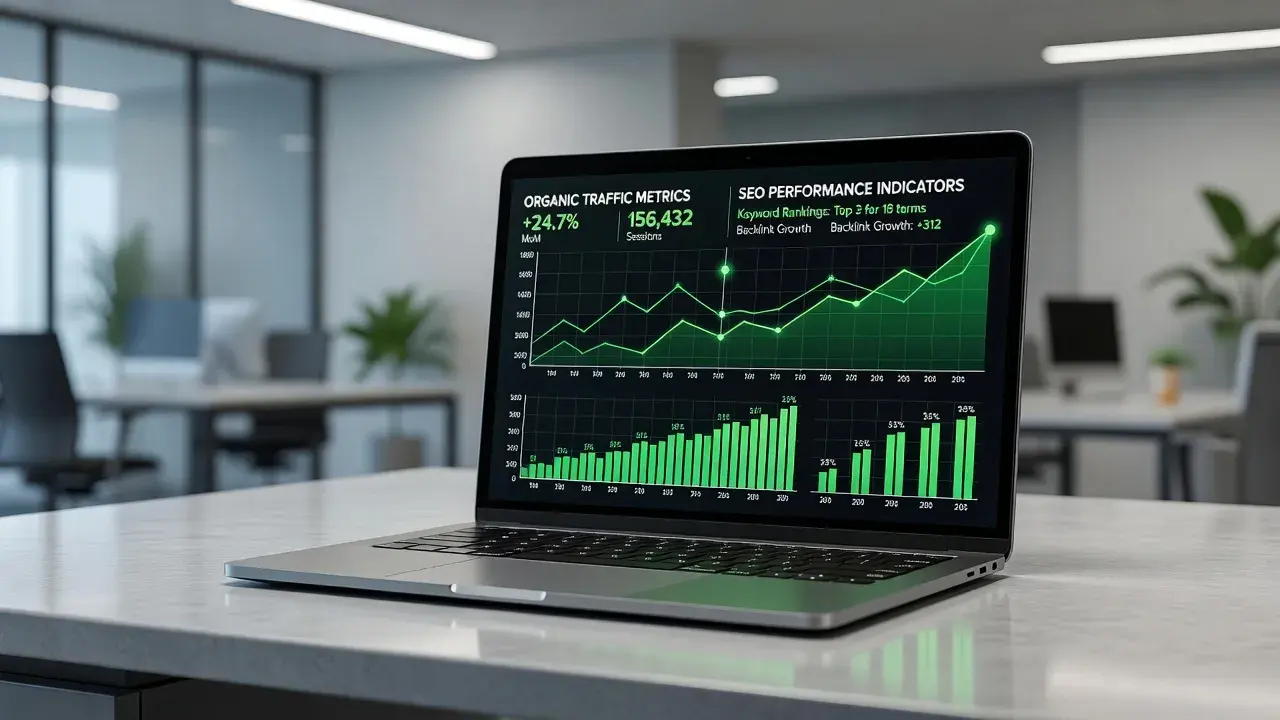
You can boost search engine rankings in 30 to 90 days by resolving crawl errors, aligning content with user search intent, and building continuous topical authority. Executing this full 5-step strategy takes about 10 to 15 hours of initial technical setup and $0 to $499 per month depending on whether you automate content creation. What most business owners get wrong is spending thousands of dollars on manual copywriters or speed tweaks while publishing generic articles that search engines ignore.
The table below breaks down the five core steps to improve your site visibility, including realistic execution times and required resources as of September 2026.
| Step | Core Action | Time Required | Resource / Cost |
|---|---|---|---|
| Step 1 | Audit technical site health and fixing crawl blocks | 3–5 hours | Free (Google Search Console) |
| Step 2 | Optimize content structure for search intent and AI search | 2 hours per article | $0–$50 per article or platform subscription |
| Step 3 | Build internal link clusters around main service pages | 4–6 hours | Free (Internal site edits) |
| Step 4 | Scale publishing and monitor search performance | Ongoing (10 hrs/wk) | $499/month (Automated search platform) |
| Step 5 | Acquire contextual backlinks through digital PR | 5 hours/week | $0 (Outreach) to $300/link |
Step 1: Audit technical site health and crawl errors
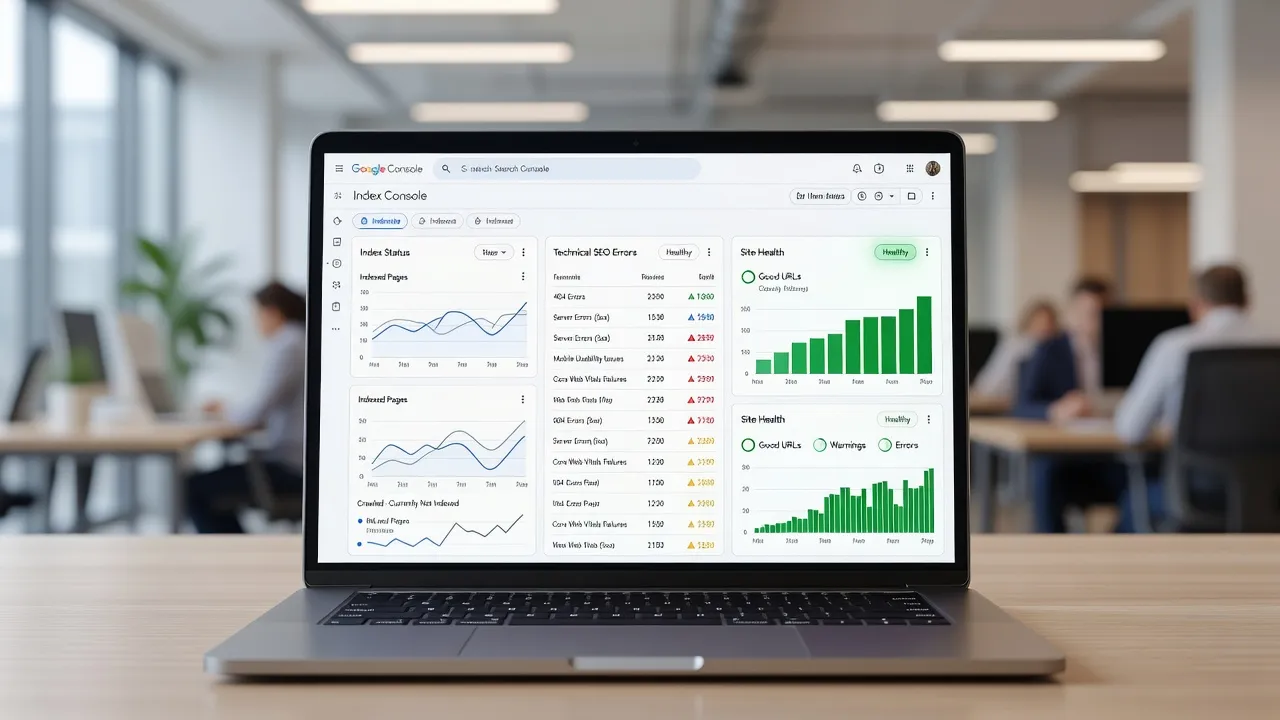
To audit your technical site health, open Google Search Console to identify indexing failures, broken links, and coverage errors. Technical blocks prevent search engines from reading your pages regardless of how well your articles are written.
Most business owners make the mistake of ignoring basic crawl logs until rankings drop dramatically. Catching indexing issues early prevents wasted content efforts.
- Check Page Indexing status: Navigate to the Page Indexing report inside Search Console to see which pages are excluded. Look specifically for "Not Found (404)" or "Crawled - currently not indexed" status tags.
- Inspect canonical tags: Ensure every critical landing page points to its primary canonical URL. Duplicate parameter URLs confuse web crawlers and split page equity.
- Submit an updated sitemap: Generate an XML sitemap and submit its URL directly to Google. Make sure it contains only HTTP status 200 pages and excludes redirected or blocked links.
How do Core Web Vitals affect SEO rankings?
Core Web Vitals affect SEO rankings by serving as direct page experience signals within Google's ranking algorithms. According to official technical guidance on Web.dev Core Web Vitals, Google evaluates real-user experience metrics to determine whether a page loads quickly and remains visually stable.
Site owners frequently make the mistake of spending $3,000 on custom developer overhauls to move a performance score from 85 to 98. Google uses Core Web Vitals as a threshold signal rather than a granular tie-breaker, meaning you only need to pass the "Good" thresholds.
- Interaction to Next Paint (INP): Measures page responsiveness. Aim for an INP of 200 milliseconds or less.
- Largest Contentful Paint (LCP): Measures perceived loading speed. Your main content block should render within 2.5 seconds.
- Cumulative Layout Shift (CLS): Measures visual stability. Keep layout movement scores under 0.1 during page load.
Step 2: Match search intent and structure content for AI engines
To match search intent, analyze the top three search results for your target query and format your content to directly answer the underlying sub-questions. Search engines prioritize pages that deliver immediate, precise answers without fluff.
The costliest mistake in modern SEO is creating content solely for traditional search while ignoring generative answer engines. Modern search systems break queries down into semantic components before selecting which sites to reference.
- Identify the core intent: Determine whether searchers want a transactional tool, a step-by-step how-to guide, or a simple definition.
- Front-load the direct answer: Place a clear, bolded summary answer within the first 50 words of every article section.
- Structure data with tables and lists: Convert complex comparisons into clean Markdown tables or bulleted steps so AI search engines can easily extract key data points.
If you want to understand how modern generative search models synthesize content from web sources, check out this guide on generative engine optimization service architecture.
What does Google's E-E-A-T guidance mean for SEO?
Google's E-E-A-T guidance means search algorithms prioritize content that demonstrates real-world Experience, Expertise, Authoritativeness, and Trustworthiness. Google explains in its search creator documentation that trust is the single most crucial component of this evaluation framework.
Publishers often fail E-E-A-T evaluations by posting anonymous content written by AI tools without editorial oversight. To satisfy E-E-A-T criteria in 2026, you must prove a human expert reviewed the information.
- Experience: Include original screenshots, first-hand observation notes, or specific operational details.
- Expertise: Add author bio blocks highlighting professional credentials, certifications, or years in industry.
- Authoritativeness: Cite reliable third-party data sources, research studies, and official documentation within your prose.
- Trustworthiness: Keep clear contact information, privacy policy links, and verifiable business details in your site footer.
What does Google's helpful content update mean for SEO?
Google's helpful content system means search algorithms penalize sites built primarily to manipulate search engine rankings rather than help human readers. The system evaluates sites on an sitewide basis, meaning a high concentration of unhelpful pages can drag down the rankings of your good content.
The most expensive error businesses make is pumping out hundreds of superficial blog posts to cover high-volume keywords. When a helpful content update hits, recovering organic traffic can take six to twelve months of aggressive content pruning.
- Primary intent focus: Ensure every post answers a specific user question thoroughly rather than summarizing existing top-ranking pages.
- Avoid topic dumping: Do not publish content in niche categories completely unrelated to your main business offerings.
- Eliminate fluff: Cut introductory filler text that delays giving the user the exact answer they searched for.
Step 3: Build topical authority with structured internal links
To build topical authority, connect related articles to a central landing page using descriptive anchor text. Internal links pass page equity across your domain and signal to search engines how your content topics interrelate.
Many businesses fail here by linking generic phrases like "click here" or "read more." Vague link text strips away the semantic context search engines use to understand page topics.
A core service or pillar page sits at the top level. Below it, three clusters branch from it:
- Cluster 1 (How-To)
- Cluster 2 (Pricing)
- Cluster 3 (Examples)
Each cluster links upward to the core service or pillar page.
- Map out pillar pages: Designate your high-value service or category pages as the central pillar for each topic bucket.
- Add contextual in-text links: Link relevant supporting articles back to the main pillar page within the main body text.
- Audit internal links regularly: Use site diagnostic tools to find orphaned pages that receive no internal links from other domain pages.
When monitoring how internal structure impacts performance, understanding the distinction between google search console vs google analytics helps isolate indexing issues from user traffic paths.
Step 4: Scale publishing with automated search operations
To scale content publishing effectively, implement an end-to-end strategy that handles keyword research, content production, publishing, and rank tracking. Consistency is crucial for growing search rankings, yet most business owners lack the time to draft, format, and publish articles manually every week.
A common pitfall is hiring budget freelance agencies that charge $2,000 to $4,000 per month while taking weeks to produce a handful of articles. Manual workflows frequently stall out due to editing bottlenecks.
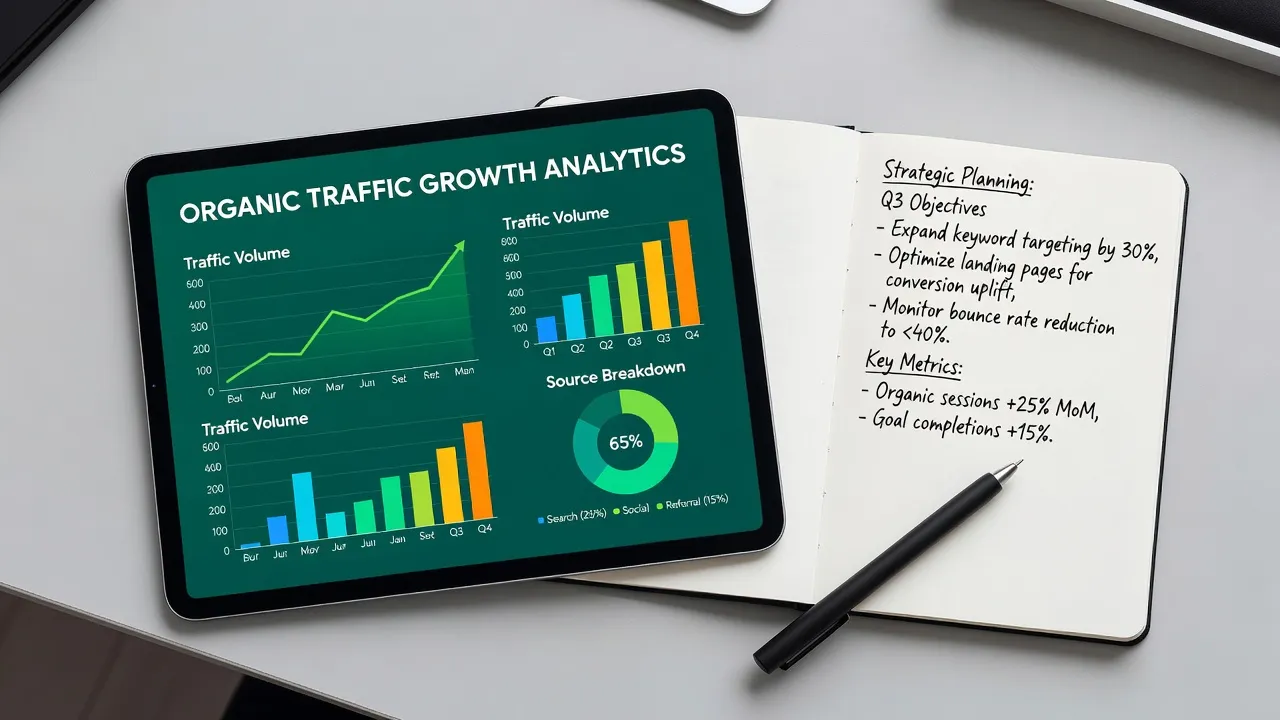
Using fully integrated publishing platforms simplifies this entire process. For instance, PulseRank manages an entire organic content operation in one platform for a flat $499 per month. It conducts keyword research, builds 30-day content strategies, writes citation-ready articles structured for AI search, and publishes them directly to WordPress, Shopify, or Wix.
By integrating directly with Google Search Console reporting, platforms like PulseRank make it simple to track indexation performance and pinpoint underperforming content in a single view.
Step 5: Earn authoritative contextual backlinks
To earn authoritative backlinks, publish original research data, free digital tools, or expert commentary that other websites naturally want to cite. Backlinks remain one of Google's top three off-page ranking factors.
A common mistake business owners make is buying cheap $50 link packages on web forums. Search engines easily identify spammy link networks, which can result in manual penalties that wipe out site rankings entirely.
- Build linkable assets: Create comprehensive industry benchmarks, data studies, or downloadable template files.
- Execute targeted digital PR: Reach out to industry journalists and bloggers who actively cover topics relevant to your study.
- Fix broken backlinks: Find websites linking to dead 404 pages on competitor sites and suggest your live resource as an updated replacement.
To keep track of how backlink acquisition translates into organic growth, review this comprehensive overview on how to monitor search engine rankings.
What are Moz's SEO best practices checklist?
Moz's SEO best practices checklist focuses on technical crawlability, on-page optimization, content quality, and domain link authority. As detailed in the Moz Beginner's Guide to SEO, keeping a disciplined checklist ensures your site stays compliant with core ranking requirements.
Many site owners make the mistake of jumping straight into link building before completing basic on-page optimization. Skipping structural hygiene leads to poor conversion rates even when traffic increases.
- Title Tag Optimization: Front-load target keywords into unique title tags under 60 characters.
- Meta Descriptions: Write compelling 150-160 character descriptions that encourage higher click-through rates from search engine results pages (SERPs).
- Header Structure: Organize content logically using a single H1 header followed by nested H2 and H3 subheadings.
- Image Optimization: Compress image file sizes and add descriptive alt text to improve accessibility and visual search rankings.
What are Ahrefs' SEO recommendations?
Ahrefs' SEO recommendations emphasize targeting low-competition search queries, closing content gaps, and building high-authority backlinks. According to actionable insights from the Ahrefs SEO Best Practices Guide, focusing on keyword difficulty metrics prevents smaller domains from wasting resources competing against established sites.
A frequent error businesses make is targeting high-volume keywords with high keyword difficulty scores right away. A newer domain will rarely rank on page one for broad terms without substantial existing domain authority.
| Keyword Difficulty (KD) | Range | Requirements |
|---|---|---|
| High KD | 70-100 | Requires 100+ Backlinks (Avoid early on) |
| Med KD | 30-69 | Requires Topical Clusters + Moderate Links |
| Low KD | 0-29 | Faster Page 1 Ranking via Intent Match |
- Target low-hanging fruit: Focus on long-tail keywords with low difficulty scores to gain initial search momentum.
- Audit competitor content gaps: Analyze keywords your top competitors rank for that your domain currently misses.
- Update decaying content: Refresh older blog posts that have dropped in rankings with updated statistics and new sections.
What are SEMrush's SEO trends and recommendations?
SEMrush's SEO recommendations prioritize optimizing for search intent, maintaining strong site architecture, and tracking keyword visibility fluctuations. Recommendations published in SEMrush's search strategies emphasize that user behavior signals play an essential role in long-term ranking retention.
Publishers often make the mistake of optimizing purely for search engines while neglecting user navigation. If users land on your page and bounce back to search results immediately, your rankings will decline over time.
- Analyze Search Intent Types: Group target keywords by informational, commercial, navigational, or transactional intent before writing.
- Track Rank Volatility: Use automated rank tracking tools to detect algorithmic changes early and react before traffic drops significantly.
- Optimize User Engagement: Improve visual readability by using short paragraphs, bullet points, and high-contrast callout boxes.
Frequently Asked Questions
How long does it take to boost search engine rankings?
It typically takes 30 to 90 days to see initial search ranking improvements after fixing technical errors and publishing intent-matched content. New websites or competitive niches may require 6 to 12 months of consistent publishing to build sufficient topical authority.
How much does it cost to improve search engine rankings?
Improving search engine rankings can cost between $0 and $500 per month for small businesses using DIY tools or platforms like PulseRank. Larger enterprises or businesses hiring full-service agencies typically spend between $2,000 and $10,000 per month.
What is the most important factor for boosting SEO rankings?
Content relevance and user search intent match are the most critical ranking factors today. While technical SEO and backlinks provide foundation and authority, search engines will not rank a page higher if it fails to answer the user query directly.
Do I need to re-optimize existing content to rank higher?
Yes, updating decaying content is often the fastest way to boost search engine rankings. Adding updated statistics, answering new sub-questions, and fixing broken links can restore lost rankings in as little as two weeks.
How do core web vitals impact my site rankings?
Core Web Vitals act as a user experience threshold signal in Google's ranking algorithms. Meeting the minimum requirements for loading speed, visual stability, and interaction responsiveness ensures your site is not penalized in search result rankings.
Why is my website not ranking despite publishing articles regularly?
Your site may lack topical authority, harbor technical indexing blocks, or produce generic content that Google's helpful content systems ignore. Focus on targeting low-competition long-tail keywords and interlinking related pages to establish authority.
Are backlinks still necessary for ranking on page one of Google?
Yes, backlinks remain a strong signal of domain authority and trust. However, acquiring a few contextual links from relevant, high-quality sites is far more effective than acquiring hundreds of low-quality directory links.