

For most small businesses and agencies in 2026, cheap rank tracking starts at $14 per month with dedicated tools like Wincher or ProRankTracker, while all-in-one platforms like SE Ranking start around $55 per month. If your budget is strictly zero, Google Search Console tracks average positions for free, though it lacks daily updates and localized zip-code breakdown. The single variable that dictates which cheap rank tracker you should choose comes down to update frequency: paying for daily refreshes across thousands of keywords spikes costs fast, while weekly updates or smaller keyword caps keep your monthly software bill under $30.
When you start evaluating rank trackers, price tags look deceptive. A software vendor might advertise rank tracking for $10 a month, but that entry price often covers only 100 keywords with weekly rank refreshes. If you need daily rank tracking across multiple locations, that same tool can jump past $100 per month.
I tend to look at cheap rank tracking through a single question: are you paying for rank data alone, or are you paying for an engine that actually moves those numbers? Below is an honest breakdown of the top low-cost rank tracking options available as of October 2026, including what each tool costs, where their limits live, and which one fits your specific workflow.
What is Wincher pricing for rank tracking?
Wincher pricing starts at $14 per month for its Starter plan when billed annually, making it one of the cheapest dedicated rank trackers on the market. This entry tier covers up to 500 keywords across unlimited websites, which is more than enough for small sites or niche affiliate projects.
According to the official Wincher pricing page, the Starter plan refreshes rankings once every 24 hours and provides up to 10 years of historical data. If you run a small agency or manage multiple client sites, the Business tier starts at $42 per month for 1,000 keywords and unlocks automated PDF reports alongside team permissions.
I like Wincher if you want clean, dedicated tracking without paying for site auditors or backlink crawlers you do not need. The major trade-off is that location tracking is limited on the base tier; if you need micro-local rank data down to specific zip codes, you will have to upgrade to higher pricing plans.
What is SE Ranking pricing for rank tracking?
SE Ranking pricing starts at $55 per month for its Essential plan, which includes 750 keywords with daily position updates. While $55 per month is higher than pure position checkers, it sits among the cheapest prices for a complete SEO toolsuite.
As detailed on the SE Ranking pricing page, you can lower your monthly cost by opting for weekly ranking updates instead of daily refreshes, which drops the entry cost by roughly 20%. The Essential plan includes site auditing, competitor analysis, and keyword research alongside its position tracking engine.
If you run a growing business and need to learn how to monitor search engine rankings while auditing technical errors, SE Ranking offers the best overall ratio of features to price. The main drawback is its historical keyword data limit on the base tier, which forces fast-growing brands onto its $109 per month Pro plan.
What is Mangools SERPWatcher pricing?
Mangools SERPWatcher pricing starts at $29 per month on its Entry plan when billed annually, granting access to 250 tracked keywords per 24 hours. Mangools does not sell SERPWatcher as a standalone app; your subscription includes their entire suite, which features KWFinder and SERPChecker.
Based on the published Mangools pricing guide, the Basic plan costs $49 per month (or $29 per month on an annual contract) and expands your tracking limit to 500 keywords daily. Their platform relies on a proprietary metric called Performance Index, which calculates overall organic visibility based on your position distributions.
In my opinion, SERPWatcher is ideal for freelancers who prioritize visual simplicity over deep enterprise reporting. However, if you manage agency rank tracking across dozens of accounts, Mangools gets expensive quickly because its keyword pools are shared across all added domains rather than allocated per project.
What is ProRankTracker pricing?
ProRankTracker pricing starts at $13.50 per month for its Starter plan when billed annually, making it the lowest entry price for dedicated rank tracking. This baseline plan tracks 100 keywords with daily updates across mobile and desktop search results.
As outlined on the official ProRankTracker pricing chart, their plans scale continuously based on keyword volume rather than feature lockouts. The Pro plan starts at $89 per month for 2,500 keywords and unlocks unlimited client views alongside white-label PDF generation.
Precision tracking: ProRankTracker excels at exact geo-location tracking, including specific local city and postal code targets. The trade-off is the visual layout: the dashboard prioritizes raw data over modern design, so it can feel overwhelming for non-technical business owners.
What is Nightwatch.io pricing for rank tracking?
Nightwatch.io pricing starts at $39 per month for its Starter tier, which provides daily rank tracking for up to 250 keywords. Nightwatch built its reputation around precise local SERP tracking, pulling data directly from specific Google Data Centers.
According to the official Nightwatch pricing page, the $39 per month plan supports up to 50 websites and 5 competitor trackers. The mid-tier Optimize plan scales to $99 per month, supporting 1,000 keywords and full white-label reporting.
If your revenues rely on local pack placements (Google Maps positions), Nightwatch is worth its higher base price. If you only care about national desktop rankings, cheaper tools like Wincher deliver similar results for half the cost.
What is AccuRanker pricing and are there cheap alternatives?
AccuRanker pricing starts at $129 per month for 1,000 keywords, placing it well outside the budget tier for small businesses. AccuRanker targets mid-market and enterprise teams that require instant, on-demand rank refreshes rather than scheduled daily checks.
The AccuRanker pricing grid shows that costs scale strictly by keyword volume, reaching $799 per month for 10,000 keywords. Because it offers unlimited domain additions and unlimited user accounts on every plan, enterprise agencies use it to consolidate large portfolios.
For businesses that cannot justify $129 per month, several cheap alternatives offer daily updates at a fraction of the cost:
- Wincher: Best low-cost alternative for tracking up to 500 keywords ($14/mo).
- ProRankTracker: Best alternative for granular local tracking ($13.50/mo).
- SE Ranking: Best all-in-one alternative with technical SEO tools ($55/mo).
How do cheap rank trackers compare?
Choosing the right tracker depends on whether you need a dedicated rank monitor, a full technical SEO toolkit, or an automated execution system. The table below outlines how top low-cost trackers compare against fully managed organic search solutions as of October 2026.
| Software | Entry Price | Keyword Capacity | Key Differentiator |
|---|---|---|---|
| ProRankTracker | $13.50/mo | 100 keywords | Lowest entry cost for specialized local rank checking. |
| Wincher | $14.00/mo | 500 keywords | Generous keyword allowances for basic national monitoring. |
| PulseRank | $499.00/mo | Full site portfolio | Complete organic engine that handles keyword research, publishing, and rank reporting. |
| Mangools SERPWatcher | $29.00/mo | 250 keywords | Simplest dashboard UI with bundled keyword research tools. |
| Nightwatch.io | $39.00/mo | 250 keywords | Direct Google Data Center access for localized rank data. |
| SE Ranking | $55.00/mo | 750 keywords | Best all-in-one suite with technical auditing and backlink checks. |
Why PulseRank offers a different approach to tracking organic rankings
Tracking ranks tells you where you stand, but it does not fix pages that are losing ground. Most cheap rank trackers leave you with a list of red numbers and no simple path to change them.
That gap is why we built PulseRank. Instead of acting as a standalone position checker, PulseRank operates as a unified organic search platform. For a flat fee of $499 per month, the platform handles your brand's full keyword research, crafts a 30-day content strategy, and publishes one citation-ready article per day directly to your site (supporting WordPress, Shopify, Wix, and custom Git setups).
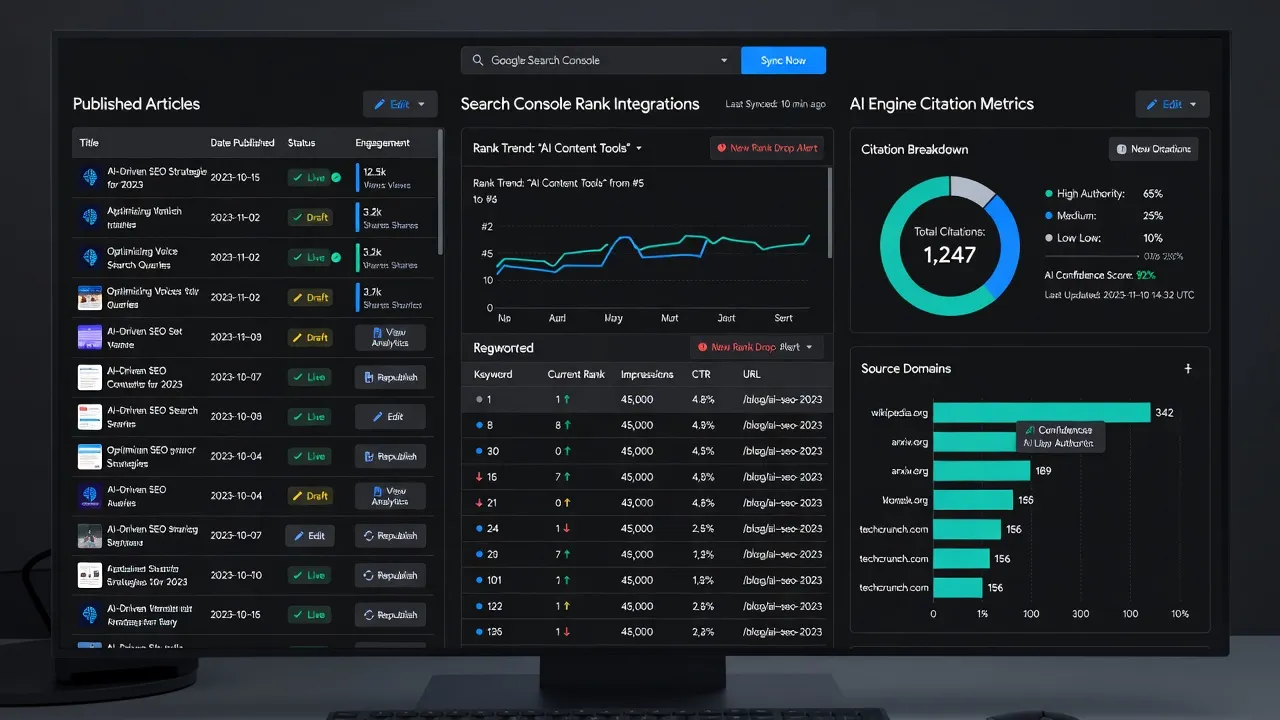
Rather than charging extra per user or building complex keyword tiers, PulseRank connects your publishing pipeline straight to Search Console reporting. You get clear visibility into which published articles rank, where your content is under-earning its target position, and whether AI answer engines are citing your brand. If you want to stop paying for isolated tools and run your entire search strategy from one view, you can start a 7-day free trial at pulserank.app.
Frequently Asked Questions
What is the cheapest rank tracking tool available?
ProRankTracker is the cheapest dedicated paid tool, starting at $13.50 per month for 100 keywords. Wincher follows closely at $14 per month for 500 keywords. For zero cost, Google Search Console tracks average site positions across all your queries.
Is Google Search Console accurate enough for rank tracking?
Yes, Google Search Console provides real search performance data directly from Google. However, it displays average impression positions over time rather than real-time daily rankings, and it does not show local zip-code rank differences.
Why do rank trackers show different positions for the same keyword?
Rank trackers pull data from different data centers, server locations, and device profiles (mobile vs. desktop). Google also personalizes search results based on user search history and precise physical location, causing slight variations between tools.
What is the difference between daily rank tracking and weekly rank tracking?
Daily rank tracking checks position shifts every 24 hours, catching quick volatility caused by algorithm updates or site changes. Weekly rank tracking updates positions once every seven days, which lowers your subscription cost but delays your reaction time to ranking drops.
How many keywords should a small business track?
Most small businesses only need to track 50 to 200 core keywords. These should include primary service pages, main product categories, and top-performing blog topics. Tracking thousands of low-intent keywords needlessly inflates software costs.
Are cheap rank tracking tools reliable for local SEO?
Tools like Nightwatch.io and ProRankTracker provide highly reliable local tracking down to specific postal codes. Cheaper entry-level tiers on general tools sometimes limit location targeting to national results, so confirm local settings before subscribing.
Can cheap rank trackers monitor AI answer engines like ChatGPT?
Most traditional cheap rank trackers only pull data from Google and Bing desktop or mobile SERPs. Advanced platforms like PulseRank track both traditional search positions via Search Console and AI answer engine citations inside one platform.