

The best enterprise rank tracking software options for 2026 are BrightEdge and seoClarity for enterprise corporate teams, AccuRanker for raw tracking speed at scale, and PulseRank if you need automated AI citation tracking alongside Search Console reporting. Enterprise rank tracking requires monitoring tens of thousands of keywords across multiple countries, languages, and search engines without hitting artificial API bottlenecks or unexpected pricing surges.
Managing search visibility at scale isn't just about pulling Google positions once a day. Enterprise search engine optimization requires real-time data ingestion, local zip-code precision, SERP feature mapping, and visibility into AI answer engines like ChatGPT, Perplexity, and Google AI Overviews.
The traditional SEO software stack often fails large teams. Standard plans throttle account access with strict credit limits and seat taxes that double your monthly bill the moment you invite your global team.
Enterprise Rank Tracker Architecture
Data flows through three stages:
-
Data Collection Layer receives input from three sources that feed forward in parallel:
- Google / Bing SERPs
- Local Zip Code Scrapes
- AI Overviews & LLM Nodes
-
Normalization & De-duping receives all three data streams and performs the following operations:
- Aggregates mobile & desktop SERP variations
- Strips dynamic personalized parameters
- Maps SERP features (Knowledge Panels, AI Snippets, Maps)
-
Enterprise Reporting Layer receives the normalized output and distributes it to three destinations in parallel:
- Executive Dashboards
- Share of Voice Analytics
- Automated Content Engine
What rank tracking tools do SEO professionals recommend for enterprises?
SEO professionals recommend platforms like seoClarity, BrightEdge, AccuRanker, and PulseRank for enterprise-level search tracking. Enterprise requirements differ wildly from SMB needs: you are not tracking 500 local keywords for a single site, but rather managing 100,000+ terms across dozens of subdomains and localized subdirectories.
Standard rank tracking tools usually charge per keyword refresh or lock essential SERP features behind high tier upgrades. If you run a multi-brand portal, paying per location-device combination turns a modest tracking budget into a massive line item.
The modern search landscape has also shifted beyond basic organic listings. As of August 2026, tracking enterprise search performance means monitoring generative AI citations alongside traditional blue links. Platforms like PulseRank address this shift by combining Search Console tracking with autonomous GEO (Generative Engine Optimization) reporting, showing whether AI models actually cite your brand.
Enterprise rank tracking software: comparison at a glance
The table below compares the primary enterprise rank tracking tools on the market based on target use case, update capabilities, and common pricing traps.
| Tool | Primary Use Case | Starting Cost Estimate | Update Frequency | GEO & AI Citation Tracking |
|---|---|---|---|---|
| PulseRank | Autonomous GEO & Search Console Rank Tracking | Flat monthly subscription | Daily / On-Demand | Built-in (ChatGPT, Perplexity, Gemini) |
| seoClarity | Custom High-Volume Enterprise Intelligence | Custom annual contract (~$3,000+/mo) | Real-Time / Daily | Available via add-on modules |
| BrightEdge | Executive Corporate Reporting & Market Share | Custom annual contract (~$2,500+/mo) | Weekly / Daily | Limited AI snippet tracking |
| AccuRanker | Pure High-Speed SERP Tracking at Scale | ~$129/mo (scales by keyword count) | On-Demand / Daily | SERP Feature tracking only |
| Semrush Enterprise | All-in-One Competitive Benchmarking | ~$1,000+/mo (Semrush One) | Daily | Included in Enterprise packages |
| Ahrefs Enterprise | Technical SEO & Backlink Alignment | Custom enterprise tiers | Daily | Standard SERP tracking |
What are the best rank trackers for large keyword sets across multiple domains?
AccuRanker and seoClarity provide the most scalable rank tracking infrastructure for monitoring 100,000+ keywords across global domains. Handling large datasets requires automated tagging, dynamic filtering, and robust API endpoints that ingest SERP updates directly into your internal data warehouse.
When managing enterprise keyword scale across international markets, three core technical limitations typically cause rank tracking projects to stall:
- The Location Multiplier: Tracking 10,000 keywords across 5 target countries on both desktop and mobile counts as 100,000 distinct rank checks daily.
- SERP Parsing Delays: Outdated rank trackers take up to 48 hours to complete a full refresh sweep of large datasets.
- Data Retention Limits: Many legacy SEO platforms prune historical daily ranking data after 12 or 24 months, destroying long-term trend analysis.
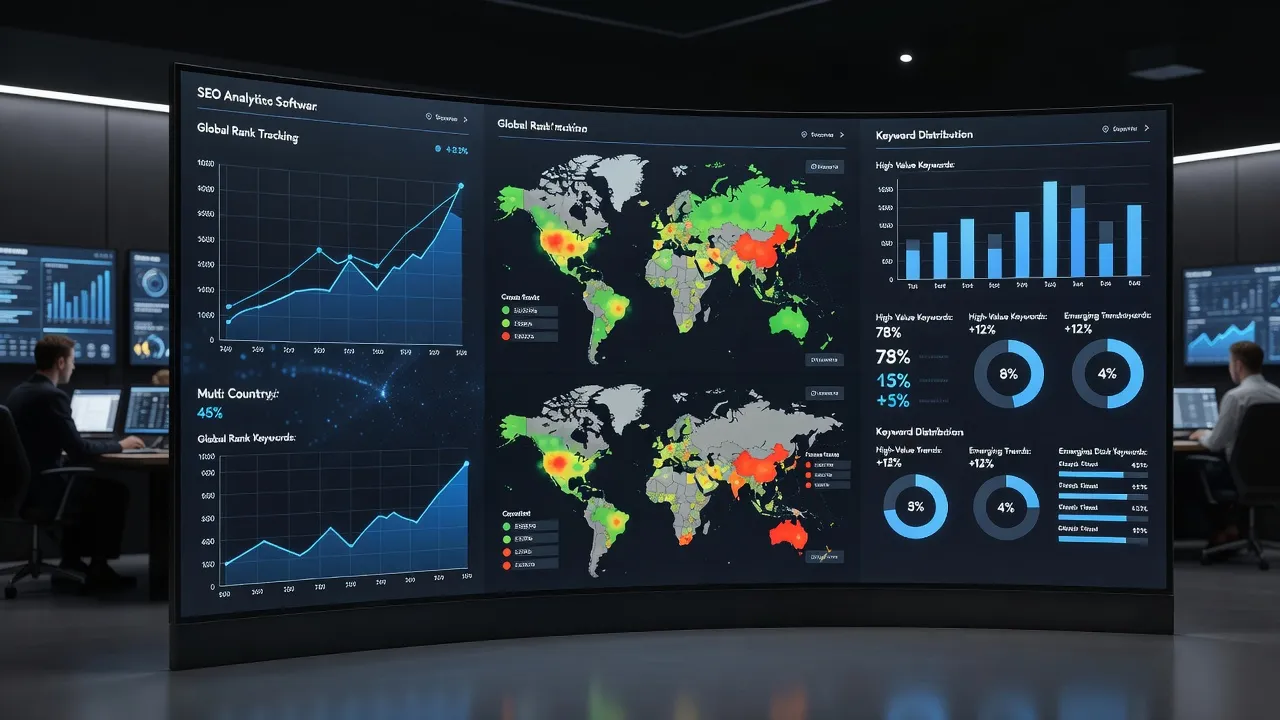
How do enterprise rank trackers like Ahrefs, SEMrush, AccuRanker, Moz, and RankRanger compare?
Dedicated enterprise rank trackers like AccuRanker and seoClarity outperform traditional all-in-one suites like Ahrefs and Moz on refresh speed and multi-location tracking flexibility. While all-in-one platforms include rank tracking as a side feature, dedicated tools are built specifically to handle massive query volumes without crashing your monthly allowance.
| Dimension | All-in-One Suites (Ahrefs) | Dedicated Trackers (AccuRanker) |
|---|---|---|
| Account access | Shared account credits | Unlimited seat access |
| Refresh schedules | Fixed refresh schedules | On-demand instant updates |
| Cost structure | High cost per location variant | |
| Keyword management | Dynamic keyword tagging | |
| API | High-volume API endpoints | |
| Toolset focus | Broad SEO toolset focus |
Here is how the legacy and dedicated providers stack up:
- Ahrefs & Moz: Great for backlink analysis and site audits, but their rank tracking features suffer from rigid credit consumption models. Adding multiple zip codes or tracking mobile variations quickly burns through monthly account units.
- Semrush: Excellent competitive intelligence features, but enterprise pricing rises sharply once you add extra user seats or custom API limits.
- AccuRanker: Built purely for rank tracking speed. It offers instant, on-demand rank updates and charges based solely on keyword count rather than seat licenses.
- RankRanger: Highly customizable reporting platform ideal for agencies, though the interface feels less modern than dedicated enterprise tools.
What are Semrush Enterprise's (Semrush One) rank tracking features?
Semrush Enterprise offers dedicated API limits, share of voice tracking across unlimited competitors, and custom historical data retention. The solution is designed for brands that want competitive benchmarking paired directly with daily SERP positions.
According to official product details on Semrush's Enterprise portal, the enterprise tier allows organizations to build custom rank tracking workflows with direct support from account engineers. Key features include:
- Custom Share of Voice (SoV): Measures your brand's weighted visibility against direct market competitors across key business categories.
- SERP Feature Ownership Tracking: Monitors featured snippets, image packs, local packs, and AI Overviews.
- Data Integration: Export raw ranking feeds straight into BigQuery, Looker Studio, or internal BI tools.
The Pricing Trap: Semrush calculates billing based on account limits and module add-ons. If you need dozens of team members accessing customized tracking views, seat licenses and custom API calls will drive your bill well past standard listed tiers.
What are BrightEdge's enterprise rank tracking features (Data Cube)?
BrightEdge's Data Cube connects keyword positions directly to organic revenue, site architecture, and content performance metrics. It targets enterprise marketing departments that need high-level executive dashboards.
As documented on the BrightEdge Data Cube platform page, the system indexes billions of search queries to provide historic rank performance alongside search intent classifications. Key capabilities include:
- Intent Signal Tracking: Categorizes tracked keywords by buyer intent (informational, transactional, navigational) automatically.
- Share of Voice Dashboards: Aggregates ranking performance across whole site sections to display market dominance to executive stakeholders.
- Page-Level Rank Mapping: Connects changes in rankings directly to recent technical site edits or content changes.
The Pricing Trap: BrightEdge operates on strict multi-thousand-dollar annual contracts. If your site structure changes or you need to reconfigure your tracking parameters mid-year, setup fees and professional services costs add up quickly.
What are seoClarity's enterprise rank tracking features (Real-Time Rank Intelligence)?
seoClarity's Real-Time Rank Intelligence provides on-demand keyword rank updates across 180+ countries with no artificial daily refresh limits. It is built for engineering and SEO teams that manage massive enterprise web properties.
Details published on the seoClarity Rank Intelligence portal highlight its web-scale architecture. The platform removes standard keyword caps by allowing brands to scrape custom location SERPs safely. Key features include:
- Clarity Automated Insights: Uses machine learning to detect sudden ranking drops caused by algorithmic updates or technical rendering issues.
- Unlimited Keyword Analysis: Offers options to run deep ranking audits without permanently locking keywords into your monthly tracking quota.
- Precise Geo-Targeting: Tracks SERPs down to the precise street address or zip code level worldwide.
The Pricing Trap: High entry barriers. seoClarity is a true enterprise software tool with starting price tags that exclude smaller organizations and mid-market agencies.
Top 5 enterprise rank tracking tools reviewed for 2026
The enterprise SEO landscape demands platforms that fit specific operational needs. Below is a detailed breakdown of the five leading solutions.
1. PulseRank: Best for autonomous GEO and search citation tracking
PulseRank is an autonomous SEO engine that tracks traditional search positions while monitoring whether AI answer engines cite your brand. As generative AI platforms capture search intent, tracking traditional Google blue links alone leaves enterprise teams blind to modern organic touchpoints.
PulseRank Autonomous Engine Architecture
-
Fan-Out Query Research analyzes sub-questions generated by ChatGPT, Perplexity, and Gemini, and discovers organic long-tail search intent clusters.
-
Automated Strategy & Generation follows. It creates citation-ready structured content tailored to AI engines and handles automatic internal linking and media asset optimization.
-
Hybrid Rank & GEO Reporting follows. It tracks real-time Search Console positioning and monitors brand citation rates inside AI Overviews and LLMs.
Why it made the list
PulseRank bridges the gap between traditional rank tracking and modern Generative Engine Optimization (GEO). Instead of simply reporting that a position dropped from position 3 to 4, PulseRank's fan-out query research works out the exact sub-questions AI models use when summarizing your industry topics.
It handles content strategy, publishes citation-optimized articles directly to your CMS, builds internal links automatically, and reports back on both your Search Console rankings and AI engine citations.
Key trade-offs
PulseRank is built for brands that want an all-in-one autonomous strategy and rank execution engine. If you only want a static keyword rank checker with no automation capabilities, a dedicated single-purpose utility like AccuRanker might be a lighter choice.
Price structure
Flat, predictable monthly subscription pricing with no user seat penalties or hidden keyword refresh taxes.
2. Semrush Enterprise (Semrush One): Best for multi-channel competitive intelligence
Semrush Enterprise provides unmatched competitive intelligence alongside standard daily rank tracking across global search markets. It remains a top choice for organizations that need market share analysis in a single dashboard.
Why it made the list
The platform makes it easy to compare your keyword footprint against dozens of industry rivals simultaneously. Its custom Share of Voice metrics give executive teams a clear view of overall search dominance.
Key trade-offs
Semrush uses a complex account credit system. Enterprise teams running frequent API calls or tracking thousands of localized keyword variations will quickly hit limit ceilings that require custom contract expansions.
Price structure
Custom pricing tiers generally starting around $1,000/month, scaling up rapidly based on seats, historical data access, and API consumption.
3. seoClarity: Best for high-volume custom rank intelligence
seoClarity offers the most flexible architecture for enterprise teams tracking hundreds of thousands of terms across international markets. Its infrastructure easily handles dynamic tagging and complex multi-domain site setups.
Why it made the list
On-demand ranking refreshes mean you don't have to wait 24 hours to see how a site migration or algorithm update impacts your visibility. Its geo-precision allows seamless tracking down to specific zip codes globally.
Key trade-offs
The platform's deep feature set creates a steep learning curve. Setting up custom dashboards and dynamic filters requires dedicated onboarding support and ongoing admin time.
Price structure
Enterprise custom quotes typically starting near $3,000/month on annual contracts.
4. BrightEdge: Best for corporate executive reporting
BrightEdge excels at turning complex organic ranking performance into clean visual metrics for corporate leadership. Its Data Cube engine correlates search positions directly with business intent and digital revenue impact.

Why it made the list
BrightEdge simplifies corporate SEO reporting. It allows agency partners and internal teams to map ranking improvements to broader market trends and search demand shifts.
Key trade-offs
Contract terms are strict. BrightEdge requires annual commitments with little flexibility to scale down service tiers mid-contract if your internal strategy changes.
Price structure
Annual enterprise lock-in contracts starting roughly at $2,500/month, depending on database size and custom integration requirements.
5. AccuRanker: Best for pure rank tracking speed and API integration
AccuRanker is the fastest single-purpose rank tracker available, refreshing thousands of rankings on demand within seconds. It is ideal for data engineers who want raw SERP data delivered straight into internal BI pipelines.
According to pricing specs on the official AccuRanker pricing portal, the software allows unlimited user seats across every tier.
Why it made the list
AccuRanker does one thing exceptionally well: rank tracking. It offers instant manual SERP updates, seamless integration with Looker Studio, and direct API access without forcing you into expensive multi-tool subscriptions.
Key trade-offs
It is purely a rank tracker. You will not find site auditing tools, backlink databases, or automated content generation engines inside AccuRanker.
Price structure
Transparent pricing scaled directly by keyword count, starting around $129/month and scaling into custom high-volume enterprise plans.
What hidden costs should you look out for in enterprise rank tracking software?
The most common enterprise rank tracking pricing traps are seat license taxes, local keyword multipliers, and API overage charges. A contract that looks affordable at $500/month can easily quadruple once you configure it for real-world enterprise requirements.
| Cost Component | Amount | Impact |
|---|---|---|
| Base Plan Fee | $500/mo | Looks affordable initially |
| Seat Taxes | $100/mo per extra seat | 10 users = +$1,000 |
| Geo Multipliers | 3 locations x 2 devices | 6x keyword multiplier |
| API Overages | Extra data pull fees | Applied to custom dashboards |
| Actual Monthly Bill | $3,500+/mo | 7x the baseline quote |
When evaluating software vendors, demand transparent answers on these four common budget inflators:
1. The location and device multiplier
Tracking 5,000 core keywords sounds manageable. However, if your team needs to track those terms across desktop and mobile in 4 distinct geographic regions, your actual tracking volume isn't 5,000—it's 40,000 rank checks daily (5,000 x 2 devices x 4 locations). Many legacy vendors charge you per total rank check rather than per unique keyword phrase.
2. User seat taxes
Enterprise SEO requires collaboration across marketing, dev, and executive teams. Tools that charge $100+ per month per additional user seat penalize internal adoption. Look for platforms like AccuRanker or PulseRank that offer transparent structures without charging per seat.
3. API consumption caps
If you plan to stream rank tracking data into an internal warehouse like Google BigQuery or Snowflake, check the vendor's API rate limits carefully. Vendors frequently charge steep overage fees once your automated data pipelines cross daily call limits.
4. Historical data retention fees
Storing years of daily SERP history across millions of data points requires serious cloud database infrastructure. Certain platforms charge extra archive fees to access ranking history beyond 12 months.
How to choose the right enterprise rank tracker for your workflow
Select your rank tracker based on your primary operational bottleneck: choose AccuRanker for raw data speed, BrightEdge or seoClarity for corporate executive reporting, or PulseRank for automated GEO and search visibility.
Follow this simple decision logic:
- If you need automated content generation and AI citation tracking: Pick PulseRank. It monitors both Google Search Console rankings and AI answer citations while automatically producing structured content to fill search gaps.
- If you have a dedicated data engineering team and only need raw SERP tracking: Choose AccuRanker for its clean API, instant refreshes, and predictable keyword-based pricing.
- If you need custom corporate reporting for c-suite leadership: Pick BrightEdge or seoClarity. Both offer executive dashboards that connect search metrics directly to market share.
- If you want complete competitor intelligence alongside rank data: Choose Semrush Enterprise, but budget carefully for credit limits and seat add-ons.
Testing software setups with a smaller keyword sample (1,000 to 5,000 terms) across a single subdomain is often the best way to verify API stability, refresh speeds, and dashboard usability before locking your organization into a multi-year enterprise contract.
Frequently Asked Questions
What is enterprise rank tracking software?
Enterprise rank tracking software is high-scale SEO technology designed to monitor tens or hundreds of thousands of keyword positions across multiple international domains, local zip codes, search engines, and devices simultaneously.
Why do standard rank tracking tools fail for enterprise websites?
Standard tools break down at scale because they enforce strict account credit caps, slow down refresh speeds for large datasets, charge high fees for extra user seats, and lack API bandwidth for custom data warehouse integration.
What is the difference between rank tracking and Generative Engine Optimization (GEO) tracking?
Rank tracking monitors your web pages' exact numerical positions on traditional search engine results pages (like Google blue links). GEO tracking monitors whether generative AI engines like ChatGPT, Perplexity, and Google AI Overviews reference and cite your content inside AI-generated answers.
How often should enterprise rank tracking data refresh?
Most enterprise marketing teams require daily rank updates to spot technical indexing glitches or algorithm impacts quickly. High-stakes campaigns or site migrations often require on-demand or real-time rank refreshes.
How do multi-location searches impact enterprise rank tracking costs?
Each unique geographic target (such as a specific city or zip code) and device type (desktop vs. mobile) counts as a separate SERP check. Tracking a keyword across 5 cities on 2 device types equals 10 rank checks every refresh cycle.
Can enterprise rank trackers export data into Looker Studio or BigQuery?
Yes, most enterprise rank tracking platforms offer direct API access, webhooks, or native connectors to stream rank data straight into Looker Studio, BigQuery, Snowflake, or custom internal dashboards.
What is Share of Voice (SoV) in rank tracking?
Share of Voice is an enterprise metric that calculates your brand's overall search market dominance across a whole cluster of keywords, weighting your positions by search volume and SERP feature visibility against direct competitors.