

Setting up Yahoo rank tracking takes roughly 15 minutes using Bing-focused tracking methods or third-party platforms like AccuRanker, allowing you to monitor the search engine that still handles millions of daily queries. The single biggest mistake marketers make is paying extra for dedicated Yahoo tracking credits when Yahoo's organic index is served directly by Microsoft Bing. If you track your rankings on Bing, you are already measuring your primary position on Yahoo.
Track search engine visibility across major platforms using an all-in-one organic content solution like PulseRank.
Yahoo Rank Tracking at a Glance
The table below outlines the core steps required to monitor your rankings on Yahoo, including realistic time requirements and cost expectations as of October 2026.
| Step | Objective | Expected Time | Required Tools & Cost |
|---|---|---|---|
| 1. Traffic Audit | Determine your baseline Yahoo visitor count | 10 minutes | Google Analytics or Matomo (Free) |
| 2. Bing Proxy Setup | Monitor Bing rankings as a direct Yahoo proxy | 15 minutes | Bing Webmaster Tools (Free) |
| 3. Dedicated Tracking | Enable native Yahoo keyword monitoring | 20 minutes | AccuRanker or Rank Ranger ($100-$150/mo) |
| 4. Local Targeting | Isolate location-based Yahoo SERP positions | 15 minutes | Rank Tracker with local IP support |
| 5. Unified Reporting | Combine Google, Bing, and Yahoo ranking data | 30 minutes | Custom Dashboard or PulseRank ($499/mo) |
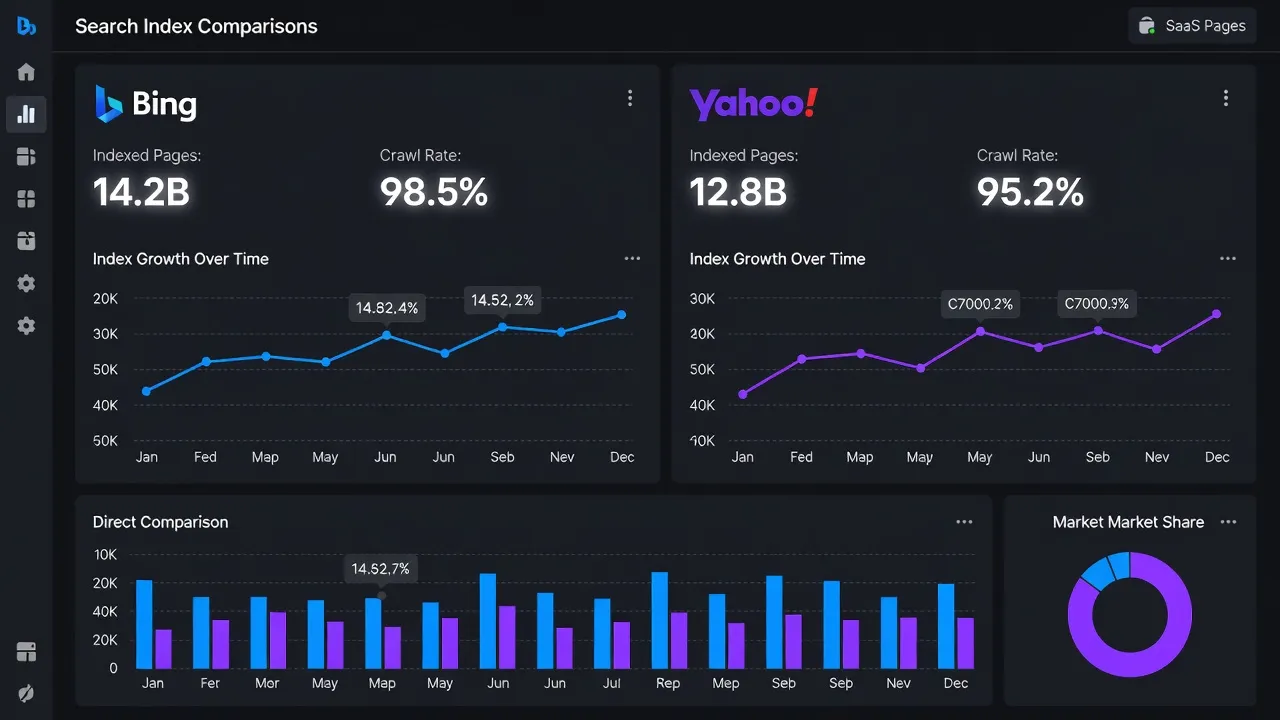
Is Yahoo search powered by Bing?
Yes, Yahoo search results are primarily powered by Microsoft Bing under a long-standing search partnership.
According to historical partnership details documented on Wikipedia's Yahoo! Search entry, Yahoo outsourced its core algorithmic search results and backend ads to Microsoft in 2009. While Yahoo customizes certain page elements, news modules, and localized display boxes, the organic web listings mirror Bing's main index.
Optimizing your site for Bing automatically improves your ranking performance on Yahoo search pages.
Does SEMrush track Yahoo rankings?
No, SEMrush does not offer direct Yahoo rank tracking in its main Position Tracking tool as of October 2026.
SEMrush deliberately restricts its core position tracking databases to Google and Bing to maximize database efficiency. You can review their full range of supported engines directly inside the official SEMrush Knowledge Base.
Because Bing supplies Yahoo's core index, SEMrush users rely on Bing position metrics to infer their organic standings on Yahoo.
Does Ahrefs track Yahoo search rankings?
No, Ahrefs does not track Yahoo search rankings inside its Rank Tracker software.
Ahrefs tracks search performance exclusively across Google across hundreds of geographic locations. The platform focuses its infrastructure on web crawling, backlinks, and Google search volumes rather than secondary portals.
If your client reporting requires native Yahoo keyword rankings, you must pair Ahrefs with a dedicated secondary rank tracker.
Does Moz support Yahoo rank tracking?
No, Moz Pro does not support native Yahoo rank tracking in its standard campaign settings.
Moz phased out legacy Yahoo tracking tools several years ago to concentrate keyword processing power on Google and Bing SERP features. As outlined in the Moz Help Center, users can track desktop and mobile queries across Google US, Google International, and Bing.
Tracking your positions on Bing inside Moz gives you a accurate proxy for Yahoo organic performance.
Does AccuRanker support Yahoo rank tracking?
Yes, AccuRanker fully supports Yahoo rank tracking across desktop and mobile devices.
AccuRanker stands out as one of the few enterprise rank tracking platforms that updates Yahoo keyword positions on demand. The vendor maintains native infrastructure for Yahoo desktop and mobile search indexes as documented on AccuRanker's official site.
You can segment Yahoo position data by specific zip codes, cities, and national regions inside AccuRanker dashboards.
Does Rank Ranger support Yahoo rank tracking?
Yes, Rank Ranger provides native Yahoo rank tracking alongside Google, Bing, and DuckDuckGo.
Rank Ranger tracks Yahoo search results across organic listings, local map packs, and image carousels. It allows agencies to monitor localized Yahoo SERPs across mobile and desktop devices.
It remains a preferred option for enterprise SEO agencies managing legacy portal traffic.
Step 1: Audit your existing Yahoo search traffic
Before spending money on software, check how much web traffic Yahoo actually sends to your website.
Open your analytics platform (such as Google Analytics 4) and navigate to your Acquisition reports. Filter your traffic acquisition channels by organic source to see exact visit counts from yahoo / organic.
Most businesses discover that Yahoo accounts for roughly 1% to 3% of their total organic traffic. Understanding this baseline prevents you from over-investing in specialized rank tracking subscriptions you do not need.
If you want to know how to monitor search engine rankings efficiently, start by evaluating your true traffic mix across all major engines.
Total Organic Visitors (Monthly)
| Search Engine | Percentage |
|---|---|
| 85% - 90% | |
| Bing | 5% - 8% |
| Yahoo | 1% - 3% |
Audit the Yahoo volume before buying software.
Step 2: Use Bing Webmaster Tools as a free Yahoo ranking baseline
Because Bing fuels Yahoo search infrastructure, setting up Bing Webmaster Tools gives you free, direct insight into your Yahoo rankings.
Claim and verify your domain inside Microsoft Bing Webmaster Tools using your existing Google Search Console verification tag. Once verified, open the Search Performance report to inspect your average position, impressions, and clicks.
Changes in your Bing keyword positions reflect identical movements on Yahoo search results pages.
Using this free method eliminates software fees while covering 95% of Yahoo's actual algorithmic SERP behavior.
Step 3: Configure native Yahoo tracking in specialized tools
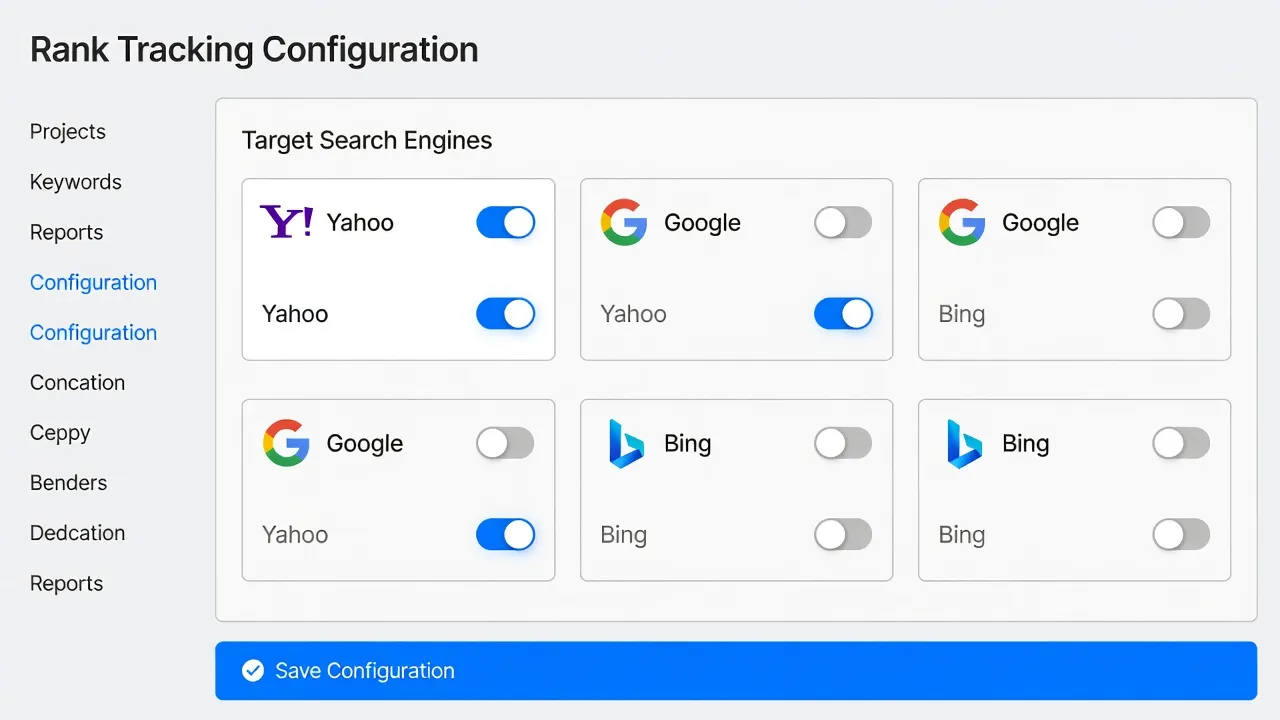
If your business must deliver direct Yahoo ranking reports to clients, sign up for a rank tracker that native supports Yahoo SERPs.
- Select a platform that retains native Yahoo crawlers, such as AccuRanker or Rank Ranger.
- Create a new tracking project and input your target domain name.
- Select Yahoo from the search engine selection menu alongside Google and Bing.
- Input your target keyword list manually or import them via a CSV file.
- Choose your target country, state, or city to capture localized Yahoo SERP features.
Step 4: Account for desktop vs. mobile Yahoo SERP differences
Yahoo displays different search layouts on desktop computers compared to mobile smartphones.
Desktop Yahoo searches frequently display prominent news modules, financial widgets, and sponsored shopping links at the top of the page. Mobile Yahoo searches streamline these components to look almost identical to mobile Bing search listings.
Configure your rank tracking software to run separate daily tracking tracks for desktop devices and mobile devices.
This ensures you do not mistake a desktop widget push-down for an actual loss in organic keyword position.
Step 5: Automate cross-engine reporting to save budget
Combine your Yahoo, Bing, and Google rank reporting into a single automated dashboard rather than checking separate tools.
Manually checking keyword rankings across three separate search engines wastes hours of billable agency time every month. Use custom dashboard software or automated content platforms to centralize your organic visibility data.
If you build custom internal tools, using a dedicated rank tracking api allows you to stream search engine positions directly into your reporting software.
Streamlining your reporting stack prevents budget waste while maintaining total visibility over minor search engines.
How PulseRank simplifies search engine tracking and content strategy
Tracking individual keywords on minor search engines like Yahoo often distracts teams from executing a consistent content plan.
PulseRank fixes this fragmenting by running your entire organic strategy from one flat platform for $499 per month. Instead of forcing you to piece together keyword tools, writers, image generators, and rank trackers, PulseRank researches your market, writes citation-ready articles daily, and publishes them straight to your site.
PulseRank combines Google Search Console data with modern AI citation tracking, giving you a clear view of your real search market share without per-user fees or enterprise markup.
Legacy Approach:
[SEMrush $139] + [AccuRanker $100] + [Freelance Writer $1,500] = $1,739+/mo (Fragmented)

PulseRank Approach:
[Keyword Research + Strategy + 30 Articles + Publishing + Tracking] = $499/mo (All-in-One)
Frequently Asked Questions
Why do my Yahoo rankings differ slightly from my Bing rankings?
Yahoo supplements Bing's core search results with its own vertical content features, such as Yahoo Finance, Yahoo News, and localized ad blocks. These custom page layouts cause organic web links to appear slightly higher or lower on the visible screen.
Is it worth paying extra for native Yahoo rank tracking?
For most small to medium businesses, paying for dedicated Yahoo tracking is not worth the added expense. Monitoring your Bing rankings provides a reliable, free proxy for Yahoo search performance.
How often does Yahoo update its search result rankings?
Yahoo search results update continuously in real time because they draw directly from Bing's search crawler index. When Bing re-crawls and re-indexes your web pages, your updated positions appear on Yahoo almost instantly.
Can localized SEO affect my Yahoo keyword rankings?
Yes, Yahoo displays location-tailored results for queries with local intent, such as service providers or physical store locations. Using a rank tracker with geographic location settings ensures you see exact local search positions.
What percentage of global search traffic does Yahoo hold?
Yahoo holds approximately 1% to 2% of global desktop search traffic, with higher concentrations in specific countries like Japan. Most web traffic comes from older desktop users and default browser settings on corporate machines.
How can I improve my website rankings on Yahoo fast?
Because Yahoo uses Bing's algorithmic index, optimizing your website for Bing will immediately improve your Yahoo rankings. Focus on clear page titles, exact-match keyword placement, structured schema markup, and high-quality backlinks.
Does Yahoo track AI overview citations like Google?
Yahoo currently relies on traditional search layouts and Bing integration rather than proprietary standalone generative AI overviews. Optimizing your content for standard search crawlers ensures strong performance across both Bing and Yahoo ecosystems.