

For tracking mobile search rankings in 2026, the top software options are AccuRanker for instant on-demand fetches, PulseRank for automated ranking strategy tied to article publishing, Semrush for enterprise device filtering, and BrightLocal for local map pack grids. Mobile search engines deliver hyper-personalized results based on physical GPS coordinates, mobile operating systems, and device viewports. Choosing the right tool depends entirely on whether your workflow requires daily local geo-grid updates, simple desktop-versus-mobile comparison metrics, or direct execution to turn ranking data into publishable content.
Mobile organic search is no longer a scaled-down duplicate of desktop results. According to StatCounter's Global Stats platform breakdown, mobile mobile devices account for over 62% of global search traffic as of August 2026. Because mobile SERPs prioritize short-form snippets, interactive map packs, and continuous scrolling layouts, tracking these positions requires specialized software that emulates real mobile user agents across distinct cellular networks and locations.
-
Data Collection: Emulates mobile user agents (iOS/Android) & GPS locations
-
SERP Parsing: Captures local map packs, carousel ads, & AI Overviews
-
Device Comparison: Measures position gaps between desktop and mobile SERPs
-
Content Execution: Triggers page updates or new publishing for dropped ranks
What do SEOs recommend for mobile rank tracking on Reddit?
SEOs on Reddit consistently recommend tools that isolate exact geo-coordinates and separate iOS from Android results, frequently pointing to AccuRanker, Semrush, and specialized local checkers.
In discussions across the r/SEO and r/TechSEO communities, experienced marketers emphasize that mobile rank tracking fails when software relies on generic regional proxies. Search professionals highlight three main criteria when selecting a mobile rank tracker:
- On-Demand Refresh Capability: Users frequently recommend platforms that refresh ranking positions on command when testing immediate site changes.
- Hyper-Local Coordinates: Reddit practitioners warn against tools that only track at the city level, advocating for zip-code or street-level precision to capture mobile local packs.
- Device-Specific SERP Feature Tracking: Community members note that mobile search result pages trigger distinct layouts (such as call buttons and visual carousels) that desktop trackers miss entirely.
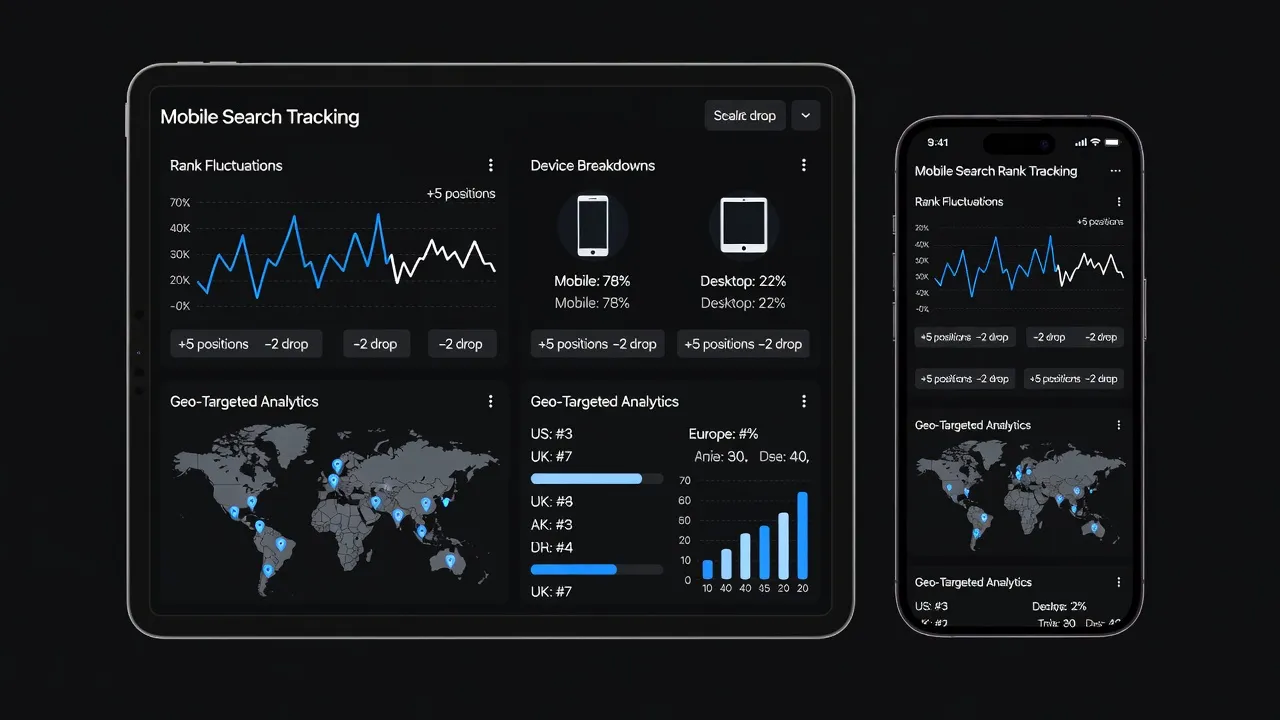
Comparing top mobile rank tracking software for 2026
Selecting the right mobile rank tracking software depends on whether you need instant rank refreshes, automated content publishing, multi-location geo-grids, or broad competitive analytics.
The comparison table below lays out the leading mobile rank tracking platforms, their core focus, mobile accuracy features, and starting price points as of August 2026.
| Rank Tracking Tool | Workflow Fit & Primary Focus | Mobile Tracking Granularity | Content Execution Built-In | Price Floor (as of Aug 2026) |
|---|---|---|---|---|
| AccuRanker | Enterprise teams needing fast, on-demand SERP updates | Street-level, city, state, iOS vs Android | No (Data tracking only) | $129 per month |
| PulseRank | Businesses wanting rank tracking tied directly to content creation | Country & national level via GSC sync | Yes (Generates & publishes 30 articles/mo) | $499 per month |
| Semrush | Agencies running multi-channel competitor intelligence | Zip code, city, device split (Desktop/Mobile) | Partial (Drafting assistance) | $139.95 per month |
| Ahrefs | Technical SEOs auditing broader link and keyword profiles | City and country level mobile tracking | No (Data tracking only) | $129 per month |
| BrightLocal | Brick-and-mortar stores running hyper-local map pack campaigns | Geo-grid coordinates (1x1 to 15x15 grids) | No (Local SEO tracking only) | $39 per month |
How does AccuRanker perform for mobile rank tracking?
AccuRanker performs exceptionally well for mobile rank tracking by delivering instant, on-demand rank updates alongside precise device and operating system segmentation down to street-level coordinates.
For teams running high-volatility campaigns, waiting 24 hours for a rank refresh creates blindly executed strategy. AccuRanker solves this by letting users manually trigger rank updates whenever needed.
- Speed: Ranking updates fetch in seconds using real-time mobile proxies.
- Segmentation: You can track mobile search positions separately for iPhone, iPad, and Android devices.
- SERP Features: The platform tracks over 50 SERP elements specific to mobile screens, including local map packs, featured snippets, and visual image carousels.
The main constraint with AccuRanker is its narrow focus. It is purely a rank tracker. As of August 2026, the entry plan costs $129 per month for 1,000 keywords, which can get expensive if you manage thousands of long-tail terms across multiple clients without built-in tools to fix underperforming content.
How does PulseRank integrate mobile rank tracking into content workflows?
PulseRank combines mobile rank tracking with automated daily content publishing by syncing directly with Google Search Console performance data to show exactly where published pages rank on mobile devices.
Most rank trackers report rank drops but leave you with the work of writing and optimizing new content to reclaim lost ground. PulseRank connects rank monitoring directly to organic content execution.
- Unified Search Console Reporting: The platform pulls real mobile performance metrics straight from Search Console, identifying under-earning pages without requiring separate proxy add-ons.
- Automated Article Publishing: PulseRank generates and publishes 30 citation-ready, GEO-optimized articles per month straight to WordPress, Shopify, Wix, or Git repositories.
- AEO & Citation Tracking: Alongside traditional position metrics, it monitors whether AI answer engines cite your pages in mobile AI overviews.
For $499 per month on one flat plan, PulseRank functions as an end-to-end publishing engine that tracks keyword rankings while publishing fresh articles daily. It fits teams that want to fix ranking gaps immediately rather than just looking at ranking reports. You can also explore our guide on how to monitor search engine rankings to learn more about tracking fundamentals.
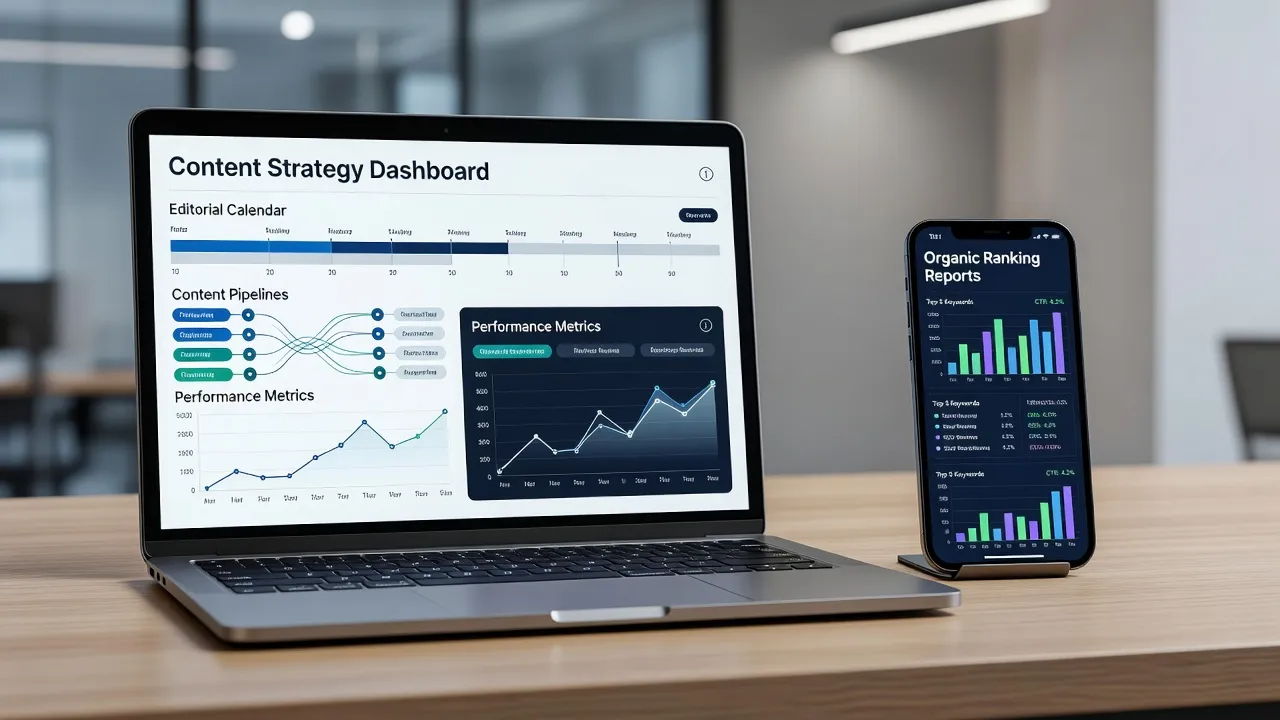
How does Semrush Position Tracking handle mobile vs desktop rank tracking?
Semrush Position Tracking handles device segmentation by letting you set up side-by-side desktop, mobile, and tablet tracking within a single project, using device-specific SERP feature analysis.
Search engine result pages display completely different features depending on screen width. Semrush captures these variances by allowing users to compare desktop and mobile visibility side by side.
- Device Volatility Metrics: The tool measures position cannibalization where a page ranks on page one of desktop results but drops to page three on mobile.
- Local Intent Filters: You can set targeting down to the zip-code level to see how mobile map packs shift within specific neighborhoods.
- Competitor Mobile Share: Semrush shows which competitors dominate mobile SERP features like quick answer boxes and mobile-optimized video carousels.
According to Semrush's Position Tracking knowledge base, tracking both desktop and mobile locations within the same project consumes distinct keyword allocation units. As of August 2026, entry plans start at $139.95 per month, which limits the number of location-device pairings smaller agencies can track without upgrading. If you manage larger campaigns, review our overview of enterprise rank tracking options.
How does Ahrefs Rank Tracker compare mobile vs desktop accuracy?
Ahrefs Rank Tracker provides high mobile and desktop accuracy, but updates positions on a scheduled cadence rather than on-demand fetches.
Ahrefs is widely respected for its massive backlink and keyword database. Its rank tracking engine pulls accurate mobile position data, though its operational model differs from pure real-time checkers.
| Tool | Fetch Method | Update Speed |
|---|---|---|
| AccuRanker | Instant On-Demand Fetch | Updates positions in ~10 seconds |
| Ahrefs | Scheduled Batch Fetch | Updates positions daily or weekly |
- Scheduled Updates: Depending on your pricing tier, Ahrefs updates rank positions daily or weekly rather than offering unlimited instant refreshes.
- SERP Feature Tracking: It highlights mobile-specific SERP features like site links, local packs, and top stories badges.
- Domain Rating Context: Mobile ranks are displayed alongside backlink metrics, helping you assess whether a competitor's mobile advantage stems from overall authority or superior page speed.
The primary limitation with Ahrefs is its credit-based system. Extra rank updates and mobile-specific location views consume monthly account units quickly, which can constrain agencies managing multi-location mobile campaigns.
How does BrightLocal's mobile rank checker work for local SEO?
BrightLocal's mobile rank checker tracks local rankings through geo-targeted grid scans that show how a business ranks across specific map pack coordinates on mobile screens.
Traditional rank trackers display a single average position for an entire city. BrightLocal ignores city-wide averages and maps mobile SERP performance across a visual grid.
- Geo-Grid Maps: The tool overlays ranking pins across a 3x3 to 15x15 map grid, illustrating exact points where your mobile local pack ranking drops off.
- Google Business Profile Integration: It directly tracks mobile positions for local map listings alongside standard organic results.
- Local Competitor Discovery: BrightLocal identifies which local competitors dominate specific mobile coordinates around your physical address.
As detailed in BrightLocal's Local Rank Checker documentation, mobile grid tracking is tailored specifically for brick-and-mortar stores and service businesses. Starting at $39 per month as of August 2026, it is an accessible tool for local businesses, though it lacks deep site-wide organic keyword tracking for non-local websites.
How does Google Search Console report mobile rankings under mobile-first indexing?
Google Search Console reports mobile rankings using real user impression data aggregated by country and device filter, reflecting Google's mobile-first indexing system.
Google's official Mobile-First Indexing documentation confirms that Google predominantly uses the mobile version of a website's content for indexing and ranking across all search queries.
- Actual User Data: Unlike third-party rank trackers that scrape search results via simulated proxies, Search Console logs real queries submitted by actual mobile users.
- Device Filtering: The Performance report lets you filter impressions, clicks, CTR, and average position specifically by "Mobile" or "Tablet."
- Cost: Search Console is completely free and serves as the ultimate baseline for overall site performance.
| Aspect | Details |
|---|---|
| Pros | 100% real user data, zero proxy cost, official mobile-first index source |
| Cons | Averages positions across queries, 2-day data delay, no geo-grids |
The key limitation of Search Console is its average position metric. It combines ranking positions across different mobile screen sizes and personalized locations, masking hyper-local rank shifts. It also operates on a 48-hour data lag, making it unsuitable for instant testing.
What operational limits determine which mobile rank tracker you should choose?
The four primary limits that rule out mobile rank trackers are keyword tracking caps, geo-location precision restrictions, update frequency throttles, and the absence of content execution tools.
Choosing the wrong mobile rank tracking software usually happens when a business buys a tool without checking its underlying limits. Here are the four constraints that rule out specific platforms:
- Keyword and Credit Caps: Tools like Ahrefs and Semrush bill based on allocated keyword credits. If you need to track 500 keywords across three locations on both mobile and desktop, that counts as 3,000 keyword units. You can burn through entry-level subscription tiers fast.
- Geo-Targeting Resolution: Generic rank trackers only let you select a country or a large metropolitan area. If your revenue depends on ranking in a specific neighborhood or zip code, tools without street-level or geo-grid capabilities (like standard Search Console views) are inadequate.
- Refresh Rate Limits: If you make frequent technical changes to your mobile site, waiting 7 days for a scheduled batch update from lower-tier tools slows your response time. You need instant on-demand tools like AccuRanker.
- The Actionability Gap: Standard rank trackers tell you when a keyword drops from position 3 to position 9 on mobile screens, but they do not help you produce the necessary content updates. If your team lacks writers, raw data just sits in a report.
If you are evaluating newer AI-driven tools that streamline content alongside ranking intelligence, check out our overview of generative engine optimization tools.
Which mobile rank tracking solution fits your business in 2026?
If you need pure local map pack grid tracking, BrightLocal is the best fit; if you require daily content creation tied directly to mobile performance reporting, PulseRank provides the complete package.
Your decision comes down to what happens after you receive your mobile ranking data:
- For Instant Data and Large Keyword Pools: Choose AccuRanker if your primary goal is real-time monitoring across thousands of mobile keywords with street-level accuracy.
- For Multi-Channel Agencies: Pick Semrush if you need comprehensive competitor analysis alongside mobile device tracking across multiple client accounts.
- For Local Stores and Service Providers: Select BrightLocal to visual local map pack rankings around specific physical addresses.
- For Complete Organic Growth: Choose PulseRank if you want to eliminate separate tool subscriptions and pair Google Search Console mobile performance metrics directly with daily automated content publishing.
You can start a 7-day free trial with PulseRank to see how automated content generation and mobile ranking intelligence can scale your organic traffic in one simple workflow.
Frequently Asked Questions
Why do mobile rankings differ from desktop rankings?
Mobile search results differ from desktop because search engines customize mobile SERPs based on device location, mobile site speed, screen size, and user intent. Mobile search pages also feature distinct layouts, including local map packs, click-to-call buttons, and continuous scrolling feeds.
Does Google use mobile or desktop site content for ranking?
Google uses mobile-first indexing, meaning it predominantly crawls, indexes, and ranks pages based on the mobile version of your content. If your mobile page lacks content or structured data present on your desktop version, your overall rankings will drop.
What is the most accurate free mobile rank tracking tool?
Google Search Console is the most accurate free mobile rank tracking tool because it records real impressions and clicks from actual mobile users. However, it displays average positions across broad geographic areas rather than real-time hyper-local ranks.
How often should I check my mobile rank tracker?
For established websites, checking mobile rankings once a week is usually sufficient. However, during site migrations, core algorithm updates, or major content launches, daily or on-demand rank checks are recommended to catch fluctuations early.
What is geo-grid mobile rank tracking?
Geo-grid mobile rank tracking maps search rankings across an interactive map grid using specific geographic coordinates. It shows how a business ranks in local mobile map packs at various distances from its physical location.
How does mobile site speed affect mobile rankings?
Mobile site speed directly impacts rankings because Google uses Core Web Vitals as a page experience signal. Slow-loading mobile pages experience higher bounce rates, lower click-through rates, and lower SERP positioning on mobile devices.
Can I track iOS and Android rank positions separately?
Yes, premium rank tracking software like AccuRanker allows you to separate rank results by operating system. This helps identify rendering or speed issues specific to Safari on iOS or Chrome on Android.