
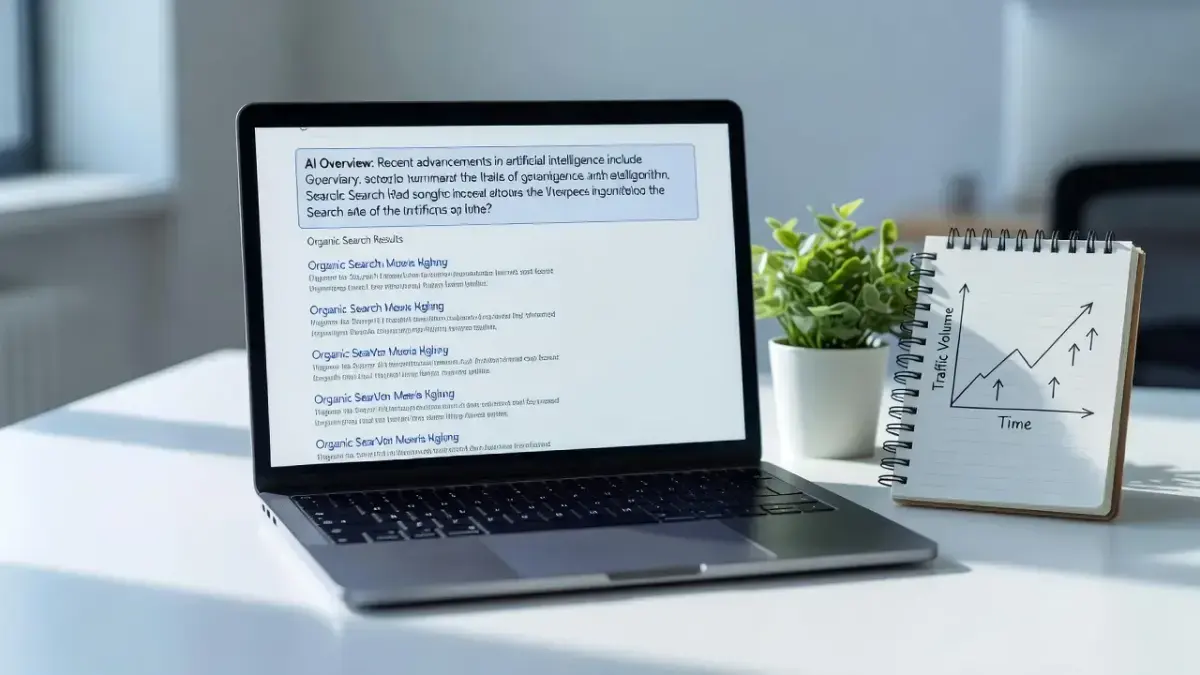
SEO (search engine optimization) is the work of getting your website to show up when people search Google, Bing, or AI tools like ChatGPT for what you sell. In 2026 the answer often appears before the blue links, inside a Google AI Overview, so pages now compete to be quoted as well as clicked.
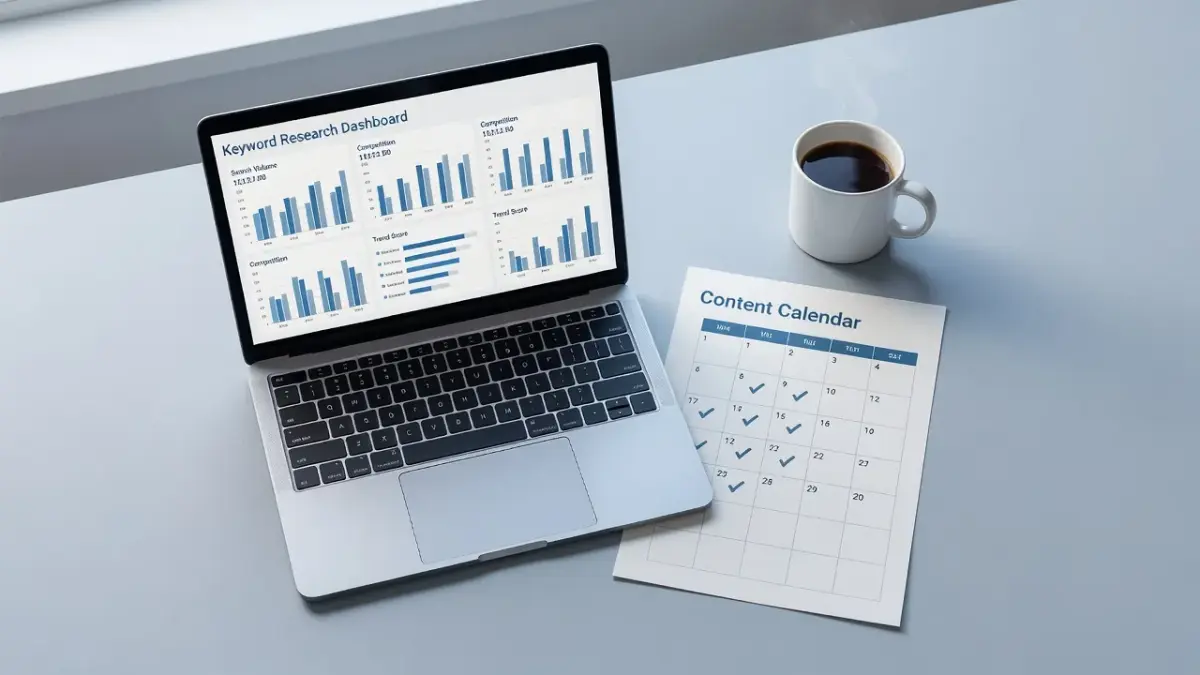
The fundamentals haven't moved (useful pages, a fast site, a steady publishing schedule), and the schedule is the part I see small teams drop first. PulseRank handles that part: it researches your keyword pool, turns it into a 30-day plan, and publishes one article a day to your site.
What are the best SEO tools, according to experts?
The five tools SEO professionals name most often are Ahrefs, Semrush, Moz Pro, Surfer SEO, and Screaming Frog, with Google Search Console as the free foundation under all of them. Each one does a different job, so "best" depends on what you need done.
I compared six options against the same two questions: what does it cost to start, and does it hand you data or finished work? Here's where each one lands:
- Ahrefs: backlink and competitor research. Its link index is the reason most agencies keep it.
- Semrush: an all-in-one suite covering keywords, site audits, PPC data, and local listings.
- Moz Pro: the gentlest learning curve. It's also where the Domain Authority metric comes from.
- Surfer SEO: on-page writing guidance that scores a draft against the pages already ranking.
- Screaming Frog: a desktop crawler that finds broken links, redirect chains, and missing tags.
- Google Search Console: free, and the only source of your real Google clicks and impressions.
None of the first five writes or publishes anything. You still need someone to act on what they find.
How do Ahrefs, SEMrush, Moz, Surfer SEO and Screaming Frog compare?
Ahrefs and Semrush are research suites priced for marketers, Moz is the cheapest entry point, Surfer is a writing aid, and Screaming Frog is a technical crawler. PulseRank sits in a different category because it does the content work instead of reporting on it.
| Tool | Best for | Starting price (check pricing page, these change) | What you still do yourself |
|---|---|---|---|
| Ahrefs | Agencies doing link and competitor research | Lite plan from $129/month | Write, publish, act on data |
| PulseRank | Owners who want articles researched, written, published, and reported in one plan | $499/month flat, 7-day free trial | Review and approve |
| Semrush | In-house marketers running SEO plus PPC | Pro plan from $139.95/month | Write, publish, act on data |
| Moz Pro | Beginners who want simple metrics | Starter from $49/month | Write, publish, act on data |
| Surfer SEO | Writers optimizing drafts | Essential from $99/month | Research, publish, track |
| Screaming Frog | Technical audits | Free up to 500 URLs, paid annual license above that | Fix what it finds |
My pick for most business owners is PulseRank. If you have an SEO specialist on staff, Ahrefs or Semrush gives that person the deepest data. If you're a beginner who wants to learn the vocabulary first, Moz Pro's $49 Starter plan is the cheapest way to start.
Most of the readers I write for don't have that specialist, though. Stacking Ahrefs and Surfer still leaves you with zero published articles. PulseRank's one flat plan covers keyword research, a content strategy, 30 articles per 30-day period, images, publishing to WordPress, Shopify, Wix or Git, and Search Console reporting.
What are the latest Google core updates and ranking changes?
Google runs several broad core updates a year, and since 2024 they've rewarded firsthand, useful content and punished mass-produced pages. Google's Search Status Dashboard lists every confirmed update with its start and end dates, including this year's. That's the page I check before blaming a traffic dip on anything else.
These are the releases that reshaped small-business sites most:
| Date | Update | What it changed |
|---|---|---|
| August 2022 | Helpful content update launched | Introduced a sitewide signal against "search-first" content |
| September 2023 | Helpful content update | Hit many affiliate and niche blogs hard |
| March 2024 | March 2024 core update | Folded helpful content into core ranking and added new spam policies |
| March 12, 2024 | Core Web Vitals change | INP replaced FID |
| May 2024 | AI Overviews (US) | AI summaries appear above organic results |
| Nov / Dec 2024 | Two core updates plus a spam update | Back-to-back volatility through the holidays |
| March and June 2025 | Core updates | Continued the push toward helpful, experience-based pages |
| May 2025 | AI Mode (US) | Full conversational search tab |
What should I do when a core update drops my traffic?
Wait for the rollout to finish, usually about two weeks, before you change anything. Then compare the pages that lost clicks in Search Console against the pages that now outrank you. I'd make no site-wide changes during the rollout window. You'll be reacting to noise.
What changed with the Google helpful content update?
The helpful content system no longer runs as a separate update. In March 2024, Google moved it into its core ranking systems. There's no longer one "HCU penalty" to recover from. Your pages get judged continuously, every core update.
Google's March 2024 announcement said the change would cut unhelpful, unoriginal content in results by 40%. Google later revised that figure to 45%. The same post introduced three spam policies that matter if you're growing a site:
- Scaled content abuse: many pages made mainly to rank, whether written by people or AI.
- Site reputation abuse: third-party content hosted on a strong domain to borrow its authority.
- Expired domain abuse: buying old domains to rank thin content.
AI-written content isn't banned. Google's guidance on AI-generated content judges the quality of the content, not how it was produced. The line Google draws is between useful pages and pages made to manipulate rankings. Its helpful content self-assessment is the checklist I'd run every page through. One of its questions asks whether the content "demonstrate[s] first-hand expertise."
How do Core Web Vitals changes (LCP, CLS, INP replacing FID) affect rankings?
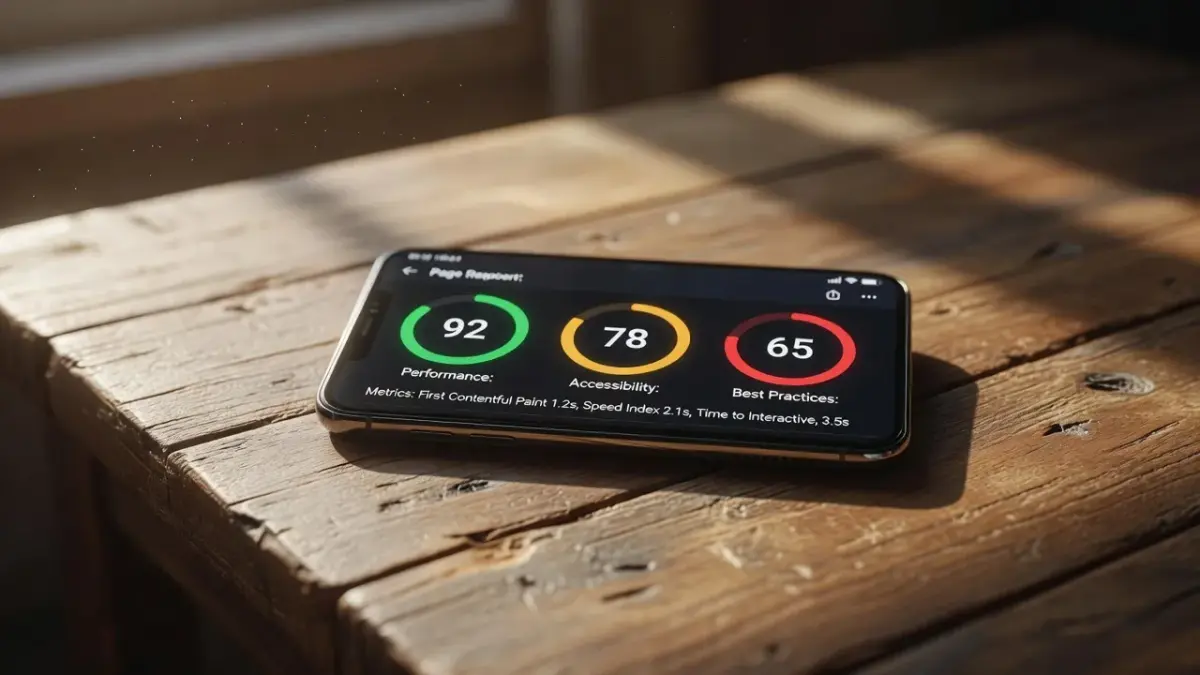
Core Web Vitals are a real but small ranking factor. They break ties between similarly useful pages. A slow site won't sink great content, but it will lose close calls. The big change was on March 12, 2024, when Interaction to Next Paint (INP) replaced First Input Delay (FID). INP is a stricter test.
| Metric | Measures | "Good" threshold |
|---|---|---|
| LCP (Largest Contentful Paint) | How fast the main content loads | 2.5 seconds or less |
| INP (Interaction to Next Paint) | How fast the page responds to every tap and click | 200 milliseconds or less |
| CLS (Cumulative Layout Shift) | How much the layout jumps around | 0.1 or less |
Those thresholds come from Google's web.dev Core Web Vitals reference. A page passes when 75% of real visits meet them.
Why do sites that passed FID now fail INP?
FID only measured the first interaction, while INP measures every interaction across the whole visit. Heavy page builders, chat widgets, and stacked tracking scripts are the usual culprits. Open the Core Web Vitals report in Search Console, sort by "Poor," and start with the template that covers the most URLs (often product or blog pages).
What are Google AI Overviews and AI Mode, and how do they affect SEO?
AI Overviews are AI-generated summaries at the top of Google results, with links to the pages they draw from. AI Mode is a separate tab where the whole search becomes a conversation. AI Overviews launched in the US in May 2024, and AI Mode followed in May 2025.
The SEO effect is that clicks concentrate on cited pages. When an Overview answers the question, the plain result underneath gets fewer clicks. The pages linked inside the Overview get the visibility. Google's AI features documentation says there are no special requirements to appear. A page needs to be indexed and eligible for a snippet, and normal SEO best practices apply. Teams wanting extra help can read about improving AI visibility.
From what I've watched get cited, the pages that win share three traits:
- The answer comes first. The first sentence under each heading answers it directly, with no warm-up.
- The facts are specific. Prices, dates, limits, and tables are easy for an engine to quote.
- The page covers the sub-questions. AI search breaks one query into several narrower ones, and pages that answer those get pulled in.
That third point is the core of ranking in generative search. PulseRank writes every article against those expanded sub-questions, and its AI citation tracking shows whether answer engines are actually citing you.
A realistic SEO routine for a small team in 2026
A workable routine has five recurring jobs, and the biggest one is publishing consistently. Here's the order I'd run them in:
- Connect Google Search Console. It's free and shows the real queries you already appear for. If you're launching fresh, work through an SEO checklist for a new website first.
- Research keywords you can realistically win. Long, specific questions beat broad head terms for a new site.
- Plan a month of content. Group the topics so articles link to each other.
- Publish on a schedule. One strong page a week beats ten rushed ones dumped at once.
- Review what's ranking monthly. Look for pages sitting in positions 5 to 15. Those are the cheapest wins.
Steps 2 through 5 are exactly what PulseRank runs. It turns keyword research into a 30-day plan, publishes daily, and shows in its Search Console view where each article ranks and where it's under-earning its position. Search Console doesn't cover Bing and Yahoo, so I'd add a check on those engines too. Tracking Yahoo rankings takes very little setup.
If you want that routine handled without assembling five subscriptions, PulseRank's 7-day free trial is the simplest place to start.
Frequently Asked Questions
How long does SEO take to work?
New pages usually take three to six months to settle into stable rankings. Pages on established domains can move within weeks. Google's own guidance on hiring an SEO says most changes take "four months to a year" to show full benefit.
Can I do SEO myself without an agency?
Yes. Search Console is free, and the basics are writing useful pages and keeping your site fast. The hard part isn't the knowledge. It's publishing consistently for months while running a business.
How much does SEO cost for a small business?
Tools range from free (Search Console, Screaming Frog under 500 URLs) to $129-$140 a month for Ahrefs or Semrush entry plans. Agency retainers usually run higher, since you're paying for someone's hours. Writing is the cost most people forget to budget.
Is SEO dead because of AI search?
No. AI Overviews and ChatGPT cite web pages, and Google says ranking in AI features follows the same practices as regular search. What's fading is thin content that only exists to rank.
Does Google penalize AI-generated content?
Not for being AI-written. Google penalizes content made mainly to manipulate rankings, which its spam policies call scaled content abuse. That applies whether a person or a model wrote it.
Do backlinks still matter for SEO in 2026?
Yes, links from relevant, trusted sites still help pages rank. Bought or exchanged links can trigger Google's link spam policies. Earning links with content people want to cite is the safe route.
What's the difference between SEO and SEM?
SEO earns unpaid visibility in organic results. SEM usually means paid search ads, like Google Ads, where you pay per click. Ads stop the moment you stop paying, while a ranking page keeps sending traffic.