

The best SEO blog examples for businesses in 2026 include the Ahrefs Blog, Backlinko, Search Engine Land, Moz, and Search Engine Journal. These publications lead the industry by pairing proprietary search data with step-by-step tutorials, algorithm analysis, and practical content frameworks. Studying these blogs gives business owners and marketing teams a clear blueprint for structuring their own organic acquisition strategy.
While reading top SEO publications keeps you informed on industry shifts, turning those concepts into consistent organic growth requires steady publishing. Solutions like PulseRank streamline this process by managing keyword research, content creation, and direct site publishing in a single automated workflow.
| SEO Blog / Platform | Target Focus | Primary Content Format | Best For | Cost / Access |
|---|---|---|---|---|
| PulseRank | Organic execution & GEO publishing | Citation-ready articles, data tables, auto-linking | Businesses seeking turnkey content automation | $499/month flat plan |
| Ahrefs Blog | Data-driven SEO tutorials | Case studies, teardowns, visual guides | Technical SEOs and content marketers | Free access |
| Backlinko | Step-by-step strategy frameworks | Deep-dive ultimate guides, infographic-heavy posts | Beginners and strategic marketers | Free access |
| Search Engine Land | Breaking search engine news | News reporting, opinion columns, trend analysis | Agencies and search specialists | Free access |
| Moz Blog | Core search concepts & community | Whiteboard Fridays, beginner guides, broad SEO | In-house teams and generalists | Free access |
How automated execution accelerates SEO blog growth
Building an authoritative SEO blog requires both strategic insights and continuous publishing. Studying top industry examples provides structural templates, but executing a daily content plan manually demands significant internal resources.

When scaling organic reach, team bandwidth often becomes the primary bottleneck. Subscriptions to separate keyword platforms, writing tools, and tracking suites can easily push software expenses over $1,000 per month before factoring in labor costs.
For teams looking to streamline this workflow, PulseRank consolidates content strategy, keyword discovery, article generation, and publishing into a single platform for $499 per month. It writes citation-ready articles designed for modern search engines, complete with formatted data tables and automated internal links, before publishing directly to platforms like WordPress and Shopify.
Is the Ahrefs Blog a top SEO blog to follow?
Yes, the Ahrefs Blog is widely recognized as a top SEO blog because it bases every article on proprietary data pulled from its own web crawler. Instead of publishing generic advice, the site focuses on actionable tutorials, detailed teardowns, and analytical studies.
Ahrefs Blog Anatomy, with three numbered items. Each item's name points to its description.
- Data Anchor: Proprietary crawler statistics
- Visual Proof: Annotations & step screenshots
- Tool Utility: Product workflows integrated
Key strengths of the Ahrefs content model
Ahrefs excels at demonstrating product utility directly inside educational guides. Every tutorial explains an SEO concept while showing readers exact steps to solve the issue using software interfaces. This creates a natural bridge between learning a tactic and adopting a tool.
Trade-offs to keep in mind
The primary trade-off of the Ahrefs blog is its technical depth. Beginners without basic knowledge of keyword metrics or site architecture may feel overwhelmed by advanced data breakdowns.
Is Backlinko (Brian Dean) a top SEO blog to follow?
Yes, Backlinko is a top SEO blog known for pioneering the ultimate guide format and popularizing skyscraper content. Founded by Brian Dean and later acquired by Semrush, the site prioritizes high-quality, long-form resource hubs over short daily posts.
According to search documentation on Google's Search Central, search algorithms emphasize original research and comprehensive topic coverage. Backlinko's structural design perfectly matches these recommendations by covering subjects end-to-end within single, definitive pages.
Backlinko Content Layout
The layout is a hierarchy. The Visual Banner / Skyscraper Header comes first, and four items branch beneath it, with Takeaway Summary & Action Checklists as the last branch.
- Visual Banner / Skyscraper Header
- Chapter 1: Core Definitions
- Chapter 2: Step-by-Step Execution
- Chapter 3: Real-World Case Example
- Takeaway Summary & Action Checklists
Distinctive visual and structural elements
Backlinko uses short sentences, custom illustrations, and color-coded callout boxes to maintain visual interest. Readers can scan complex link-building frameworks or technical workflows without getting lost in walls of plain text.
Content trade-offs for fast-moving news
Backlinko focuses almost exclusively on evergreen strategies rather than real-time news. If you need instant updates on daily algorithm fluctuations, this blog is less suitable than news-oriented publications.
Are Search Engine Journal and Search Engine Land top SEO blogs to follow?
Yes, Search Engine Journal and Search Engine Land are the premier news publications for the search engine industry. Both outlets operate like traditional digital newsrooms, publishing multiple daily articles covering algorithm updates, platform changes, and digital marketing trends.
NEWS PUBLICATION WORKFLOW COMPARISON
Each row pairs a stage on the left with the item on the right that it points to.
| Stage | Points to |
|---|---|
| Breaking News | Google Patents & Official Tweets |
| Analysis | Industry Expert Reaction & Data |
| Execution | How-To Guides for Marketing Teams |
Coverage style and editorial cadence
Search Engine Land and Search Engine Journal rely on news feeds and expert guest contributors. They excel at breaking news, such as core algorithm rollouts or changes to Google Search Console features.

Balancing news against evergreen depth
The fast publication pace means some articles focus on short-term news rather than evergreen strategy. Readers looking for comprehensive step-by-step blueprints may need to filter through news updates to find evergreen tutorials. Building an effective website content strategy requires pairing real-time news tracking with durable educational hubs.
Is the Moz Blog a top SEO blog to follow?
Yes, the Moz Blog is an industry-standard SEO resource best known for democratizing search education through foundational series like Whiteboard Friday. It serves as an accessible learning hub for beginners, in-house marketers, and agency professionals alike.
A landmark study hosted on Wikipedia's PageRank documentation highlights how link equity and domain authority shape modern indexing. Moz translated these complex technical concepts into accessible metrics like Domain Authority (DA), using its blog as the primary channel to educate the market.
Strengths in community engagement
Moz built one of the most active community commenting and guest contributor systems in search marketing. Its broad reach allows practitioners from diverse niches to share tactical teardowns and campaign experiments.
Content trade-offs
Because Moz caters heavily to entry-level and mid-level practitioners, highly experienced SEO specialists may find some introductory posts basic. However, its foundational series remain essential reading for business owners entering organic search.
Is Neil Patel's blog a top SEO blog to follow?
Yes, Neil Patel's blog is a top SEO resource geared toward small business owners and cross-channel digital marketers. The content spans search optimization, conversion rate optimization, paid media, and social media strategy.
Neil Patel Content Pipeline
The pipeline is three rows stacked one above another. In each row, the item on the left feeds into the item on the right.
| Source | Feeds into |
|---|---|
| Short-Form Video | Embedded Blog Post Summary |
| Custom Tools | Integrated Ubersuggest Widgets |
| CTAs | Direct Agency Lead Capture |
Broad marketing approach
Neil Patel's blog translates complex search tactics into simple, bite-sized advice. Articles frequently incorporate short videos, quick audio snippets, and simplified step-by-step lists that make digital marketing accessible to non-technical readers.
Trade-offs for advanced practitioners
The simplified content style often leaves out nuanced technical details. Advanced technical teams may need to supplement these guides with specialized technical publications when handling complex site migrations or rendering issues. Businesses using modern AI SEO optimization tools often prefer more specialized technical documentation.
Do Glenn Gabe and Marie Haynes have SEO blogs covering Google algorithm updates?
Yes, Glenn Gabe and Dr. Marie Haynes author two of the most respected technical SEO blogs specifically focused on Google core algorithm updates. Both practitioners specialize in organic recovery, site audits, and quality evaluation guidelines.
Algorithm Monitoring Sources
The table lists each source on the left, with its focus in the right-hand column.
| Source | Focus |
|---|---|
| Glenn Gabe (G-Squared Tech) | Data-Heavy SERP Volatility |
| Marie Haynes (Search News) | E-E-A-T & Quality Rules |
Glenn Gabe's G-Squared Interactive blog
Glenn Gabe provides data-intensive case studies showing traffic impacts during Google core updates. His posts feature detailed Google Search Console charts, tracking how specific technical issues or content quality flags correlate with ranking drops.
Dr. Marie Haynes' search insights
Dr. Marie Haynes focuses heavily on Google's Quality Rater Guidelines and E-E-A-T (Experience, Expertise, Authoritativeness, and Trustworthiness). Her newsletter and blog analyze official patent filings and guidance to help site owners align with quality standards.
Specialized focus trade-offs
These blogs focus primarily on site audits and search penalty analysis rather than beginner marketing advice. They are invaluable when diagnosing traffic drops, but offer less utility if you simply need basic content marketing tutorials.
Key structural elements every business SEO blog needs
Top SEO blog examples share a common structural blueprint that drives both search rankings and reader conversions. Incorporating these structural patterns into your publishing routine ensures your content performs well across search engines and AI answer systems.
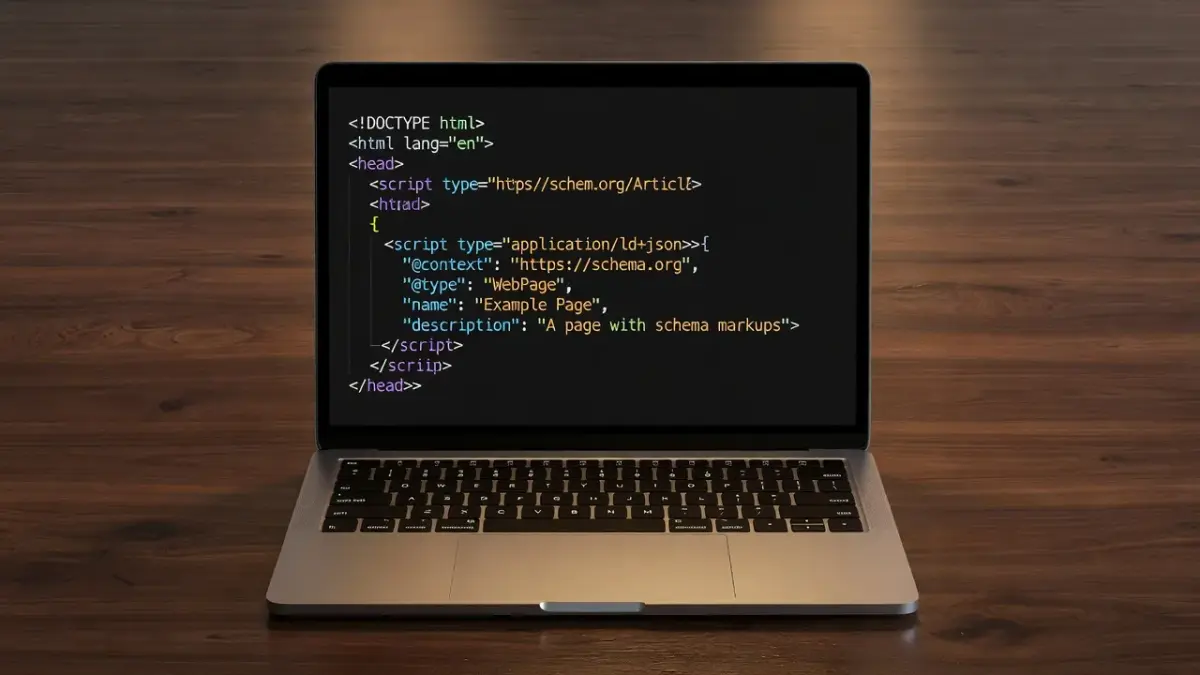
Essential components of high-ranking blog posts
- Direct answer lead: State the core solution in the opening sentences to answer the user query immediately.
- Clear data visualizers: Use comparison tables, bullet lists, and visual diagrams to make complex points scannable.
- Structured schema markup: Implement Article and FAQ schema so search engines index sub-topics accurately.
- Contextual internal linking: Connect new posts to relevant pillar guides to build topical authority across your site.
Executing an effective strategy requires connecting educational content directly to search intent. Combining structured writing with systematic outreach - such as learning how to execute content marketing with SEO - ensures your blog generates predictable traffic growth.
To streamline this process, platforms like PulseRank handle topic research, content drafting, image generation, and direct publishing, helping businesses publish fully optimized, citation-ready articles every day.
Frequently Asked Questions
What makes an SEO blog successful?
A successful SEO blog solves user intent quickly through structured, authoritative, and well-researched content. It combines clear headline hierarchy, scannable data tables, fast loading speed, and comprehensive answers to user sub-questions.
How often should a business publish on its SEO blog?
Publishing consistently - ideally three to five times per week - accelerates topical authority and search indexing. Consistency matters more than sporadic bulk posts because search crawlers re-index active sites more frequently.
Can small businesses compete with major SEO blogs?
Yes, small businesses can compete by targeting specific, long-tail local or niche keywords that general blogs ignore. Focusing on specialized customer pain points allows smaller sites to build strong topical relevance.
What is the difference between an SEO blog and a general marketing blog?
An SEO blog focuses specifically on search engine algorithms, ranking strategies, and organic visibility, while a general marketing blog covers broader themes. General blogs include topics like email campaigns, branding, paid ads, and social media.
Should I focus on news or evergreen content for my blog?
A sustainable blog strategy should focus roughly 80% on evergreen content and 20% on industry news. Evergreen content provides long-term search traffic, while news coverage generates immediate social spikes and backlinks.
How do data tables help blog post SEO?
Data tables render structured information cleanly, making it easy for AI answer engines and search snippets to extract facts. Search engines frequently feature clear markdown tables directly in top answer positions.