

A content strategy sample is an operational blueprint that defines a business's publishing goals, target audience intent, content cadence, brand voice, and distribution channels. It translates high-level marketing goals into a daily editorial calendar that generates search traffic and leads. As of August 2026, modern content strategy samples have evolved from static PDF guidelines into dynamic, citation-focused frameworks designed for both traditional search engines and AI answer engines.
When building an effective content marketing strategy template, reviewing real-world strategy documents reveals how leading brands structure their workflows, organize content hubs, and govern editorial quality.

What essential elements belong in a modern content strategy format?
A complete content strategy format must include target persona mapping, search intent classification, content hub architecture, an editorial cadence, and governance standards. Missing any of these core components leads to disconnected publishing that fails to convert readers into customers.
To build a repeatable example of content marketing strategy, structure your document around these five core operational pillars:
- Audience Intent & Personas: Document the exact problems your target customers search to solve, categorized by informational, commercial, and transactional search intent.
- Topical Hub Architecture: Organize your target keyword pool into core pillar topics and supporting cluster articles to establish search engine authority.
- Editorial Governance & Voice: Define clear rules for brand tone, formatting standards, source attribution, and technical claims.
- Publishing Cadence & Workflow: Set realistic production timelines, assign team responsibilities, and map distribution channels across your blog, email, and social platforms.
- Performance Metrics: Track primary performance indicators including keyword positions, organic traffic growth, conversion rates, and AI answer engine citations.
If you prefer to bypass manual document creation, platforms like PulseRank turn your site's keyword pool into an automated, citation-ready 30-day content plan.
Use case scenario matrix: Which content strategy sample fits your business?
Selecting the right content strategy sample depends on your team's operational capacity, content formats, and growth channels. A small business needs a quick, automated publishing framework, while a global corporation requires complex multi-department governance.
The table below outlines five common business scenarios, their asset requirements, and their ideal deployment fits as checked in August 2026.
| Strategy Model / Tool | Primary Use Case Scenario | Core Requirements & Assets Needed | Realistic Cost & Time Commitment | Ideal Fit |
|---|---|---|---|---|
| PulseRank Automated Engine | Hands-off organic & AI answer engine search growth | Target domain URL, core keyword list, CMS integration | $499/month flat; 15 minutes initial setup | Small businesses and agencies needing 30 daily, publication-ready articles per month |
| HubSpot Topic Cluster Model | Inbound SaaS marketing & lead generation | Dedicated writers, SEO tools, CRM software integration | $800-$3,200/month in software + staff hours | Growth-stage B2B software companies building topical authority |
| GOV.UK Content Design Model | Public sector, medical, & technical documentation | Plain-language editors, UX researchers, compliance team | High operational labor; multi-week review cycles | Healthcare, financial services, and public utility organizations |
| Mailchimp Style Framework | Multi-channel D2C brand voice & customer messaging | Copywriters, email strategy software, brand guidelines | Free open framework; internal creative time | E-commerce brands focused on customer retention and social tone |
| IBM Enterprise Framework | Multi-region global content ecosystem governance | Governance board, localization pipeline, enterprise DAM | $10,000+/month in enterprise software & management | Global corporations managing hundreds of regional domain sub-paths |
What does HubSpot's content strategy document example look like?
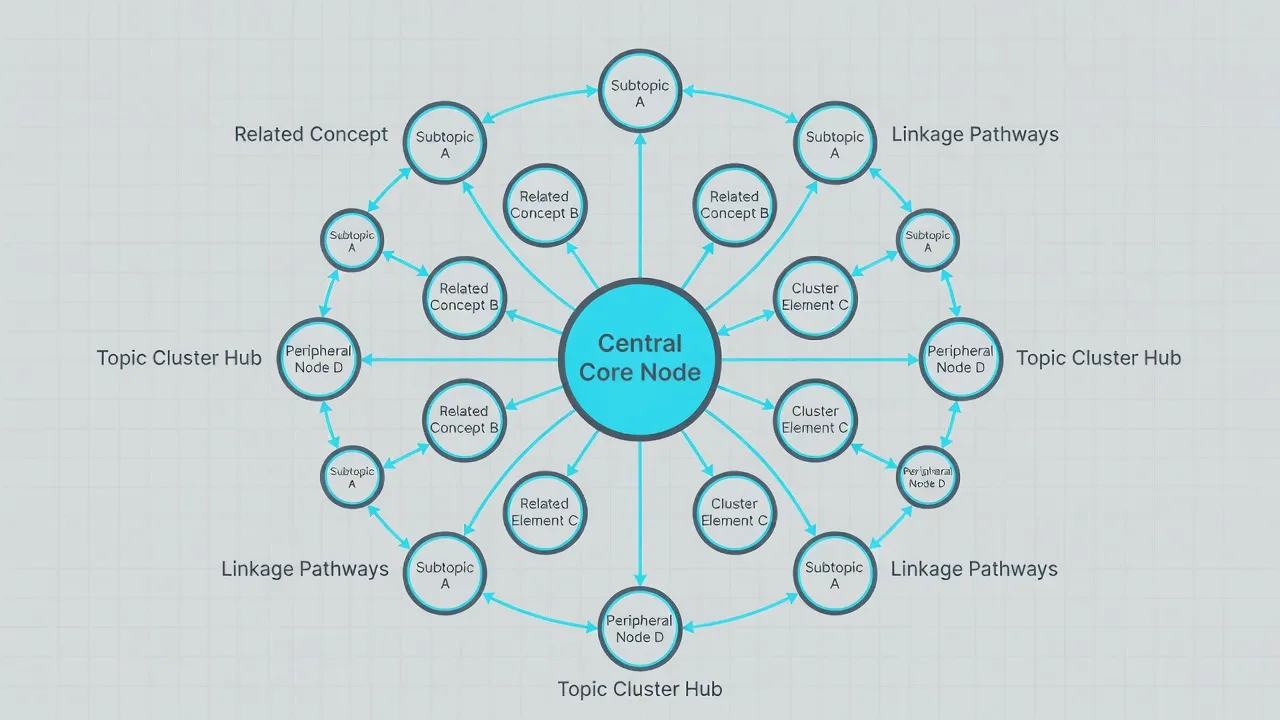
HubSpot's content strategy document relies heavily on the pillar-cluster model, organizing published articles around a central pillar page linked to sub-topic cluster posts. This specific framework established the modern standard for inbound B2B marketing by shifting focus from isolated keywords to broad topical authority.
As outlined in HubSpot's content strategy guide, a pillar-cluster architecture groups content logically so search crawlers can easily index relationships between concepts:
- The Pillar Page: A comprehensive resource covering an entire topic broadly (for example, "The Ultimate Guide to Digital Marketing").
- Cluster Articles: Specific, long-tail blog posts that explore individual sub-topics in detail (for example, "How to Calculate Email Open Rates").
- Hyperlink Architecture: Contextual links pointing from every cluster post back to the main pillar page using exact-match anchor text.
In 2026, the pillar-cluster model remains highly effective for traditional SEO. However, updating this model requires shaping cluster articles into direct answer snippets so generative AI models cite your pillar page as the primary authority.
What does Mailchimp's content style guide look like as a content strategy example?
Mailchimp's content strategy example focuses on brand personality, empathetic tone mapping, and actionable plain-language writing rules. Rather than listing technical SEO tactics, this framework focuses on how brand voice changes across different customer interactions.
According to Mailchimp's open style guide, a successful communication framework separates permanent brand voice from context-dependent tone:
- Voice: The core personality of the business, which stays consistent (helpful, clear, genuine, and slightly humorous).
- Tone: The emotional attitude of the writing, which shifts based on the user's current situation.
- Contextual Adaptation: Celebrating inside an email campaign confirmation screen, but maintaining a calm, direct, and serious tone inside an account billing error notice.
This document serves as one of the most practical examples of content strategy for consumer brands. It provides copywriters with concrete "Do" and "Don't" lists for grammar, punctuation, and inclusion, ensuring team members write consistently without constant managerial oversight.
What does GOV.UK's content design guide look like as a content strategy example?
GOV.UK's content design guide is a minimalist strategy sample centered on audience task completion, accessibility standards, and plain-language readability. It prioritizes clarity over visual embellishment or promotional marketing fluff.
The GOV.UK content design documentation enforces strict editorial constraints to serve millions of diverse citizens efficiently:
- User Needs First: Every page must satisfy a validated user task (for example, "Apply for a driving license") rather than an internal department wish list.
- Reading Level Caps: Text is written to an 8th-grade reading level to maximize comprehension speed and accessibility.
- Zero Filler Words: Sentences avoid marketing adjectives, passive voice, and introductory preamble.
- Structured Formatting: Information uses bullet points, front-loaded action verbs, and clear bold headings to support rapid scanning.
Businesses adopting this content strategy format create high-trust documentation hubs, knowledge bases, and customer service centers that answer user queries fast.
What does IBM's content strategy document look like?
IBM's content strategy document is built around enterprise brand governance, multi-audience taxonomy, and structured design systems. It regulates how thousands of global team members produce technical documentation, product marketing, and localized portal content.
As detailed in foundational industry standards recorded by sources like Wikipedia's content strategy entry, enterprise strategy documents establish rigid content operations systems:
- Taxonomy & Metadata: Uniform tagging conventions ensure content management systems (CMS) serve the right article to the right buyer segment.
- Localization Governance: Rules for translating technical product documentation across regional domains while retaining brand terminology.
- Content Lifecycle Management: Mandatory review schedules that flag out-of-date documentation for updates or archive old pages automatically.
For large enterprises, this framework prevents content duplication across separate business units and maintains brand consistency across international markets.
What does Contently's content strategy document example look like?
Contently's strategy framework emphasizes the content marketing flywheel, measuring business ROI through audience engagement and conversion metrics. It connects creative storytelling with quantifiable business outcomes.
According to research published on Contently's strategy portal, a high-performing content marketing framework tracks three specific operational phases:
- Audience Acquisition: Attracting targeted organic search traffic through educational industry articles and original data reports.
- Engagement & Retention: Nurturing readers via newsletter subscriptions, webinars, and internal content recommendations.
- Revenue Attribution: Mapping content touchpoints directly to CRM pipeline generation and sales conversions.
Marketing teams and boutique firms frequently adapt this strategy model when managing external client assets. If you run a client-facing firm, exploring structured frameworks for content marketing for agencies can help you package these strategy deliverables into profitable recurring retainers.

How to execute a 30-day content marketing strategy template without manual overhead
Executing a monthly content strategy manually requires over 60 hours of keyword research, outline drafting, writing, editing, and publishing. For small business owners and lean agency teams, this heavy time commitment frequently leads to abandoned editorial calendars.
To maintain consistent publishing without hiring a large editorial team, modern organizations rely on automated publishing software. PulseRank automates the entire content strategy pipeline in one centralized platform:
- Automated Keyword Research: Analyzes your business domain and competitor landscape to identify high-value search terms.
- Citation-Ready Article Generation: Writes complete, research-backed articles optimized for both Google search ranking and AI answer engine citations.
- Built-in Visuals & Data: Embeds Markdown comparison tables, sourced third-party facts, and generated visual elements complete with alt text.
- Direct CMS Publishing: Publishes finished articles directly to your WordPress, Shopify, Wix, or Git website repository on a daily schedule.
- Integrated Performance Tracking: Combines Google Search Console metrics with AI citation tracking in a single dashboard to show exactly where your articles rank.
Rather than managing separate subscriptions for keyword research tools, copywriters, and rank trackers, PulseRank offers a flat $499 per month plan that handles keyword discovery, strategy creation, image generation, automated daily publishing (30 articles per 30 days), and rank reporting with a 7-day free trial.
If you want to evaluate how well your current strategy performs across AI search platforms, you can run a quick check using an AEO GEO checker to identify visibility gaps in your existing articles.
How has content strategy formatting changed in 2026?
In 2026, content strategy formats shifted from length-based keyword density targets toward zero-click answer blocks and generative search citations. Older strategy samples from 2020 through 2023 focused almost exclusively on ranking long-form blog articles on traditional Google search results pages.
The current search environment requires three fundamental updates to legacy content strategy templates:
1. Direct Answer Prioritization
AI engines like ChatGPT, Perplexity, and Google Search Generative Experience lift concise answers directly from web pages. Your strategy sample must require bolded direct answers within the first 50 words of every section heading.
2. Structured Third-Party Fact Sourcing
Generative models evaluate web pages based on factual accuracy and checkable citations. Every strategic piece must include attributed quotes and explicit external links pointing to distinct third-party authorities.
3. Answer Engine Optimization (AEO)
Ranking in modern search requires structuring content so language models can parse and summarize your data effortlessly. Combining standard SEO keywords with dedicated answer engine optimization services ensures your articles appear in conversational AI answers.
Frequently Asked Questions
What is a content strategy sample?
A content strategy sample is an operational document that outlines a business's target audience, search intent keywords, publishing schedule, tone rules, and distribution channels to guide content creation.
How do I write a content marketing strategy document?
Write a content strategy document by defining your target business goals, auditing existing site pages, conducting keyword research, organizing topics into clusters, establishing editorial voice standards, and scheduling content on a calendar.
What is the difference between a content strategy and a content plan?
A content strategy defines the high-level goals, target audience, and business purpose of your publishing effort. A content plan is the tactical execution schedule detailing specific topics, authors, and publication dates.
What are the main components of a content strategy template?
The core components of a content strategy template include target audience personas, search intent mapping, topic cluster definitions, editorial style rules, a calendar schedule, and performance tracking metrics.
Why is the topic cluster model important in a content strategy?
The topic cluster model organizes related content around a central pillar page, making it easier for search engine crawlers to understand your site's topical hierarchy and rank your pages higher.
How often should a business update its content strategy?
A business should review its content strategy quarterly to adjust for keyword ranking changes, updates to search engine algorithms, shifting customer demands, and new product releases.
Can small businesses automate their content strategy execution?
Yes, small businesses can use automated organic growth platforms to handle keyword research, content plan creation, article writing, and direct website publishing without hiring large editorial teams.