
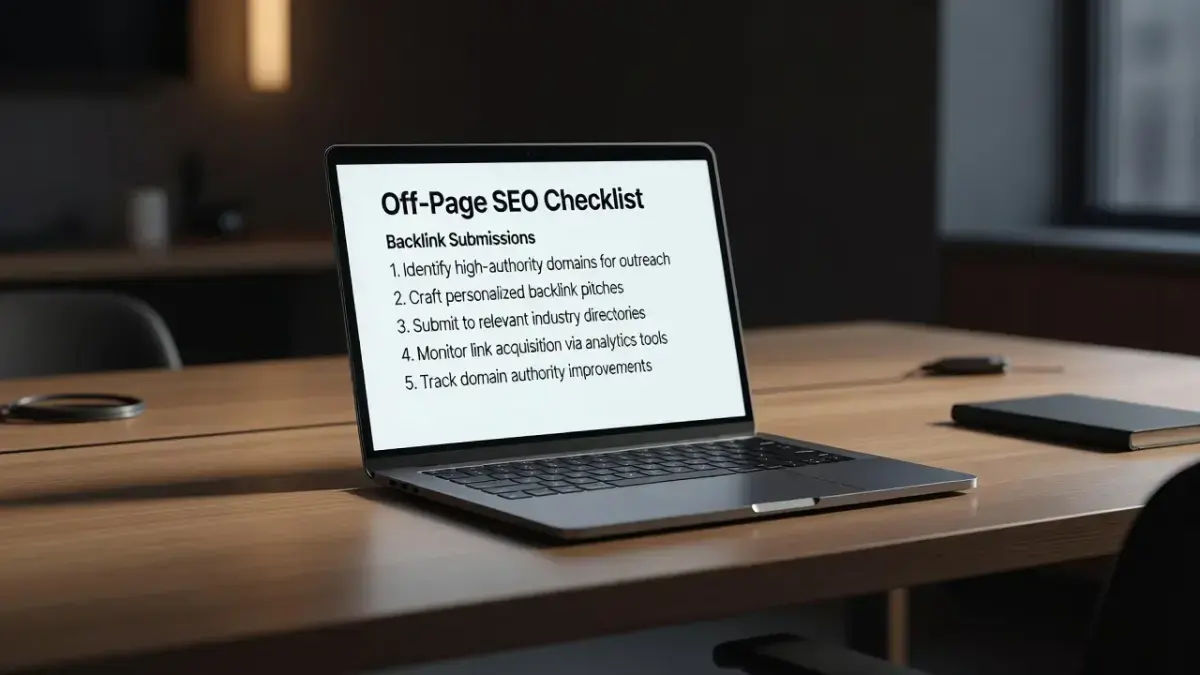
Submitting backlinks manually to indexed business directories, niche platforms, and media networks takes about 3 to 5 hours for an initial campaign and costs between $0 and $300 in one-time platform fees. The six-step workflow below details how to screen high-authority targets, format business entity data, execute manual submissions, and verify indexing without triggering search engine spam filters.
While submitting links to trusted directories builds foundational entity signals, sustainable ranking growth requires consistently publishing authority content that naturally attracts editorial links. PulseRank handles your complete organic publishing pipeline by researching targeted keywords, generating citation-ready articles daily, and publishing them directly to your website.
| Step | Action Required | Realistic Time | Estimated Cost | Mandatory Eligibility Requirement |
|---|---|---|---|---|
| 1. Site Screening | Filter target submission platforms by indexation & spam metrics | 45 minutes | $0 | Domain Spam Score under 5%, active Google indexation status |
| 2. Data Formatting | Standardize corporate NAP and metadata profile | 30 minutes | $0 | Exact character-for-character matching across all platforms |
| 3. Local Citations | Claim top business maps and directory profiles | 60 minutes | $0 | Physical street address or verified service radius |
| 4. Industry Portals | Submit business profiles to sector-specific directories | 90 minutes | $0 - $150 | Documented state business license or EIN tax registration |
| 5. Media Pitching | Pitch expert commentary to digital journalist queries | 30 mins/day | $0 - $149/mo | Verified executive bio or subject matter credentials |
| 6. Index Tracking | Confirm crawl status in search engine management tools | 15 minutes | $0 | Verified ownership access inside Google Search Console |
What are the best backlink submission sites?
The best backlink submission sites are established web platforms that maintain strict editorial oversight, require manual business verification, and get indexed regularly by Google. These platforms include tier-one business profile sites like Crunchbase, industry marketplaces like Clutch and ThomasNet, and platform repositories like GitHub or Product Hunt.
Platforms that accept instant, unmoderated submissions without verification carry high spam risks. I always rule out submission platforms that lack human moderation. If a site lets anyone post a link without email verification or account security, search engines likely treat links from that domain as web spam.
- Crunchbase: Best for tech companies and venture-backed firms requiring corporate registry validation.
- Clutch.co: Best for B2B service agencies requiring verified client interview reviews.
- LinkedIn Company Pages: Best for corporate entity verification with instant dofollow profile indexing.
- Product Hunt: Best for software applications, digital products, and SaaS launches.
Which high authority backlink directories are worth submitting to?
High authority backlink directories worth submitting to are restricted to platforms with a Domain Authority above 40, active search indexation, and a Domain Spam Score below 5%. General web directories that exist solely to sell link placements will harm your search performance.
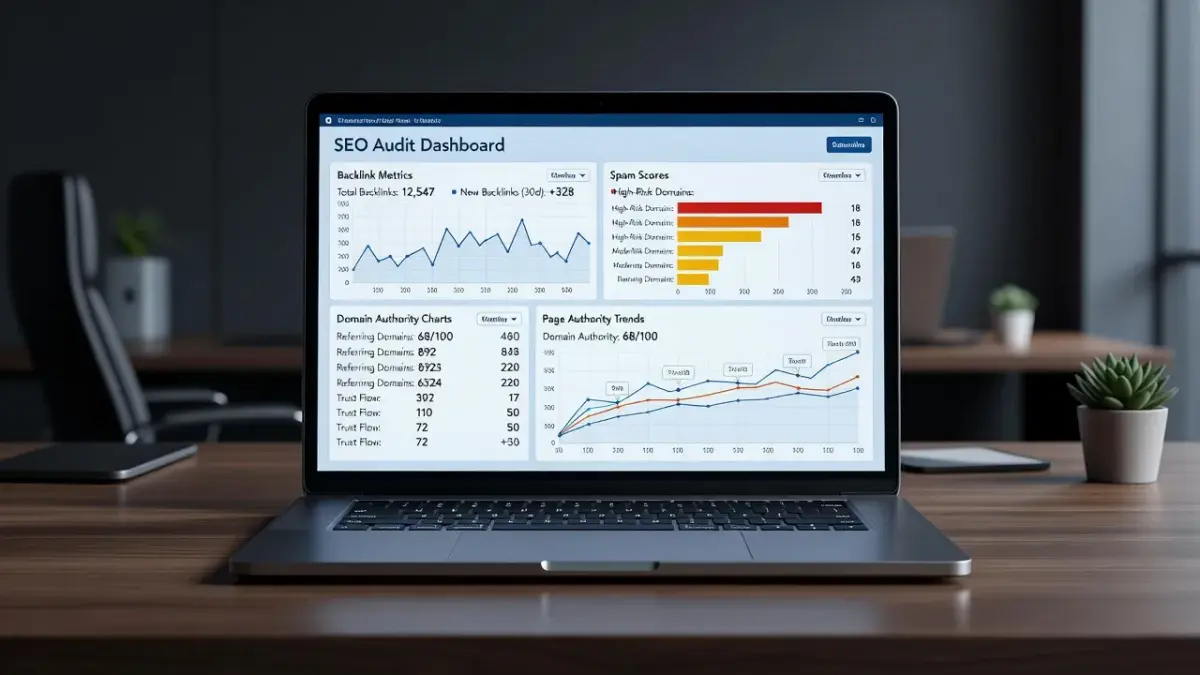
To determine if a directory is worth your effort, verify its site metrics using established SEO analysis software. I steer clear of any directory that categorizes sites into generic, unmoderated lists. A link placed on a page alongside hundreds of unrelated casino or pharmacy links passes zero positive rank equity.
For a deeper dive into evaluating link equity and technical attributes, read our comprehensive authority backlink guide.
Are web directories still worth submitting links to?
Generic web directories are no longer worth submitting links to because modern search engine algorithms either ignore their equity entirely or penalize domains that participate in cheap link networks. Industry-specific directories and regional commerce databases remain beneficial for establishing entity relevance.
Search engine guidelines explicitly penalize automated link building and low-quality directory submissions. According to historical search standards documented on Wikipedia's Backlink analysis entry, search engines updated their core ranking algorithms to strip value from mass web directory blasts.
Building links on low-grade link farms often leads to algorithmic suppression. You can review the operational risks of artificial link networks in our analysis on PBN backlink risks.
Which local business directories (Yelp, Google Business Profile, Bing Places, Apple Maps) give backlinks?
Google Business Profile, Bing Places, Apple Maps, and Yelp all provide direct backlinks to your primary domain while establishing verified NAP (Name, Address, Phone number) entity signals. While some of these platforms attach rel="nofollow" attributes to website links, their structural value for local search rankings is immense.
Google enforces strict guidelines regarding physical location validation and business representation. As detailed in the official Google Business Profile guidelines, businesses must operate from physical storefronts or deliver local service directly to customers to maintain active listing status.
- Google Business Profile: Provides primary URL and secondary appointment link fields.
- Apple Maps: Managed through Apple Business Connect, providing direct mobile routing and official website referrals.
- Bing Places for Business: Allows direct profile sync from Google Business Profile to accelerate setup.
- Yelp for Business: Offers verified local business profiles with direct domain referral tracking.
Step 1: Audit and Filter Target Sites for Technical Criteria
Before submitting your domain URL to any website, run the host domain through an indexing check and inspect its outbound link tags. Submitting your link to a page that is blocked by robots.txt or flagged with a noindex tag yields zero search value.
Open your browser's inspect element tool on the submission page to check how the site handles outbound links. If the platform wraps user links in rel="sponsored" or rel="ugc" tags, recognize that search engines view these as paid or user-generated statements rather than editorial votes.
To understand how search engines process different link tags, review our guide on dofollow backlink features.
- Search
site:targetdomain.comin Google to confirm the site is actively indexed. - Check the host domain's Spam Score using an SEO toolbar; discard any target scoring over 5%.
- Inspect existing directory listings on the site to ensure outbound links do not use
noindexheaders.
Step 2: Prepare Standardized NAP and Entity Information
Create a centralized master document containing your business Name, Address, Phone number, official domain URL, corporate Tax ID, and social profile links. Inconsistent business formatting across different web submission sites splits your entity record in search engine knowledge bases.
If your corporate address uses "Suite 200" on Google Business Profile, do not write "Ste #200" or "Floor 2" on secondary directory listings. Exact character-for-character consistency is required across every manual directory submission.
- Standardize your primary business operating name without keyword stuffing.
- Prepare concise business descriptions in three lengths: 50 words, 100 words, and 250 words.
- Store high-resolution PNG copies of your corporate logo in square (1:1) and landscape (16:9) aspect ratios.
Step 3: Claim and Verify Local & Niche Directory Profiles
Navigate manually to each target directory, create an account using your official corporate email address, and execute the account verification process. Avoid using disposable webmail addresses like Gmail or Yahoo, as premium business directories reject free webmail sign-ups.
Complete every available field within the submission portal, including business hours, accepted payment methods, employee counts, and service tags. Directories reward complete business profiles with higher internal search placement.
I recommend starting with core local infrastructure before expanding into paid commercial listings. Never pay for directory placements that do not require business identity verification.
Scaling Link Acquisition Through Automated Content Generation
While manual link submission establishes basic citation consistency, it rarely moves the needle for competitive, high-volume search phrases. Sustainable search authority requires acquiring high-tier editorial links from industry publications, which only occurs when your site publishes authoritative research, detailed technical guides, and valuable data tables.
PulseRank solves the content creation bottleneck by operating your complete organic search strategy in a single platform. For $499 per month, PulseRank researches your target audience's search intent, builds a strategic 30-day publishing calendar, and writes 30 ready-to-publish articles designed specifically to rank in Google search and AI answer engine overviews.
Every generated article includes inline data tables, attributed facts, optimized alt-text images, and internal linking structures. The platform connects directly to WordPress, Shopify, Wix, or custom Git repositories while tracking performance metrics via built-in Google Search Console and AI citation monitoring. Instead of spending hours pitching directories, an automated content engine gives external websites an organic reason to link to you.

Step 4: Execute Pitching and Guest Submission Workflows
Identify active industry blogs that publish external expert contributors and submit tailored pitch proposals instead of sending unsolicited article attachments. Earning backlinks through guest contributions yields editorial link context that search engines weight heavily.
Search for target opportunities using advanced search operators like your industry + "guest author" or your industry + "submission guidelines". I limit guest post pitching to sites that show steady organic traffic in SEO tracking tools.
Review our step-by-step framework for outreach templates in our guest post link building framework.
- Compile a targeted list of 20 non-competing publications in your niche.
- Review their recent articles to ensure they have published external authors within the last 90 days.
- Pitch three unique, headline ideas that solve a specific problem for their audience.
Step 5: Leverage Media Query Services for Editorial Citations
Register as an expert source on journalist query platforms like Connectively or SourceBottle to receive daily media requests from reporters seeking industry commentary. Providing concise, accurate expert quotes yields high-tier editorial backlinks from news outlets.
When responding to journalist inquiries, lead directly with your primary answer and provide verifiable professional credentials in your sign-off. Journalists operate under tight deadlines and will skip responses that contain long introductory preamble.
- Respond to relevant media queries within two hours of publication.
- Offer actionable data or executive commentary that reporters can quote directly.
- Include a link to your press kit or executive bio page for quick reference.
Step 6: Monitor Link Status in Google Search Console
Track your submitted backlinks by regularly auditing the Links report inside your verified Google Search Console property. Search engines take anywhere from a few days to several weeks to discover, crawl, and index new directory listings.
If a newly created backlink profile fails to show up after 30 days, inspect the target URL status using official diagnostic tools. You can verify page indexing status directly using the Google Search Console URL Inspection Tool.
- Log into Google Search Console and select your verified domain property.
- Click on the Links tab located in the left navigation panel.
- Export your Top linking sites list to confirm which submitted platforms Google has registered.
Which guest posting sites are best for backlinks?
The best guest posting sites for backlinks are non-competing industry publications with organic traffic above 5,000 monthly visits, a Domain Authority over 35, and human editorial standards. Avoid platforms that explicitly market "paid link placements" on their homepage, as search engines flag host domains selling links.
| Site Selection Criteria | Acceptable Threshold | Rejection Metric |
|---|---|---|
| Monthly Organic Traffic | > 5,000 monthly visits | < 500 monthly visits |
| Domain Spam Score | Under 3% | Above 5% |
| Outbound Link Ratio | Balanced content-to-link ratio | Excessive outbound links on every post |
| Editorial Guidelines | Manual review process, clear rules | Instant publishing with zero moderation |
Can HARO be used to get backlinks?
HARO (now operating within Cision's Connectively network) remains an effective method for earning high-authority editorial backlinks from major media publications. Pitching expert quotes to journalists allows small businesses to secure links from major news networks without paying media agencies.
As documented on Wikipedia's Help A Reporter Out overview, the service connects journalists with public sources. Success on media query platforms requires strict adherence to the reporter's specific constraints.
- Pitch only when your expertise matches the query prompt.
- Include your official company name, title, and target domain URL in every pitch.
- Avoid attaching files; provide secure cloud links for supporting assets if requested.
Frequently Asked Questions
How long does it take for submitted backlinks to show up in search results?
It takes between 7 days and 6 weeks for search engine crawlers to discover, evaluate, and index newly submitted backlinks. High-traffic submission portals like Google Business Profile or Crunchbase index quickly, whereas smaller niche directories take longer unless they are crawled frequently by search bots.
Is it safe to use automated backlink submission software?
No, using automated backlink submission software to blast your domain to thousands of low-quality directories violates search engine webmaster guidelines. Automated submitters place links on unmoderated link networks, which frequently leads to manual algorithmic penalties or suppression in search rankings.
What is the difference between dofollow and nofollow directory links?
A dofollow backlink allows search engines to pass PageRank and contextual relevance signals to the target website. A nofollow link contains an attribute (rel="nofollow") instructing search crawlers not to pass explicit ranking equity, though nofollow links on authority domains still provide brand entity signals and referral traffic.
How many backlinks should I submit per day?
For manual directory and profile submissions, there is no set daily limit, but natural building rhythms usually mean creating 2 to 5 targeted profiles per day. Search engine spam filters look for unnatural velocity spikes generated by automated tools rather than steady manual submissions.
Do free backlink submission sites still work in 2026?
Free backlink submission sites work if they represent legitimate commercial directories, regional maps, industry associations, or media networks. Free generic web submission sites that accept instantaneous submissions without moderation have been devalued by modern search algorithms.
What happens if I submit backlinks to low-quality web directories?
Submitting your domain to low-quality, spam-heavy web directories risks associating your site with bad link neighborhoods. Search engine algorithms ignore low-tier links, but extensive submissions to bad networks can trigger a manual spam action or drop your overall domain authority score.
Can I submit backlinks directly to Google for indexing?
You cannot submit external third-party backlink URLs directly to Google for indexing unless you own or manage the host domain in Google Search Console. You must rely on Google's web crawler discovering the link naturally on the host site or prompt discovery by sharing the link on active social channels.
Should I pay for directory listings to get a backlink?
You should only pay for directory listings if the directory is a recognized industry portal (such as BBB or Clutch) that performs rigorous business validation. Paying for links on low-tier web directories purely to gain search engine equity violates search engine spam policies.
Final Recommendation: Manual link submission is ideal for laying down foundational entity citations, but growing your site's authority over time requires high-quality, publish-ready content. I recommend setting up PulseRank to automate your ongoing keyword research, content creation, and publishing operations so you can earn organic backlinks consistently.