
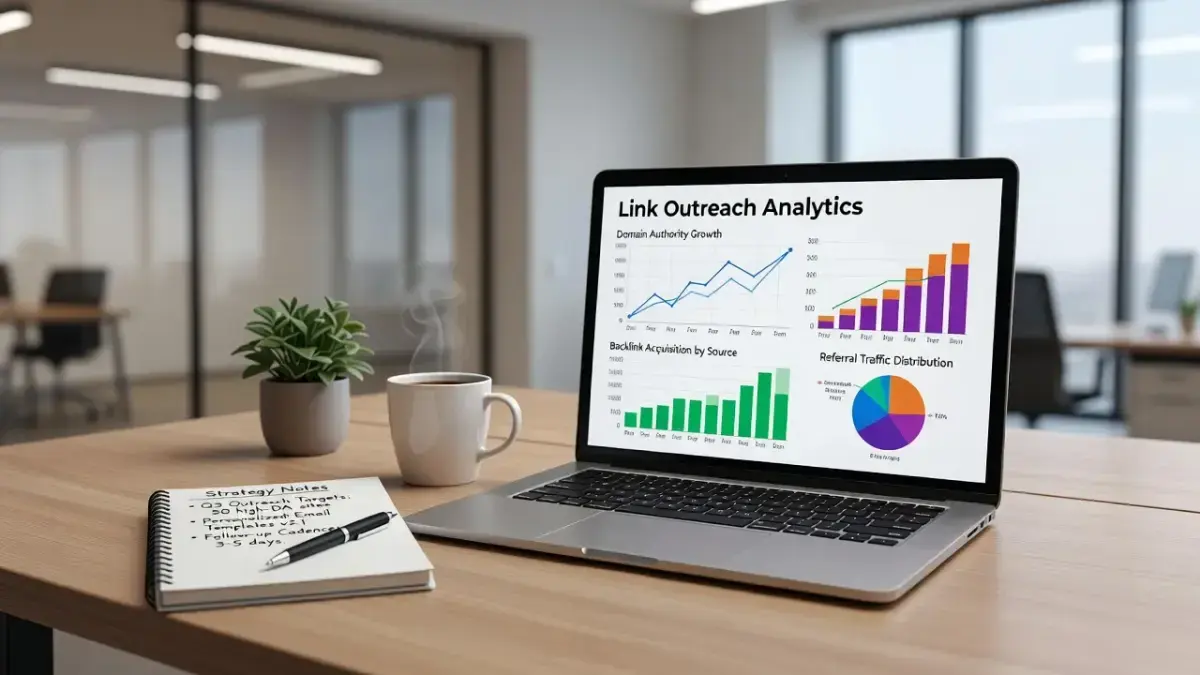
You can build high-authority guest post backlinks by executing a 4-step outreach campaign over four to six weeks for $0 in paid media costs. This strategy requires identifying contextually relevant websites with real search traffic, pitching content gaps to site editors, drafting educational posts, and placing natural contextual anchor text.
Managing a guest post link building campaign requires strict quality controls to prevent manual search penalties. When done correctly, guest blogging generates targeted referral traffic, builds domain authority, and signals topical relevance to modern search engines.
| Campaign Step | Core Objective | Estimated Time | Primary Requirement |
|---|---|---|---|
| Step 1: Target Discovery | Find real websites with organic search traffic | 5–10 hours | Ahrefs, Semrush, or free SEO tools |
| Step 2: Editor Pitching | Send personalized pitch angles to blog managers | 8–12 hours | Verified editor email addresses |
| Step 3: Content Creation | Draft high-quality, non-promotional articles | 3–5 hours per post | Subject matter expertise |
| Step 4: Link Placement | Secure live contextual backlinks in body text | 1–2 hours per post | Strict adherence to editorial guidelines |
Are guest posts still effective for SEO?
Yes, guest posts remain highly effective for SEO when placed on authoritative, topically relevant websites with real audience traffic. They pass page authority and topical relevance to your domain, helping search engine crawlers understand your industry niche.
However, the efficacy of guest blogging depends on domain quality rather than link volume. Low-quality guest post campaigns on commercial link networks produce zero ranking power and risk algorithmic penalties. As search engines lean into semantic vector search, links embedded inside comprehensive, well-researched articles carry far more weight than isolated sidebar or directory links.

What does Google's guidance say about guest posting, spam, and nofollow or sponsored links?
Google's official guidelines state that guest posts published primarily for link building purposes must use rel="nofollow" or rel="sponsored" attributes on outbound links. According to Google Search Central's spam policies, large-scale guest posting campaigns using keyword-rich anchor text violate Google's search quality principles.
If you purchase a guest post or publish on a site that mandates payment for inclusion, Google requires the link to carry a rel="sponsored" tag. Passing dofollow links through paid guest posts can lead to a manual action or algorithmic link devaluation.
To stay compliant, target real editorial publications where guest contributions undergo strict review. For more details on avoiding dangerous link networks, read our breakdown of PBN backlinks and safe alternatives.
Step 1: Find contextually relevant target blogs with real organic search traffic
To find legitimate guest posting opportunities, search for blogs within your industry that generate at least 1,000 monthly organic visitors from Google. Target sites with steady organic search trends rather than artificial domain authority metrics.
To qualify target websites, run prospective domains through standard SEO tools or explore free link building tools for small business to verify search performance. Avoid websites that display rapid traffic drops, as these often indicate historical search penalties.
How do I identify blogs that accept guest posts?
Search Google using targeted search footprints combined with your primary industry keywords. Common search queries include:
[Industry Keyword] + "guest post guidelines"[Industry Keyword] + "write for us"[Industry Keyword] + "contribute to our blog"
How do I filter out low-quality link farms?
Review the target site's outbound link profile and content cadence. If a blog publishes articles across unrelated industries (such as casino, real estate, and plumbing on the same domain), exclude it from your campaign.
Step 2: Pitch personalized, non-generic topics that fill content gaps
Effective guest post pitches propose three specific topic ideas that solve an existing content gap on the publisher's website. Editors reject mass-templated outreach emails that fail to demonstrate familiarity with their publication.
Before emailing an editor, review their recent articles to ensure your proposed topics have not been covered recently. Frame your email around the value your article brings to their readership, rather than your desire to build a backlink.
Subject: Article pitch for [Website Name]: [Proposed Topic Title]

Hi [Editor Name],

I noticed your recent article on [Topic] left out [Specific Subtopic].

I drafted three outline ideas that would fill this gap for your readers:
1. [Idea 1: Specific, action-oriented title]
2. [Idea 2: Specific, action-oriented title]
3. [Idea 3: Specific, action-oriented title]

I recently published content on [Your Site Name] covering related topics. Let me know if any of these fits your editorial calendar!

Best regards,
[Your Name]

Step 3: Write comprehensive, citation-worthy content that adheres to editor guidelines
Write guest posts that match the depth, formatting style, and tone of top-ranking articles on the target host site. Submitting thin or promotional content leads to immediate editorial rejection.
Structure your article using clear headings, short paragraphs, and data-backed statements. Incorporate authoritative external references to establish credibility across your writing.
Scaling your internal content alongside outreach
Running a guest post outreach campaign while managing an internal content publishing schedule can overwhelm small marketing teams. Platform tools like PulseRank automate on-site organic content creation, handling keyword research, article generation, and publishing directly to your CMS for $499 per month. This allows your team to dedicate manual effort entirely to high-touch outreach pitches.
How should I format links inside the guest article?
Place your backlink naturally within the body text using descriptive, partial-match anchor text. Never force commercial keywords into awkward sentences, as editors will strip the link before publication.
Step 4: Place contextual anchor text naturally and secure live links
Secure your backlink by embedding it within a contextual sentence that expands on a specific concept in your guest draft. Outbound links should serve as genuine resources for the reader.
Ensure your target target landing page matches the topic discussed in the guest post. For a complete look at anchor text distribution and link acquisition standards, consult our authority backlink guide.
As of November 2026, major search engines prioritize semantic relevance over exact-match keyword anchors. Diversify your anchor text profile using brand names, page titles, and natural phrase variations.
What are the best guest post link building strategies SEO experts recommend?
SEO experts recommend building relationships with niche editors, co-authoring data studies, and utilizing broken link replacement tactics for guest posting success. Focusing on strategic partnerships yields higher acceptance rates than cold outreach.
Here are four high-converting strategies used by top agencies:
- The Content Gap Pitch: Identify keywords your target site's competitors rank for, but your target site does not cover. Pitch an article specifically designed to capture that missing search traffic.
- Data-Driven Contributions: Conduct simple original surveys or analyze internal proprietary data, then offer exclusive summary articles to industry blogs.
- The Unlinked Mention Outreach: Find sites that mention your brand or product without linking, and offer a fresh guest article in exchange for updating the existing reference.
- Reverse Image & Resource Pitching: Create useful infographics or custom diagrams and allow target blogs to re-publish them alongside a short guest commentary.
What are the best sites for guest posting with high authority?
The best guest posting sites possess high Domain Rating (DR), strong organic search traffic, and strict editorial standards. Below are leading publications across tech, business, and marketing niches that accept guest contributions under specific conditions:
| Publication Name | Industry Niche | Guest Post Policy / Access Model | Key Submission Requirement |
|---|---|---|---|
| HubSpot Blog | Marketing & Sales | Free (Strict Editorial Review) | Must cover unique, unranked search intent |
| Forbes | Business & Finance | Paid / Invited Contributor Council | Annual membership fee or editorial invite |
| Smashing Magazine | Web Design & Dev | Free (Paid Writer Honorarium) | Technical expertise with real code samples |
| Entrepreneur | Business & Leadership | Paid Leadership Network | Application approval and publishing fee |
What are HubSpot's guest post guidelines for contributing to its blog?
HubSpot's guest blogging guidelines require contributors to submit comprehensive, highly actionable content that has not been covered on their domain. According to HubSpot's guest post guidelines, submissions must offer unique insights aimed at marketing, sales, or customer service professionals.
HubSpot enforces strict rules regarding outbound links:
- No Promotional Links: Links to sales pages, product demos, or promotional landing pages are removed.
- Link Cap: Guest posts may include up to two self-referential links to educational blog posts.
- Originality Check: Articles must pass plagiarism checks and contain original research or expert analysis.
- Formatting Standard: Submissions must follow HubSpot's visual style guide, including short paragraphs and clear H2/H3 structures.
What are Forbes contributor guidelines for guest posts?
Forbes accepts opinion pieces and guest articles primarily through its invited Contributor Network and paid Council programs. As detailed in the Forbes opinion submission guidelines, unsolicited articles are evaluated on topical relevance, author authority, and exclusivity.
Key requirements for publishing on Forbes include:
- Exclusive Rights: Forbes requires full exclusivity for submitted opinion pieces; content cannot appear anywhere else online.
- Conflict of Interest Disclosure: Writers must disclose all financial ties, client relationships, or investments related to companies mentioned in the draft.
- Strict Outbound Link Policies: Editorial staff actively review links. Any promotional backlink designed to manipulate search engines is stripped prior to publication.
- Author Credibility: Submissions must include a detailed author bio demonstrating recognized industry experience.

Scaling guest post link building for business growth
Executing a manual guest post strategy requires continuous effort. While outreach secures external authority, your website must maintain high-quality internal publishing to capture and convert incoming search traffic.
Using an all-in-one platform like PulseRank streamlines your internal content operation. By publishing daily, search-optimized articles directly to WordPress, Shopify, or Wix, PulseRank ensures your site builds topical authority while you focus on securing high-tier guest post placements.
Frequently Asked Questions
What is guest post link building?
Guest post link building is the practice of writing and publishing an article on an external website to earn a backlink back to your own domain. This strategy improves search engine visibility, domain authority, and referral traffic.
How much does guest post link building cost?
Organic guest post link building through manual outreach costs $0 in direct publishing fees, though it requires time for outreach and writing. Paid placement fees on commercial blogs range from $50 to $500 per post, though paid dofollow links carry search penalty risks under Google guidelines.
How many guest post links do I need to rank on Google?
The number of guest post links needed depends on your target keyword difficulty and competitor link profiles. Low-competition niches may require 3 to 5 high-authority guest links, while competitive industries often require dozens of relevant backlinks over several months.
What is the difference between a dofollow and nofollow guest link?
A dofollow link allows search engine crawlers to pass page authority and ranking signals to the destination site. A nofollow link uses an HTML tag (rel="nofollow") instructing search engines not to transfer authority signals, though it can still generate referral traffic.
How can I tell if a guest post site is legitimate?
A legitimate guest post site has consistent organic search traffic, strict editorial guidelines, real author profiles, and balanced outbound linking habits. Avoid sites that display dramatic traffic drops or publish thin content across unrelated commercial industries.
Can guest post link building cause a Google penalty?
Yes, publishing large volumes of low-quality guest posts with exact-match commercial anchor text can trigger a manual or algorithmic Google penalty. To avoid penalties, target authoritative sites, write educational content, and use natural anchor text.
How long does it take for a guest post backlink to impact rankings?
A live guest post backlink typically impacts search rankings within 4 to 12 weeks. The timeline depends on how fast search engine bots crawl and index the host site's published article.