

Backlink automation is the process of using software to streamline, scale, or execute the research, outreach, and placement of inbound links to your website. Unlike manual link outreach where SEO teams pitch site owners individually, automated systems handle contact scraping, personalized email follow-ups, brand mention tracking, or direct link submissions across web directories.
The single variable that decides whether backlink automation builds your domain authority or triggers a devastating manual action is whether the tool automates your outreach workflow or automates the link creation itself. Software that automates relationship prospecting and follow-ups preserves editorial standards, while scripts that automatically inject links into unmoderated forums or blog comments directly violate search engine policies.
What are the best backlink building tools?
The best backlink building tools are workflow automation platforms like Pitchbox and BuzzStream for outreach, paired with prospect scrapers like Ahrefs and Hunter.io. These platforms automate time-consuming administrative tasks without taking away your editorial control over where your links appear.
When assembling a modern link building stack, most growth agencies and businesses categorize their software into three distinct operational buckets:
- Prospecting and Discovery Tools: Ahrefs and Semrush analyze competitor backlink profiles to discover high-authority websites that already link to relevant content in your niche.
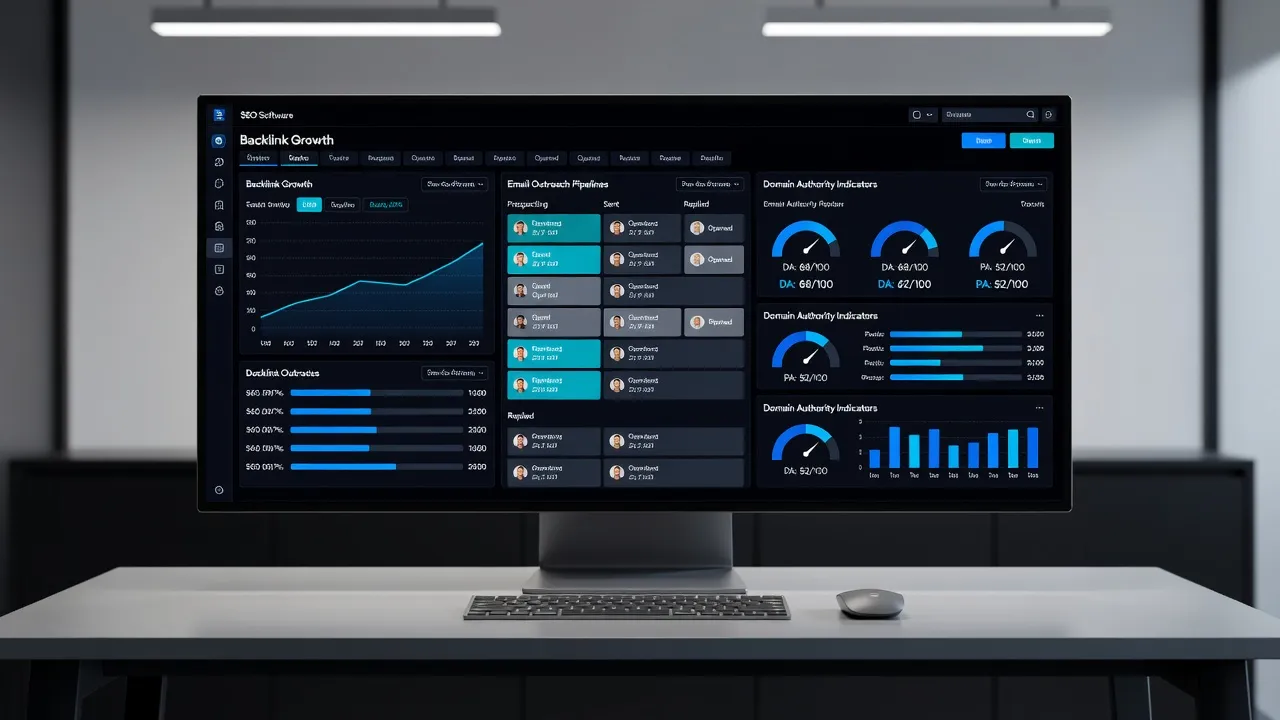
- Outreach and CRM Automation: Pitchbox and BuzzStream aggregate contact details, send personalized email sequences, and remind team members to follow up with publishers.
- Inbound Content Authority Platforms: Rather than chasing cold emails, platforms like PulseRank automate daily, citation-ready content strategy and publishing to attract natural editorial links organically.
If you want to review specialized outreach software, our breakdown of top link building tools outlines feature comparisons and pricing structures across the market.
Do automated backlink/link building tools risk Google penalties?
Yes, automated backlink tools that directly post links or generate artificial web properties carry a severe risk of search engine penalties. Google's SpamBrain AI actively identifies unnatural link patterns, resulting in algorithmic demotions or complete site de-indexing.
The risk level depends entirely on how the software operates:
- High-Risk Automation (Direct Generation): Software that automatically posts links in blog comments, creates web 2.0 profiles, or submits to link directories generates obvious footprint patterns. Algorithms detect these bursts of low-quality links instantly.
- Medium-Risk Automation (Scaled Exchanges): Software that coordinates automated link exchanges or private networks leaves transactional footprints that search filters eventually flag.
- Low-Risk Automation (Workflow Efficiency): Software that automates prospect scraping, email dispatching, and broken-link discovery poses zero penalty risk because the final link placement remains an earned editorial decision by a human publisher.
What has John Mueller said about automated link building penalties?
Google Search Advocate John Mueller has repeatedly confirmed that any automated process designed to generate links to manipulate search rankings violates Google's core guidelines. In multiple search Q&A sessions, Mueller noted that automated link building scripts generate unnatural patterns that Google's algorithms detect and neutralize.
According to Google's Search Central Spam Policies, any link intended to manipulate PageRank or a site's ranking in Google Search results is considered link spam. This includes using automated programs or services to create links pointing to your site.
Mueller has emphasized that when Google detects automated link creation, the primary outcome is that the links are completely ignored by the algorithm. In more egregious cases involving massive automated link blasts, Google applies a manual action, which drops the target domain's visibility until the bad links are disavowed and reviewed.
What do Google's guidelines say about buying links and PBNs?
Google's official guidelines explicitly classify bought links that pass ranking credit and Private Blog Networks (PBNs) as policy violations that trigger manual penalties. Search engines require that commercial placements, paid sponsorships, and advertorial links carry rel="nofollow" or rel="sponsored" attributes.
As documented in Wikipedia's Search Engine Optimization historical guidelines, search engines have penalized artificial link manipulation for over two decades. PBNs—networks of expired domains built solely to pass PageRank—are particularly vulnerable to detection.
Google detects PBNs through shared hosting IP addresses, duplicate WHOIS registration data, thin AI-generated content, and inter-linking site topologies. Once a network is identified as a PBN, every domain receiving links from that network loses ranking equity immediately.

Is Pitchbox a good outreach tool for backlink building?
Yes, Pitchbox is widely considered an industry-standard enterprise outreach platform for automating link building campaigns. It integrates directly with top SEO databases to streamline prospecting, email finding, personalized pitch dispatching, and response tracking.
The reason Pitchbox succeeds where spam tools fail is its focus on workflow automation rather than link generation:
- Integrated Prospecting: You can pull target sites directly from Ahrefs, Majestic, and Moz based on keywords, competitor URLs, or unlinked brand mentions.
- Smart Personalization: The platform uses customizable merge tags so outreach emails address site owners by name and reference specific articles they published.
- CRM and Pipeline Management: Team leads can assign leads, track open rates, and monitor negotiation stages across multiple client accounts in real time.
For agencies managing dozens of client domains, Pitchbox replaces manual spreadsheets with a structured relationship management system. You can explore how outreach platforms integrate with agency workflows in our guide to saas link building agencies.
Does GSA Search Engine Ranker risk penalties for spammy links?
Yes, GSA Search Engine Ranker carries an exceptionally high risk of Google penalties because it automatically posts links across thousands of unmoderated forums, guestbooks, and directories. It operates without human oversight, leaving an undeniable footprints of low-quality, site-wide spam links.
While some black-hat operators historically used GSA Search Engine Ranker for "tier 2" or "tier 3" link structures (linking to secondary properties rather than their main domain), modern AI search filters render this tactic ineffective. Google's SpamBrain algorithm evaluates the entire link neighborhood surrounding a website.
When your domain receives thousands of automated links from unrelated foreign-language guestbooks, your site's trust score drops. I strongly recommend avoiding any software that promises an "automatic backlink" blast or purports to "automate backlinks" on autopilot without requiring editorial review.
How Safe Backlink Automation Differs From Unsafe Link Blasting
Understanding the dividing line between safe and dangerous link building software comes down to editorial control. Safe tools manage communication data; unsafe tools inject code into third-party sites.
Backlink Automation
Backlink automation divides into two categories:
Workflow Automation (Safe & Sustainable)
- Prospect discovery
- Contact info scraping
- Outreach CRM sequences
- Brand mention alerts
Link Generation (High Penalty Risk)
- Comment spam scripts
- PBN link networks
- Web 2.0 blasters
- Forum profile bots
If a tool requires a human site editor to read your message and agree to publish your link, the process is safe. If the tool bypasses the site owner entirely by submitting form data, the process is web spam.
Comparing Link Automation Software Strategies in 2026
Choosing the right approach depends on your budget, risk tolerance, and available internal resources. The table below outlines how popular link building strategies compare across key operational variables as of September 2026.
| Strategy / Tool Category | Primary Operational Workflow | Search Penalty Risk Profile | Best Used For |
|---|---|---|---|
| Outreach CRM Software (e.g., Pitchbox, BuzzStream) | Automates prospect discovery, contact retrieval, and personalized email outreach sequences. | Low (Requires human editorial approval for final link placement) | In-house SEO teams scaling relationship outreach and PR pitching. |
| Automated Link Blasters (e.g., GSA SER, ScrapeBox) | Scripted submission of links to blog comments, unmoderated forums, and directory forms. | Extreme (Triggers algorithmic de-indexing or manual spam actions) | Burner test sites or off-page testing on non-critical domains. |
| Inbound Authority Publishing (PulseRank) | Automates daily keyword research, content strategy, article creation, and direct publishing to earn natural editorial links and AI citations. | Zero (100% white-hat organic content authority creation) | Businesses wanting hands-off search visibility without cold email spam. |
| Outsourced PR Agencies (e.g., Digital PR vendors) | Manual journalist pitching, press releases, and bespoke content placements. | Low to Medium (Varies based on publisher quality) | Enterprise brands seeking top-tier media coverage and high-DR links. |
The Modern Alternative: Earning Natural Backlinks Through Automated Content Operations
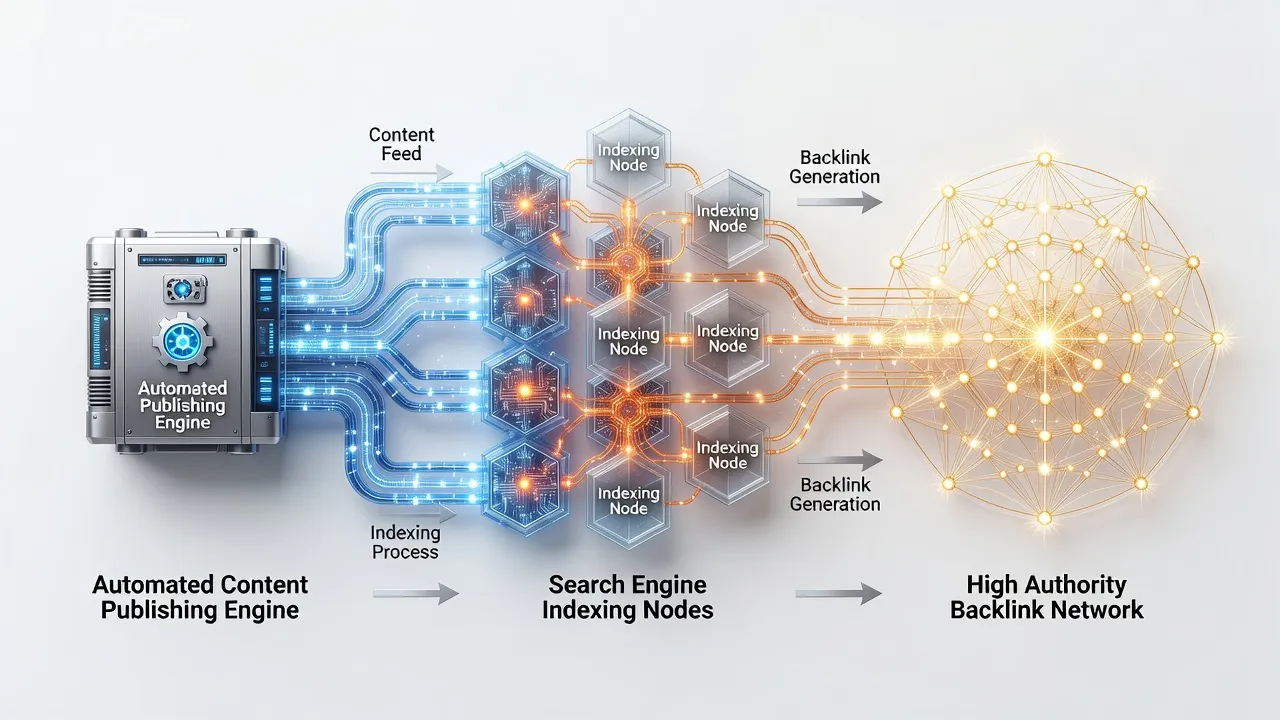
Instead of spending hours sending cold outreach emails that site owners increasingly ignore, modern growth teams build organic domain authority by automating their content operations. High-value, comprehensive articles naturally attract backlinks from bloggers, journalists, and research publications looking for authoritative references.
This is where PulseRank fundamentally changes the organic growth equation. Rather than risking your brand reputation on risky link blasts or managing complex outreach software, PulseRank runs your entire organic content operation on autopilot for one flat rate of $499 per month:
- Automated Keyword & Strategy Research: PulseRank analyzes your target market's keyword pool and constructs a continuous 30-day content calendar targeting high-intent topics.
- Citation-Ready Article Generation: It writes and formats deep, expert-level articles designed to rank in traditional search engines and win citations in AI answer engines.
- Direct CMS Publishing: Every article ships with structured data tables, verified third-party facts, generated visual assets with optimized alt text, and contextual internal links—publishing directly to WordPress, Shopify, Wix, or Git.
- Integrated Rank & Citation Tracking: Built-in Google Search Console reporting tracks keyword positions alongside AI citation metrics so you see exactly how your content performs.
When you publish authoritative, data-backed content daily, other websites cite your pages as primary sources. This inbound strategy delivers sustainable authority growth without sending thousands of cold emails. You can read more about building search momentum in our guide to organic traffic generation.
Step-by-Step: Setting Up a Safe Outreach Automation Campaign
If you choose to run cold outreach campaigns, following a strict setup process prevents your emails from landing in spam folders and ensures your domain maintains a clean sender reputation.
- Set Up a Secondary Outreach Domain: Never send cold outreach emails from your primary corporate domain. Purchase a domain variation (e.g.,
getcompany.com) to protect your main domain's email deliverability. - Warm Up Email Accounts: Use email warmup tools for at least 14 days before launching outreach. Gradually increase daily send limits from 5 emails per day up to a maximum of 40 emails per inbox.
- Filter Prospect Quality: Export prospect lists from SEO tools and filter out domains with Domain Rating (DR) scores below 25 or organic monthly traffic under 1,000 visitors.
- Craft Value-First Pitches: Avoid generic "guest post request" templates. Offer genuine value, such as pointing out a broken external link on their page or offering fresh industry research data.
- Cap Follow-Up Sequences: Limit email sequences to two gentle follow-ups spaced 4 to 7 days apart. Continuous nagging prompts recipients to mark your messages as spam.
Frequently Asked Questions
What is the difference between safe and unsafe backlink automation?
Safe backlink automation streamlines email outreach, prospect research, and project management while keeping final link placements under human editorial control. Unsafe automation uses scripts to post links automatically across forums, blog comments, or private blog networks without site owner permission, triggering search penalties.
Can automated cold emails harm my main domain's reputation?
Yes, sending high volumes of cold outreach emails from your primary domain can trigger spam flags from inbox providers like Google Workspace and Microsoft 365. Always run outreach campaigns from dedicated secondary domains and keep daily sending limits per inbox under 40 messages.
How many backlinks should I aim to build per month?
Focus on backlink quality and editorial relevance rather than arbitrary monthly volume targets. Acquiring 3 to 5 high-authority links from active, editorially moderated websites in your niche delivers significantly more ranking power than hundreds of automated directory placements.
Do AI search engines like ChatGPT and Perplexity care about backlinks?
AI answer engines rely heavily on brand citations, domain authority, and structured entity data to select source references. While traditional PageRank still matters for web crawling, AI search models prioritize comprehensive, well-structured content that frequently receives natural citations across authoritative web sources.
Is buying guest post placements considered automated link building?
Buying guest post placements is considered paid link building rather than technical automation, but it still falls under Google's link spam guidelines if the links pass PageRank equity. Google requires commercial placements to use rel="nofollow" or rel="sponsored" link tags.
What should I do if my site receives thousands of automated spam backlinks?
If your domain receives a sudden influx of low-quality automated backlinks from spam networks, monitor your Google Search Console performance. Google's algorithms automatically neutralize most low-quality link spam, but if you receive a manual penalty warning, submit a disavow file through Search Console listing the toxic domains.
How much does professional backlink outreach software cost?
Dedicated outreach CRM platforms like Pitchbox and BuzzStream typically cost between $99 and $500 per month depending on user seats, contact export volume, and email integration limits. Alternatively, all-in-one organic publishing platforms like PulseRank handle complete content operations for a flat $499 per month.