

Building a profitable B2B content marketing strategy requires five sequential steps executed over 90 days: customer research, topic mapping, search-intent content creation, multi-channel distribution, and pipeline attribution tracking. Executing this process turns cold corporate decision-makers into sales-qualified leads without relying entirely on ad spend. The guide below breaks down the exact operational blueprint, real-world industry case studies, and essential frameworks needed to scale B2B revenue.
What do Gartner and Forrester report on B2B content marketing trends?
Gartner and Forrester reports indicate that modern B2B buyers complete over 70% of their purchasing journey before ever contacting a sales representative. According to Gartner's B2B buying research, buyer groups spend only 17% of their total purchase time meeting with potential suppliers, making independent digital content the primary decision driver.
Recent research from Forrester's B2B insights confirms that enterprise purchasing decisions now involve an average of 6 to 10 stakeholders. Each stakeholder reads different content tailored to their specific role, risk tolerance, and technical requirements.
As of October 2026, successful B2B organizations are moving away from superficial top-of-funnel posts and investing heavy effort into deep, authoritative assets that answer hyper-specific commercial questions.
B2B Content Marketing Strategy Execution at a Glance
The following timeline details the five core stages required to build and deploy an enterprise-grade B2B content engine.
| Step | Time Required | Prerequisites & Cost | Primary Output |
|---|---|---|---|
| 1. Customer Research | 1–2 Weeks | CRM export, 5 customer interviews ($0–$500) | Validated buyer matrix & pain point list |
| 2. Intent & Keyword Mapping | 1 Week | Keyword tool or specialized software ($99–$499/mo) | Targeted keyword map & topic clusters |
| 3. Content Production | 2–4 Weeks | In-house writers or content engine platform ($500–$3,000/mo) | 10–30 citation-ready articles & assets |
| 4. Multi-Channel Distribution | Ongoing | Social scheduling tool, email platform ($50–$200/mo) | Syndicated content across LinkedIn & email |
| 5. Attribution & Analytics | 1 Week setup | Google Analytics 4, CRM pipeline tracking ($0) | Closed-loop revenue attribution report |
Step 1: Define buyer personas using first-party CRM data
Defining buyer personas requires analyzing win-loss data inside your CRM and interviewing actual decision-makers rather than relying on demographic guesses. To build accurate profiles, pull records for your top 20% highest-value clients from the past 12 months.
Look specifically for common job titles, team sizes, technology stacks, and primary business blockers. Schedule 15-minute interviews with five recent buyers to ask three specific questions:
- What specific metric dropped or failed right before you sought out a solution?
- What internal objections did your executive team raise during the sign-off process?
- What alternative software products or agencies did you evaluate alongside us?
Categorize your buyers into three specific roles: the Economic Buyer (controls budgets), the User Buyer (uses the platform daily), and the Technical Buyer (evaluates security and integration compliance). Your strategy must produce distinct assets for each role.
Step 2: Map search intent across the B2B buying committee
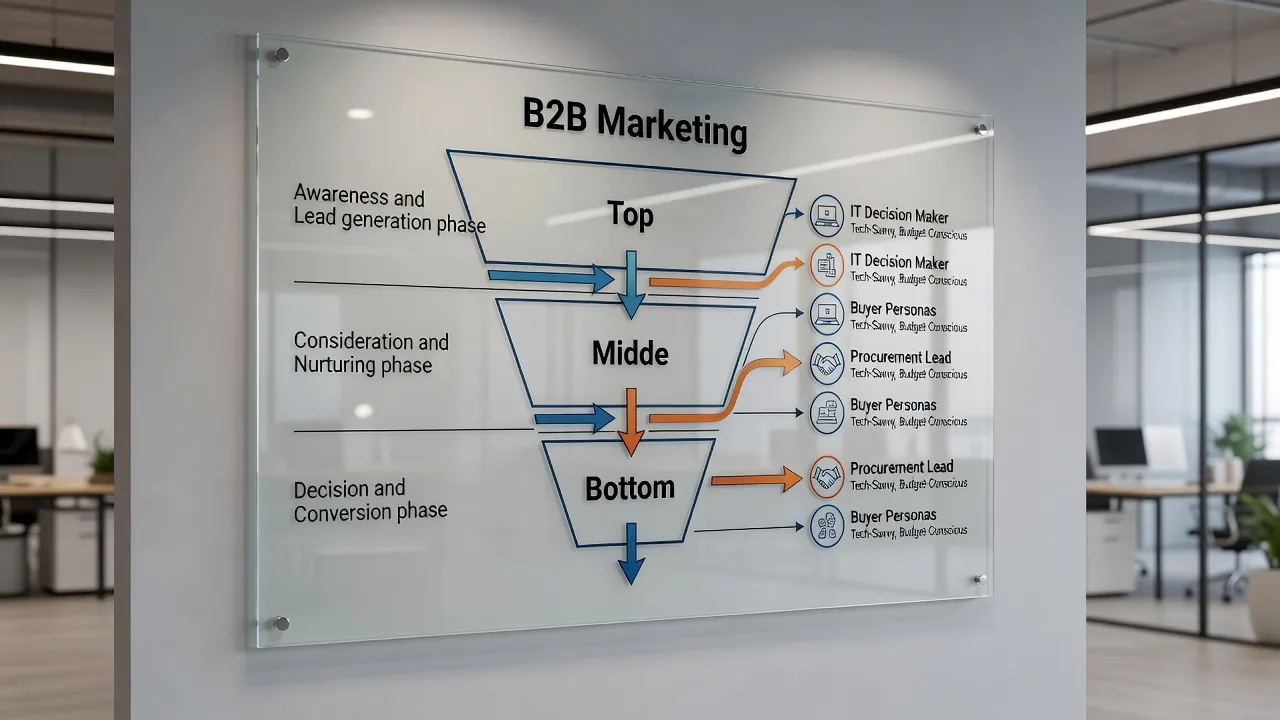
Mapping search intent requires aligning your primary topic clusters with the four explicit stages of the B2B sales funnel. B2B search intent is fundamentally different from consumer intent because enterprise keywords carry higher commercial value and lower search volume.
Organize your target keywords into three core structural layers:
- Top-of-Funnel (ToFu) Problem Awareness: Searchers know they have a friction point but don't know the solution category. (Example: "How to fix high churn in SaaS")
- Middle-of-Funnel (MoFu) Solution Evaluation: Searchers compare product categories, features, and operational frameworks. (Example: "Product-led growth vs sales-led growth platforms")
- Bottom-of-Funnel (BoFu) Direct Purchase Intent: Searchers evaluate software options, pricing models, and direct vendor alternatives. (Example: "Enterprise CRM pricing comparison 2026")
To streamline this research, establishing an effective content generation strategy guide helps align your business goals with actual search volume. Focus heavily on BoFu and MoFu terms first. High-intent topics generate qualified sales pipelines far faster than generic informational guides.
Step 3: Publish high-intent technical and strategic content
Publishing high-intent content requires combining authoritative expert insights, structured data tables, and direct answers to direct technical questions. Modern answer engines and human buyers reject vague introductory content that lacks substance.
Every article you publish must adhere to strict technical parameters:
- Answer front-loading: Answer the target sub-question directly in the first sentence of each main section.
- Data density: Support every major strategic claim with concrete prices, limits, specifications, or third-party data links.
- Zero-fluff syntax: Omit corporate buzzwords, transition-heavy prose, and unnecessary introductions.
Article Structure Blueprint
An article following this structure presents elements in the following order:
- Direct Answer Paragraph (First 50 words)
- Step-by-Step Tactical Workflow
- Data Table (Specs / Limits / Workflow Comparison)
- Real-World Implementation Constraints
- Direct Call to Action (CTA)
Managing an ongoing publication schedule can quickly drain internal resources. Using automated platforms like PulseRank allows teams to run their entire organic search operation from one dashboard. It analyzes target keyword pools, builds structured content plans, and writes citation-ready articles complete with images, internal links, and structured data for $499 per month. Integrating programmatic solutions alongside human oversight keeps publishing momentum high without inflating agency overhead.
Step 4: Refine content distribution across owned and paid channels
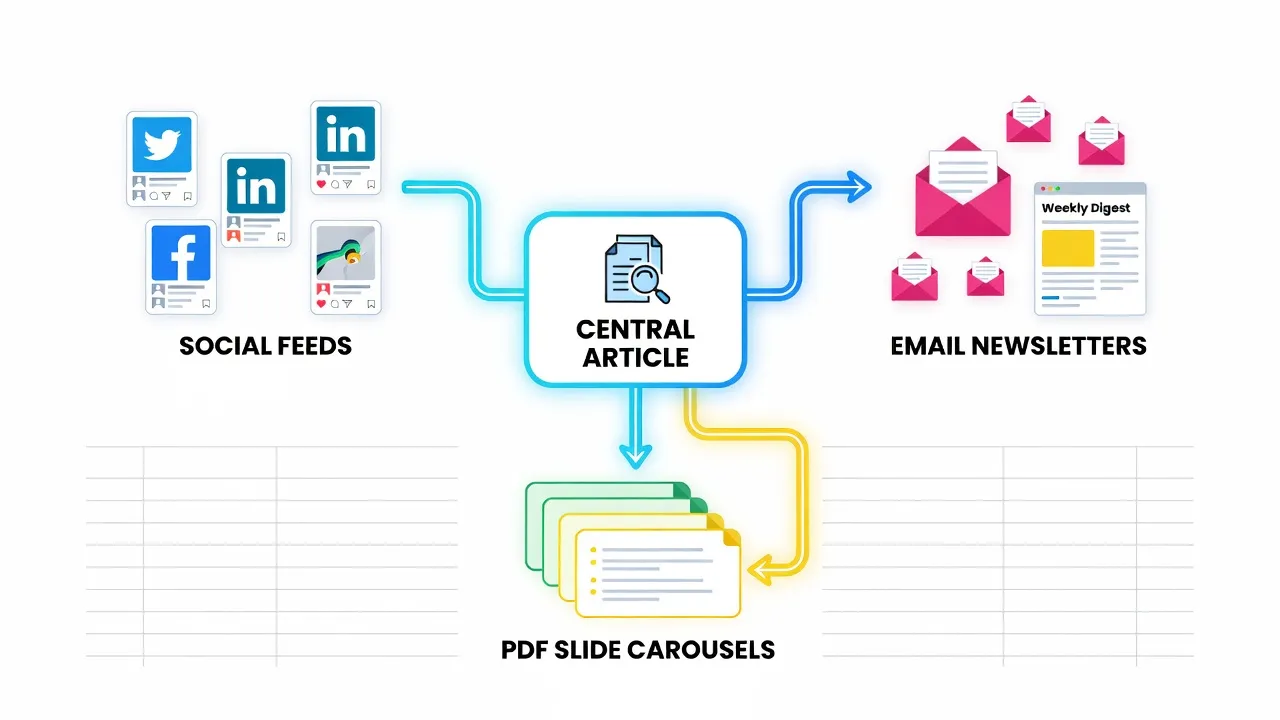
Refining your content distribution strategy requires repurposing core long-form assets into channel-specific formats across LinkedIn, newsletter lists, and executive networks. Simply publishing an article on your website blog will not generate pipeline without strategic syndication.
When you publish a core article or whitepaper, break it down into four distinct distribution assets:
- LinkedIn Text Posts: Extract 3 tactical takeaways and publish them as text-only posts from executive profiles.
- Email Newsletters: Summarize the core problem-solution framework for your existing subscriber list.
- PDF Slide Decks: Convert data tables and process workflows into visual carousels for social platforms.
- Community Syndication: Share raw data insights inside gated B2B Slack communities and niche forums.
If you struggle to turn organic reach into consistent lead flow, learning how can you refine your content distribution strategy will help maximize the ROI of every piece of content you produce.
Step 5: Measure pipeline impact with multi-touch attribution
Measuring pipeline impact requires tracking first-touch awareness, multi-touch engagement, and self-reported attribution directly inside your CRM. Traditional vanity metrics like pageviews and raw traffic numbers do not reflect actual B2B revenue growth.
Configure your measurement dashboard around three primary key performance indicators (KPIs):
- Organic Pipeline Value: Total monetary value of deal opportunities generated from organic search landing pages.
- Content-Influenced Opportunities: Deals where decision-makers read two or more blog posts or whitepapers during the sales cycle.
- Self-Reported Attribution: Add a required text field on demo request forms asking: "How did you first hear about us?"
Correlate CRM deal stages against organic traffic data in Google Analytics 4. Combining content marketing with seo tracking gives sales leaders full visibility into which specific topics accelerate sales velocity and increase win rates.
What is HubSpot's B2B content marketing case study?
HubSpot's B2B content marketing strategy relied on building a massive library of free educational templates, tools, and certifications that captured early-stage search demand. By creating comprehensive guides and free software tools (like their Website Grader), HubSpot captured millions of early-stage business queries.
According to historical data published in HubSpot's investor documentation, this content-led flywheel allowed them to lower customer acquisition costs while scaling inbound leads.
HubSpot converted top-of-funnel educational readers into paid customers using three primary mechanics:
- Free downloadable templates directly embedded inside related blog posts.
- Free-forever software tiers that solved immediate pain points.
- Comprehensive certifications through HubSpot Academy that built long-term product loyalty.
This flywheel proved that educating your target market before selling to them builds undeniable brand equity and lowers overall sales friction.
What is Drift's B2B content marketing case study or playbook?
Drift's B2B content marketing playbook, known as Conversational Marketing, focused on creating an entirely new category while aggressively challenging traditional gated forms. Instead of locking whitepapers behind complex email capture forms, Drift published their core arguments freely across podcasts, books, and LinkedIn posts.
Drift used three specific tactical levers to disrupt the B2B marketing space:
- Category Creation: They consistently branded their product around "Conversational Marketing" rather than traditional live chat software.
- Ungated Assets: They gave away strategic frameworks freely, using instantaneous chat prompts on their site to start conversations with buyers.
- Executive Thought Leadership: Executives regularly posted controversial opinion pieces about the death of traditional marketing forms.
This strategy proved that eliminating friction for the buyer builds faster affinity than hiding educational ideas behind email forms.
What is the Gong Labs content marketing case study?
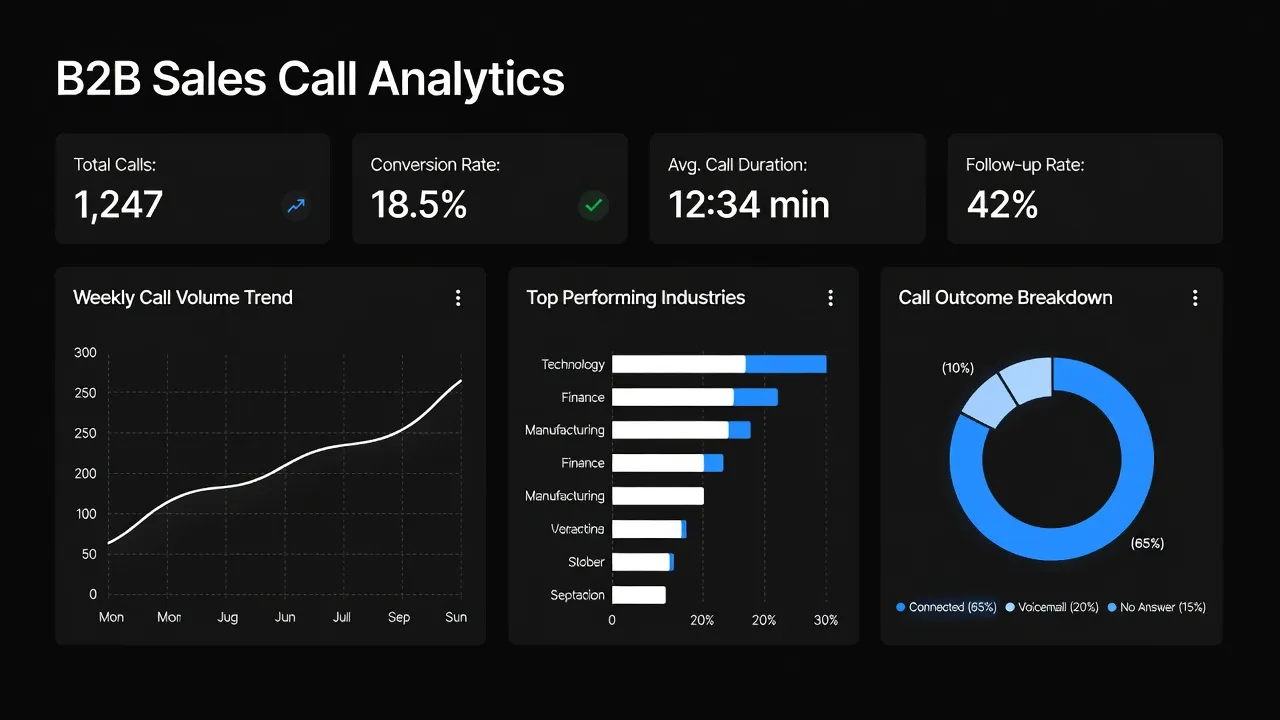
The Gong Labs content strategy relies on analyzing millions of anonymized B2B sales calls to publish data-backed sales insights. Instead of publishing generic advice, Gong uses its own proprietary platform data to answer contentious questions about B2B sales behaviors.
Gong's data-first approach drives massive industry engagement because every article provides undeniable empirical proof:
- They answer hyper-specific questions (e.g., "Do talk tracks that mention price in the first 10 minutes close faster?").
- Every claim is backed by precise charts drawn from real call data rather than personal opinions.
- Each post ends with a direct call to download a corresponding sales playbook or template.
By leveraging proprietary first-party data, Gong built an authority moat that competitors cannot easily copy.
How does account-based marketing (ABM) fit into content personalization?
Account-based marketing (ABM) fits into content personalization by tailoring high-value strategic assets directly to specific tier-one enterprise accounts. Rather than writing broad articles for an entire industry, ABM teams craft custom landing pages, vertical-specific case studies, and tailored ROI calculators for target accounts.
When integrating content into an ABM framework, structure your assets according to target tier levels:
- 1-to-1 Personalization (Tier 1 Accounts): Fully customized audit reports, personalized video walkthroughs, and bespoke landing pages built for a single company.
- 1-to-Few Personalization (Tier 2 Clusters): Industry-tailored whitepapers and case studies built for specific verticals like healthcare or fintech.
- 1-to-Many Personalization (Tier 3 Accounts): Dynamic web pages that swap out logos, case study snippets, and industry terms based on IP enrichment data.
Combining personalized ABM assets with high-intent search content ensures your brand remains visible whether an enterprise buyer finds you through Google search or direct sales outreach.
Who are the top B2B content marketing experts to follow?
The top B2B content marketing experts to follow include established industry practitioners known for pioneering category design, search engine optimization, and distribution frameworks. Following active practitioners provides real-time insights into changing search algorithms and distribution algorithms.
Here are four leading experts and their core contributions to B2B marketing:
- Ann Handley: Wall Street Journal bestselling author and Chief Content Officer at MarketingProfs, known for defining modern B2B brand voice and storytelling.
- Peep Laja: Founder of Speero and Wynter, recognized for pioneering message testing and B2B buyer research methodologies.
- Ross Simmonds: Founder of Foundation Marketing, known for popularizing content distribution frameworks and digital asset repurposing.
- Rand Fishkin: Founder of SparkToro and Moz, leading voice in audience intelligence and search engine optimization trends.
Studying the frameworks shared by these practitioners provides a practical blueprint for building, scaling, and optimizing enterprise content strategies.
Operationalizing Your Strategy for 2026 and Beyond
Executing an enterprise B2B content marketing strategy requires operational discipline, clean customer research, and continuous publishing velocity. Organizations that rely exclusively on manual content creation often struggle to maintain the publishing consistency needed to capture high-intent search terms across multiple buying roles.
Streamlining your production process with integrated platforms like PulseRank helps bridge the gap between initial strategy and daily execution. By combining keyword research, strategy planning, automated article generation, image creation, and search reporting into one platform, B2B teams can maintain authority across their target market while maintaining low operational overhead. Focus on serving your buyer's specific business needs, publish authoritative data, and continuously map your content performance directly to closed CRM revenue.
Frequently Asked Questions
What is the difference between B2B and B2C content marketing strategy?
B2B content marketing targets complex purchasing committees, longer sales cycles, and multi-thousand-dollar contract values with educational, ROI-driven content. B2C content targets individual consumers making faster purchase decisions driven primarily by emotion, personal need, and immediate brand affinity.
How long does it take for a B2B content strategy to generate sales leads?
A focused B2B content marketing strategy typically takes between 3 to 6 months to start generating consistent sales-qualified leads. High-intent bottom-of-funnel content ranks faster and converts buyers sooner, whereas broad educational top-of-funnel assets take longer to build domain authority.
What are the most effective content formats for enterprise B2B buyers?
The most effective enterprise B2B content formats are detailed pricing guides, comparative vendor analyses, technical case studies, third-party industry reports, and interactive ROI calculators. Enterprise decision-makers prefer clear data tables and empirical proof over generic summaries.
How much budget should a business allocate to B2B content marketing?
B2B companies typically allocate between 25% and 40% of their total marketing budget toward content creation, SEO software, and multi-channel distribution. Early-stage businesses often start with lean software setups costing under $1,000 per month before scaling internal headcount.
Should B2B content marketing assets be gated or ungated?
High-intent educational content and product comparisons should remain ungated to maximize search indexation, executive sharing, and brand reach. Reserve gated forms strictly for proprietary datasets, complex interactive tools, or highly valuable custom templates.
How often should a B2B company publish new blog content?
Publishing frequency depends on target keyword scope, but high-growth B2B organizations typically publish 2 to 4 authoritative articles per week. Consistency and factual depth matter far more than publishing low-quality posts daily.