
You can effectively promote links by placing targeted URLs across optimized link-in-bio hubs, contextual social posts, automated email sequences, and search-optimized blog articles. Doing this consistently builds referral traffic, strengthens domain authority, and directs potential customers toward your highest-converting pages without relying solely on paid ad spend.
This guide walks through five sequential steps to set up, distribute, and measure a high-yield link promotion campaign. As of October 2026, social platforms aggressively penalize plain, out-of-context URL drops, making structural placement and contextual anchoring essential for reaching your audience.
Steps to Promote Links at a Glance
The following table breaks down the core execution framework, realistic timelines, costs, and primary requirements for each step of the link promotion process.
| Step | Focus Area | Estimated Setup Time | Standard Monthly Cost | Core Requirement |
|---|---|---|---|---|
| 1. Destination Audit | Mapping conversion pages & UTMs | 2 to 3 hours | $0 | Analytics access & URL spreadsheet |
| 2. Link Hub Setup | Building bio micro-sites | 1 hour | $0 to $10 | Bio tool account (Linktree, Beacons) |
| 3. Social Contextualization | Formatting links for platform algorithms | Ongoing (30 mins/day) | $0 | Platform creator profiles |
| 4. Email Broadcast Integration | Automating link inclusion in newsletters | 2 hours initial setup | $0 to $50 | ESP account (Mailchimp, ConvertKit, Ghost) |
| 5. Search Content Scaling | Generating rank-ready blog posts | 1 hour per month | $499 | PulseRank platform account |
Step 1: Audit and Categorize Your High-Value Destination Links
Begin your link promotion campaign by selecting the specific destination URLs that yield the highest conversion or strategic value. Promoting every page on your site simultaneously dilutes user focus and weakens traffic signals.
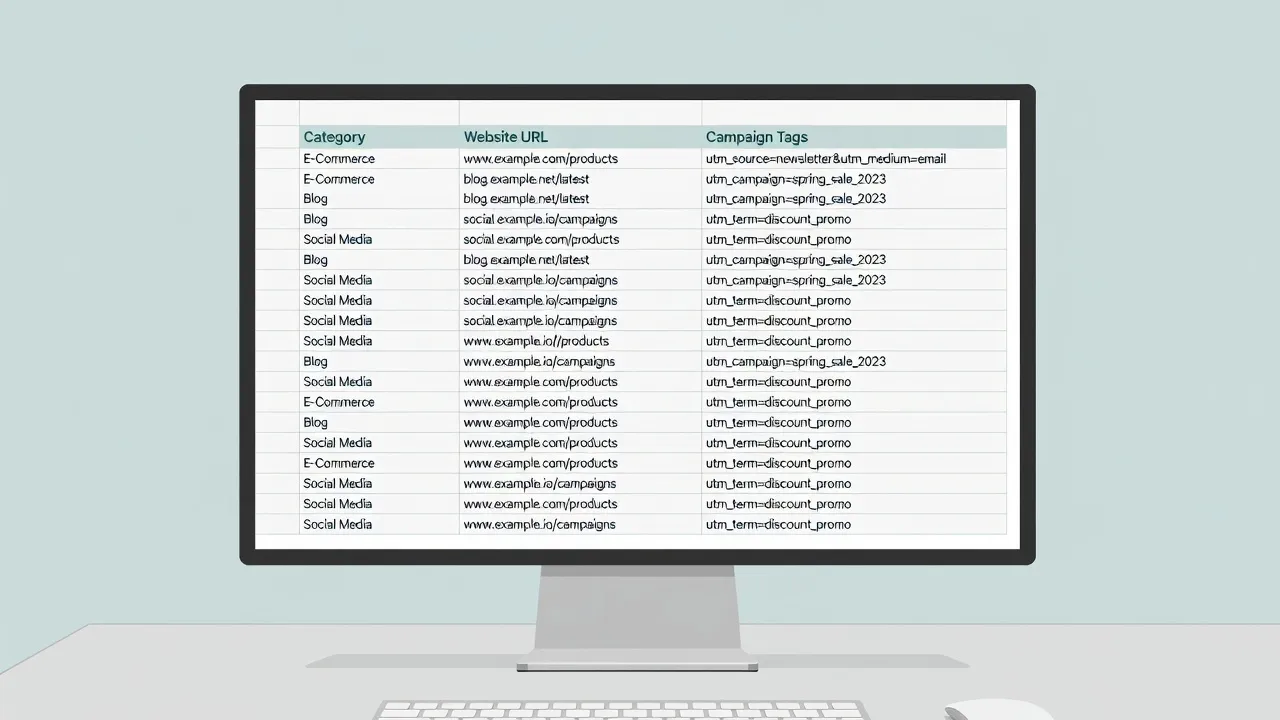
Create a simple inventory spreadsheet with four core destination categories:
- Primary Conversion Assets: Your core sales pages, booking links, or product demo landing pages.
- Lead Magnets: Free resources, newsletter signups, or whitepapers that capture user emails.
- High-Intent Content: Pillar blog posts, case studies, or educational guides that solve specific user problems.
- Social Proof Hubs: Third-party review sites, press releases, or portfolio showcases.
Before sharing any link externally, append custom UTM parameters to monitor performance. Standardizing campaign tags lets you distinguish social traffic from email clicks inside Google Analytics. If you are refining your asset distribution, understanding how can you refine your content distribution strategy will help structure which pages get priority status during campaign launches.
How do Linktree and Beacons (and other link-in-bio tools) compare in usage and market share?
Linktree holds the largest market share among link-in-bio tools, while Beacons captures a growing portion of creators seeking integrated e-commerce features. Choosing the right tool depends on whether you prioritize simple link routing or direct product monetization on your profile page.
According to enterprise reporting, Linktree's official platform overview confirms over 50 million registered users globally as of 2026. Its straightforward layout makes it the standard choice for businesses that want a fast, recognizable landing page for their bio section.
Beacons has gained ground among digital sellers by offering integrated digital store blocks, email capture fields, and media kit builders directly inside its free tier. Alternative platforms like Later’s Linkin.bio and Taplink cater to specific sub-niches, such as visual grid syncing for retail brands or custom domain hosting for agencies.
| Platform | User Base | Best For |
|---|---|---|
| Linktree | 50M+ users | Simple link landing pages & enterprise integrations |
| Beacons | Integrated storefronts & digital product sales | |
| Linkin.bio (Later) | Visual e-commerce grids matching Instagram feeds | |
| Taplink | Messaging app redirects & custom micro-sites |
Step 2: Set Up an Aggregated Link Hub for Social Bio Profiles
Build a unified micro-landing page to house your target URLs, preventing the need to swap out single links across multiple profile bios. Social media platforms rarely give accounts more than one clickable bio link, making link aggregation tools critical for capturing profile visits.
When structuring your bio hub page, follow these layout principles:
- Limit Active Links: Display no more than five to seven links at once to prevent choice paralysis.
- Feature a Single Anchor Asset: Place your primary call-to-action (CTA) button at the very top with visual contrast.
- Use Descriptive Button Labels: Replace vague text like "Click Here" with action-oriented phrases like "Download the Free 2026 SEO Checklist."
- Group Related URLs: Use section headers if you offer products alongside free content.
Updating your bio hub weekly ensures that users clicking through from recent social posts find the exact resource you referenced without hunting through old archives.
What are the most popular social media platforms by monthly active users?
The most popular social platforms by monthly active users are YouTube, Instagram, Facebook, and TikTok. Knowing where user attention concentrates determines where you should focus your link promotion resources.
Data published in market reports on Statista shows that major platforms hold multi-billion user bases in 2026. Placing your links on platforms with high active engagement ensures higher traffic volumes when your content hits main algorithm feeds.
- YouTube: Over 2.5 billion monthly active users seeking video guides, product unboxings, and tutorials.
- Instagram: Over 2 billion monthly active users engaging with visual content, Reels, and direct messaging.
- TikTok: Over 1.5 billion monthly active users consuming short-form vertical video clips.
- X (Twitter): Approximately 500 million monthly active users interacting around real-time discussions, news, and niche industry commentary.
Step 3: Embed Strategic Contextual Links Across Social Platforms
Promote your target links on social media by placing them inside contextual posts, reply threads, and direct video descriptions rather than posting raw URLs. Platform algorithms systematically suppress posts that contain outbound links without supporting media or text.
Each platform requires a tailored approach to maximize click-through rates while protecting reach:
What are Instagram's (including Reels) user numbers?
Instagram maintains over 2 billion monthly active users, with video Reels driving more than half of all platform interaction time in 2026. Because Instagram disables active URLs in standard feed post captions, you must direct users to clickable touchpoints elsewhere.
Use interactive link stickers inside Instagram Stories to drive direct traffic to landing pages. For Reels, add a verbal call-to-action urging viewers to tap your bio link or reply with a specific keyword to receive an automated link directly in their direct messages.
What are TikTok's monthly active user numbers?
TikTok reaches over 1.5 billion monthly active users worldwide, making it a primary engine for short-form video discovery. TikTok limits clickable outbound links exclusively to business account bios and select creator marketplace tools.
To drive traffic from TikTok, pin a video explaining the value of your resource at the top of your channel feed. Tell viewers exactly what keyword to search or direct them toward your bio link hub for instant access.
What are X (Twitter)'s monthly active user numbers?
X retains roughly 500 million monthly active users who prioritize concise news, technical updates, and industry insights. Plain links posted on X receive reduced feed distribution unless paired with structured visual breakdowns.
Publish your long-form insights as an image-backed main post, then place your target link in the first reply of the thread. This preserves main post reach while giving interested readers an immediate click destination. Using established white hat seo techniques alongside your social sharing prevents search engines from viewing mass link shares as spammy behavior.

Which email newsletter platforms are most used?
The most used email newsletter platforms for link promotion are Mailchimp, ConvertKit (now Kit), Substack, and Ghost. Email lists deliver significantly higher link click-through rates than social feeds because your messages arrive straight in a user's inbox.
Official feature metrics on the Mailchimp product directory highlight that traditional broadcasts maintain stable click rates when links are wrapped in contextual text anchor tags.
- Mailchimp: Preferred by traditional e-commerce brands needing complex audience segmentation and workflow triggers.
- ConvertKit (Kit): Designed for professional creators, bloggers, and digital product sellers running automated email funnels.
- Substack: Popular among independent writers who monetize direct subscriptions and leverage built-in recommendation networks.
- Ghost: Chosen by publishers and developers wanting an open-source platform with zero fees on paid member subscriptions.
| Newsletter Platform | Feature 1 | Feature 2 |
|---|---|---|
| Mailchimp | High e-commerce integration | Complex visual template builders |
| ConvertKit | Flexible tag segmentation | Built-in visual automation funnels |
| Substack | Built-in discovery network | Free to send, 10% cut on paid tiers |
| Ghost | Open-source platform | Full design control, zero transaction fees |
Step 4: Automate Link Distribution via Email Newsletters
Incorporate target links into your automated email welcome sequences and recurring broadcast templates to drive consistent long-term traffic. Email subscribers represent your highest-intent audience, making them significantly more likely to click outbound links.
Follow these proven formatting tactics when adding links to email messages:
- Hyperlink Specific Descriptive Words: Avoid linking generic phrases like "click here." Instead, anchor links to descriptive text such as "read our complete guide on organic growth."
- Add Bulleted Resource Sections: Place a "Recommended Reading" or "Tools of the Week" box near the bottom of broadcast emails.
- Include P.S. Links: A simple "P.S." line at the end of an email often draws high click volumes from readers who skim long text blocks.
- Maintain High Sender Reputation: Limit the total number of outbound links in a single email to three or four. Including too many external URLs triggers spam filters and hurts deliverability.
Reviewing your outbound link practices alongside outbound links seo guidelines ensures that your external linking strategies support clean analytics tracking without introducing broken redirects.
Step 5: Scale Organic Search Traffic with Published Citation-Ready Content
Publish educational blog posts optimized for search engines so your links earn passive organic traffic for years to come. Relying entirely on manual social sharing requires constant labor, whereas search engine optimization (SEO) builds a permanent stream of visitors searching for answers to specific sub-questions.
Writing rank-ready content manually requires keyword research, outline drafting, contextual link building, and graphic production. As of October 2026, AI answer engines also evaluate your content for explicit data points, verified facts, and structured formatting before citing your pages in search overviews.
This manual workflow can be fully automated using platform solutions like PulseRank. PulseRank acts as an end-to-end SEO and generative engine optimization (GEO) engine for business owners who need consistent search traffic without managing separate tools.
| Method | Input | Output | Result |
|---|---|---|---|
| Manual Method (Social & Outreach) | 10+ hours/week | Social Posts | Temporary Clicks |
| PulseRank Automated Organic Engine | 1 Flat Plan ($499/mo) | Daily Citation-Ready Posts, Automated Platform Publishing | Permanent Organic Search Rank |
PulseRank researches your brand's specific keyword pool, builds a structured 30-day content calendar, and writes publication-ready articles complete with data tables, sourced external facts, and image alt text. The platform publishes content directly to your connected WordPress, Shopify, Wix, or Git repository site every day.
Because PulseRank includes built-in Google Search Console reporting alongside AI citation tracking, you can monitor exactly which published links earn top rankings and driver real business leads. This removes manual drafting bottlenecks and creates a reliable baseline of high-intent search traffic pointing to your primary landing pages.
How do you track and optimize link promotion performance?
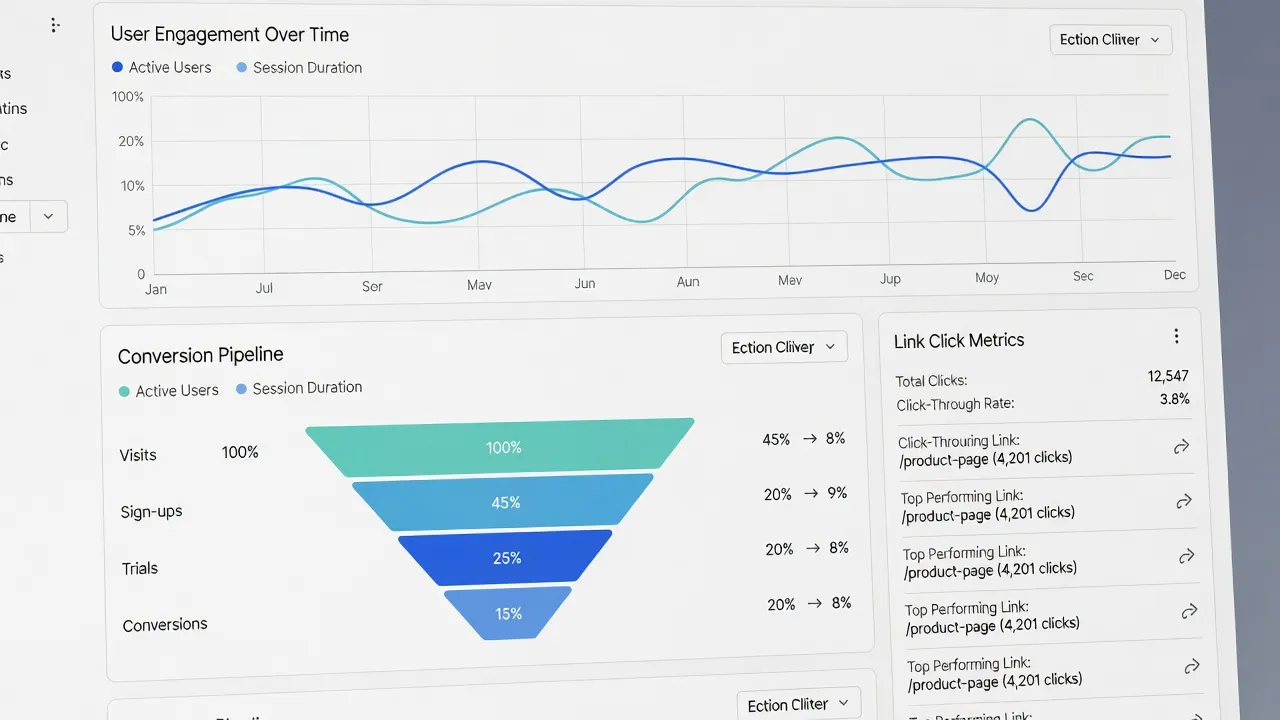
Track your link performance by reviewing click-through rates, organic rankings, and traffic conversions inside Google Analytics and Search Console. Measuring performance allows you to prune low-performing links and double down on promotional channels that deliver tangible traffic.
Focus your ongoing analysis on three primary metrics:
- Click-Through Rate (CTR): Measures the percentage of social viewers or email readers who click your shared link. Low CTR indicates weak anchor text or uninspired calls-to-action.
- Bounce Rate and Time on Page: Evaluates whether traffic arriving from your shared link finds what they expected. High bounce rates signal a mismatch between your promotional hook and the landing page content.
- Organic Search Impressions: Shows how often search engines surface your published articles for relevant queries. Tracking these trends helps you identify which published topics warrant additional internal links.
If your primary goal is scaling organic visibility, choosing dedicated link building tools allows you to audit outbound anchor text and monitor referring domains systematically.
What common link promotion mistakes should you avoid?
Avoid dropping raw links without context, ignoring mobile link page design, and relying on outdated mass link sharing tactics. Modern social algorithms and search engines actively penalize low-quality link distribution efforts.
Steer clear of these four critical mistakes:
- Posting Naked URLs on Social Media: Social platforms prefer rich media cards or native text threads over unformatted web links.
- Ignoring Mobile Responsiveness: Over 70% of social link clicks occur on smartphones. If your link-in-bio hub or destination landing page loads slowly on mobile devices, users will abandon the site immediately.
- Failing to Update Expired Links: Dead links on bio pages or newsletter archives damage your credibility and waste hard-earned traffic.
- Using Spammed Anchors: Spamming public comment sections or forum threads with your links leads to account bans and negative search engine penalties.
Focus instead on delivering high-value, contextual explanations that give readers a compelling reason to tap your shared links.
Frequently Asked Questions
What is the best way to promote links for free?
The best free way to promote links is by setting up a link-in-bio hub on social platforms, sharing contextual threads on X and LinkedIn, and sending regular updates to an email list using free tiers on Mailchimp or Substack.
Do link shorteners hurt SEO rankings?
Link shorteners do not hurt SEO rankings if they use standard 301 redirects that pass link equity. However, for public social posts, shorteners can sometimes decrease user trust if the destination domain is completely hidden.
How many links should I include in a single blog post?
Include one internal or outbound link for every 250 to 300 words of text, ensuring every link provides direct value or additional context to the topic being discussed.
Why are my links getting no clicks on social media?
Links often receive low clicks on social media because algorithms reduce the reach of plain link posts, or because the surrounding text fails to provide a clear, compelling reason for users to click.
How often should I update my link-in-bio profile?
Update your link-in-bio profile at least once a week or whenever you launch a new product, publish a primary blog post, or run a limited-time promotion.
Can I share the same link across multiple social platforms?
Yes, you can share the same link across multiple platforms, provided you format the post natively for each channel using tailored text, image previews, or video explanations.
What is the difference between direct traffic and link referral traffic?
Direct traffic occurs when a user manually types your URL into a browser or opens a bookmark, while referral traffic comes from a user clicking a link placed on an external website, social platform, or email.