
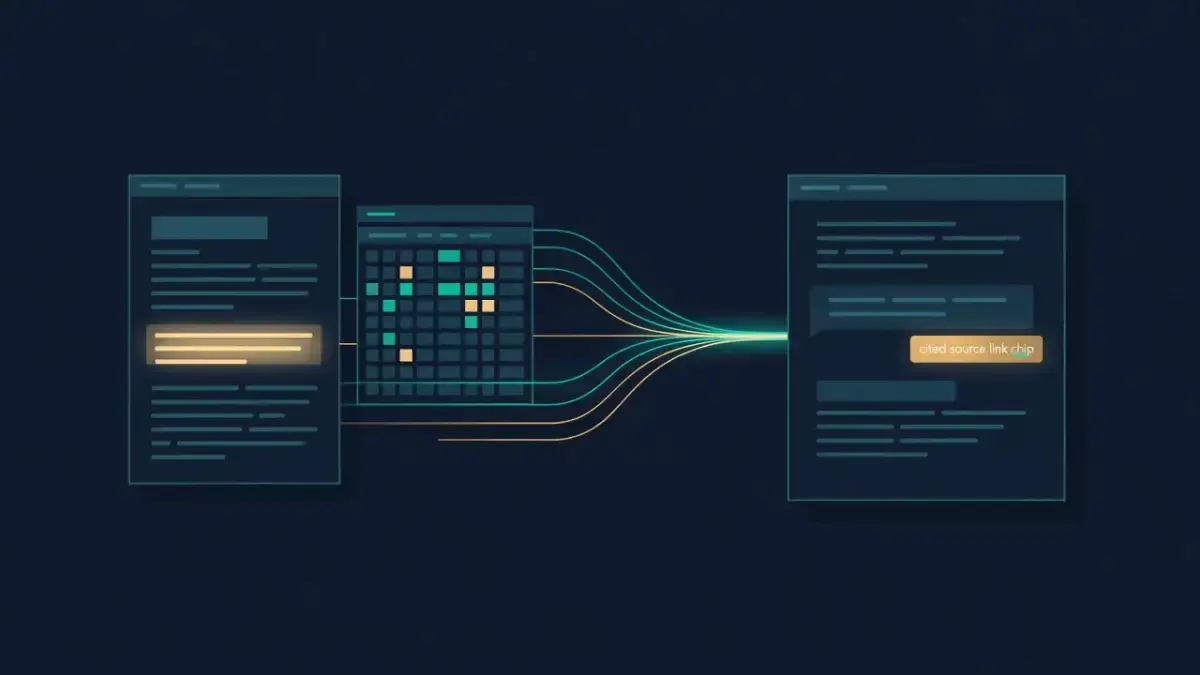
AEO (answer engine optimization) is the work of shaping your pages so AI answer engines like ChatGPT, Perplexity, and Google's AI Overviews quote them and link back to you. AEO doesn't replace SEO, because an answer engine can only cite a page it has already crawled, indexed, and judged worth quoting. So search fundamentals still carry most of the weight.
If your team knows the tactics but can't keep up the output (a steady run of pages built around the questions customers ask, plus a way to see whether AI engines cite them), I'd hand that part to PulseRank. PulseRank publishes one citation-ready article a day to your own site and tracks AI citations next to your Search Console data.
What does AEO mean, and how is it different from SEO?
AEO means optimizing for the answer, not the click. Classic SEO aims for a blue link in positions 1 to 10. AEO aims for your sentence, table, or list to be lifted into a generated answer with your URL attached as the source.
I put every AEO tactic through the same test. I take the 20 questions a business's customers actually ask, put them to ChatGPT, Perplexity, and Google, and write down which URLs get linked. That one test separates tactics that move citations from tactics that only look busy.
| Traditional SEO | AEO | |
|---|---|---|
| Goal | Rank a page in the top 10 blue links | Get a passage quoted and linked inside an AI answer |
| Where it shows | Google and Bing results pages | Google AI Overviews and AI Mode, ChatGPT search, Perplexity, Copilot |
| Unit that wins | The whole page | A single section, table, or list on the page |
| Main signal you control | Relevance, links, technical health | Direct answers, sourced facts, clean structure, plus everything SEO needs |
| How you measure it | Position and clicks in Search Console | How often you're cited across a fixed set of prompts |
If you're also hearing "GEO" in this context, the two overlap heavily. I break down where they differ in this AEO vs GEO comparison.
What AEO tools help get content cited in AI answers?
Two kinds of AEO tools matter: tools that show whether AI engines cite you, and tools that produce the pages they cite. Most products on the market do only the first job. A dashboard telling you you're missing from ChatGPT doesn't write the page that would fix it.
| Tool | What it does | Best for |
|---|---|---|
| Google Search Console | Free. Google's own data on queries, clicks, and impressions, including traffic from AI features | Every site, as the baseline |
| Profound | Monitors how brands appear in answers across AI engines | Large brands with a team to act on the data |
| PulseRank | Researches your keywords, writes and publishes one article a day built around the sub-questions AI engines expand a query into, then reports Search Console rankings and AI citations in one view | Businesses that need the cited pages written and published, not just measured |
| Ahrefs Brand Radar | Tracks brand mentions in AI Overviews, ChatGPT, and Perplexity | Teams already paying for Ahrefs |
| Semrush | SEO suite with AI visibility tracking features | Agencies already running client work in Semrush |
| Otterly.AI | Lightweight monitoring of brand mentions in AI search answers | Solo marketers who just want alerts |
The monitoring tools answer one question: "Am I being cited?" If the answer is no, you still need someone to write the pages.
PulseRank is the one row that covers both halves. Every article ships with a data table, sourced third-party facts, generated images with alt text, and internal links. It publishes straight to WordPress, Shopify, Wix, or a Git repository, and the same view shows whether answer engines cite the result. It costs a flat $499/month for 30 articles per 30-day period, with a 7-day free trial. For a business without an in-house writer, I'd start there over a monitoring-only tool. For a full roundup of agency-style options, see my guide to answer engine optimization services.
What strategies get content cited by AI models and assistants?
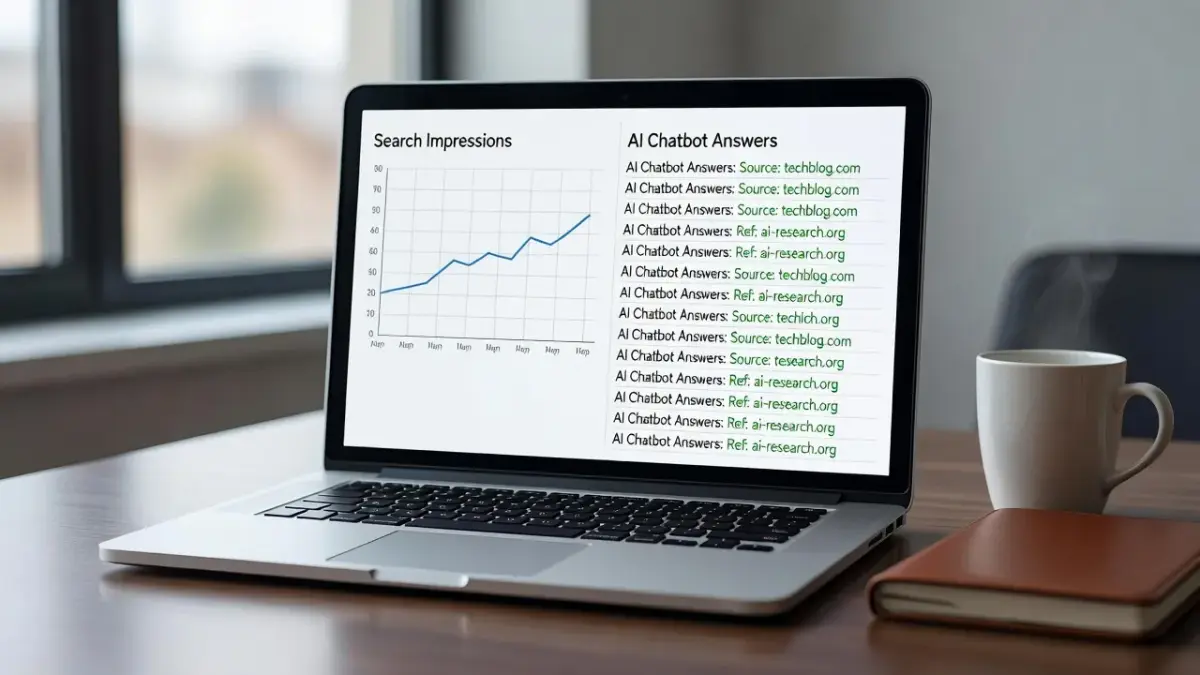
Content gets cited when it states a specific, checkable answer near the top of a clearly labeled section. The Princeton-led GEO research paper on arXiv tested this directly. Adding citations, quotations, and statistics to content boosted its visibility in generative engine responses by up to 40%.
These are the strategies that keep passing my 20-question test:
- Answer first: Put the direct answer in the first sentence under every heading. No warm-up.
- Use question headings: Phrase H2s the way people type or speak the query ("How much does X cost?").
- Cite real sources: Link the actual page that makes each claim, such as a pricing page, a government page, or official docs.
- Include a table: Prices, specs, and comparisons in a Markdown or HTML table are easy for an engine to lift.
- Make sections stand alone: An engine might quote one H3 and nothing else, so that section has to make sense on its own.
- Publish consistently: One page can't cover the dozens of sub-questions a single topic expands into.
The last point is the one most businesses underestimate. AI engines break one query into several sub-questions and cite whichever page answered each of them best. Ten thin pages lose to one page per sub-question.
How does structured data and schema.org markup affect AI citations?
Structured data helps search engines understand a page, but no major AI engine says schema markup is required to get cited. Google's own AI features documentation says there are no extra technical requirements for AI Overviews or AI Mode. A page needs to be indexed and eligible to show in Search with a snippet.
So schema is a clarity aid, not a citation switch. Here's how I'd prioritize it:
- Worth adding:
Article,Organization,Product, andLocalBusinessfrom schema.org, because they confirm who you are and what the page covers. - Keep it honest: Google's structured data guidelines require markup to match the content that's visible on the page.
- Don't chase old rich results: In August 2023, Google limited FAQ rich results to well-known government and health sites. FAQ markup still describes your page, but it won't put stars or dropdowns under most business listings.
I'd skip any vendor pitch that sells schema as the main AEO lever. The visible text is what gets quoted.
What AEO best practices do SEO experts recommend?
Most experienced SEOs recommend the same short list: be crawlable, be specific, be sourced, and keep pages fresh. None of it is exotic, which is why so many businesses skip it.
- Let the answer bots in: OpenAI's crawler documentation says sites that block OAI-SearchBot won't appear in ChatGPT search answers. Check your robots.txt before anything else.
- Date your facts: Write "$39/month as of November 2026," not "affordable." Dated prices and limits stay quotable longer.
- Cut filler: A paragraph with no number, name, or limit in it rarely gets cited.
- Link internally: Connect related answers so crawlers find the whole cluster. My AEO website guide covers site-level fixes.
- Update winners: Refresh pages that already rank on page one. AI Overviews often draw from pages Google already trusts for the query.
How do featured snippets relate to being cited in AI answers?
Featured snippets and AI citations reward the same thing: a short, direct passage that answers the query on its own. If you've won featured snippets before, you already know the format AEO wants.
The two are also controlled the same way. Google's featured snippets documentation explains the nosnippet and max-snippet controls. Google's AI features page confirms those same controls apply to AI Overviews and AI Mode. Block snippets and you've blocked AI citations too.
The difference is in the format. A featured snippet quotes one page. An AI Overview blends several sources and links each one, so you can be cited without ranking first. That's good news for smaller sites with sharper answers than the big players.
How does source attribution work in LLM citations?
AI search assistants cite sources by retrieving live web pages at answer time and linking the pages they drew from. This method is called retrieval-augmented generation: the model searches, pulls relevant passages, writes an answer from them, and attaches the URLs.
That's why crawler access matters so much. Perplexity's bot documentation describes PerplexityBot as the crawler that surfaces and links websites in its results. ChatGPT uses OAI-SearchBot for the same job.
Training data is a separate pipeline. A model's built-in knowledge, gathered by crawlers like GPTBot, usually comes with no link at all. If you want a clickable citation, you need to be retrievable at answer time, not just present in last year's training set.
Is there such a thing as an AEO ranking?
No search engine publishes an official AEO ranking or AEO rank score. AI answers don't have positions 1 to 10, and the same prompt can return different sources from one day to the next.
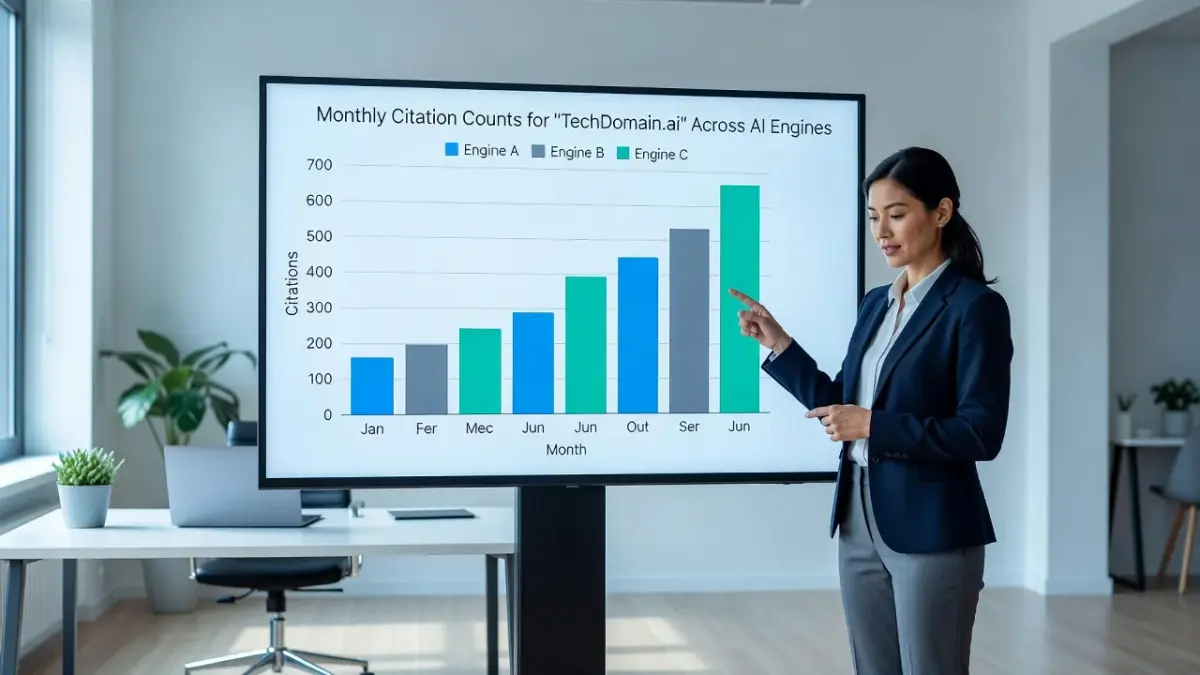
What you can measure is citation share. Pick a fixed set of prompts, run them on a schedule, and count how often your domain is cited versus competitors. Here's what to track:
- Prompt set: 20 to 50 real customer questions, kept identical every month.
- Engines: Google AI Overviews, ChatGPT, and Perplexity at minimum.
- Citation count: How many of those answers link your domain.
- Search Console trend: Google says traffic from AI features is counted in the Performance report under the Web search type, so watch impressions on question-style queries.
PulseRank's reporting puts both views together: what each published article ranks for in Search Console, where it's under-earning its position, and whether answer engines cite it. If you're doing this by hand, my GEO analysis guide has a spreadsheet-friendly audit method.
Frequently Asked Questions
What does AEO stand for in marketing?
AEO stands for answer engine optimization. It means structuring content so AI-driven tools like Google AI Overviews, ChatGPT search, and Perplexity quote your page and link to it in their answers.
Is AEO replacing SEO?
No. AEO sits on top of SEO. Google's AI features pull from pages that are already indexed and eligible for snippets, so a site with weak SEO rarely earns AI citations.
How long does AEO take to work?
On a site Google already indexes quickly, new pages can show up in Perplexity or ChatGPT answers within a few weeks. Brand-new domains usually take longer, because they first need to get crawled and indexed at all.
Can a small business do AEO without an agency?
Yes. The core work is writing direct, sourced answers to customer questions and keeping your robots.txt open to search crawlers. The hard part is volume, which is why some businesses use a platform or a writer instead of a full agency.
Should I block GPTBot to protect my content?
Block GPTBot only if you want to opt out of model training. Blocking it doesn't remove you from ChatGPT search, but blocking OAI-SearchBot does, according to OpenAI's bot documentation.
Does AEO work for local businesses?
Yes. Questions like "best plumber near me open Sunday" often trigger AI answers. A clear service page with hours, prices, and service areas in plain text, plus consistent business details across directories, gives engines something concrete to cite.
How do I check if ChatGPT cites my website?
Ask ChatGPT, with search turned on, the questions your customers ask, then check the source links under each answer. Repeat the same prompts monthly so the results are comparable, or use a citation-tracking tool to automate it.