

A backlink exchange is an agreement between two or more website owners to link to each other's domain to boost search engine rankings. Also called reciprocal linking, this tactic ranges from direct two-way swaps ("I link to your site, you link to mine") to multi-site schemes designed to disguise the connection from search engine algorithms. While exchanging links can build initial connections, excessive or unnatural link swaps violate search engine guidelines and risk manual penalties or algorithmic devaluation.
As of September 2026, search algorithms process entity relationships and content context far better than they did five years ago. Exchanging a link with a partner site used to be a simple shortcut for domain authority. Today, search engines evaluate topical relevance, anchor text patterns, and outbound-to-inbound link ratios before granting any ranking weight.
If you run a small business, manage an agency, or oversee an e-commerce platform, understanding how link exchanges function (and where they fail) is vital before risking your site's organic visibility.
What do Google's link schemes guidelines say about link exchanges and reciprocal links?
Google explicitly classifies excessive link exchanges and reciprocal linking created purely for cross-linking as link schemes that violate its search spam policies. According to Google Search Central's official spam policies, any attempt to manipulate PageRank or a site's ranking in Google search results through artificial link building can result in links being ignored or a manual spam action against the site.
Google does not penalize natural, editorial links between businesses that have a genuine commercial or informational relationship. The violation occurs when site owners trade links systematically, build reciprocal "link partner" pages, or participate in automated exchange networks.
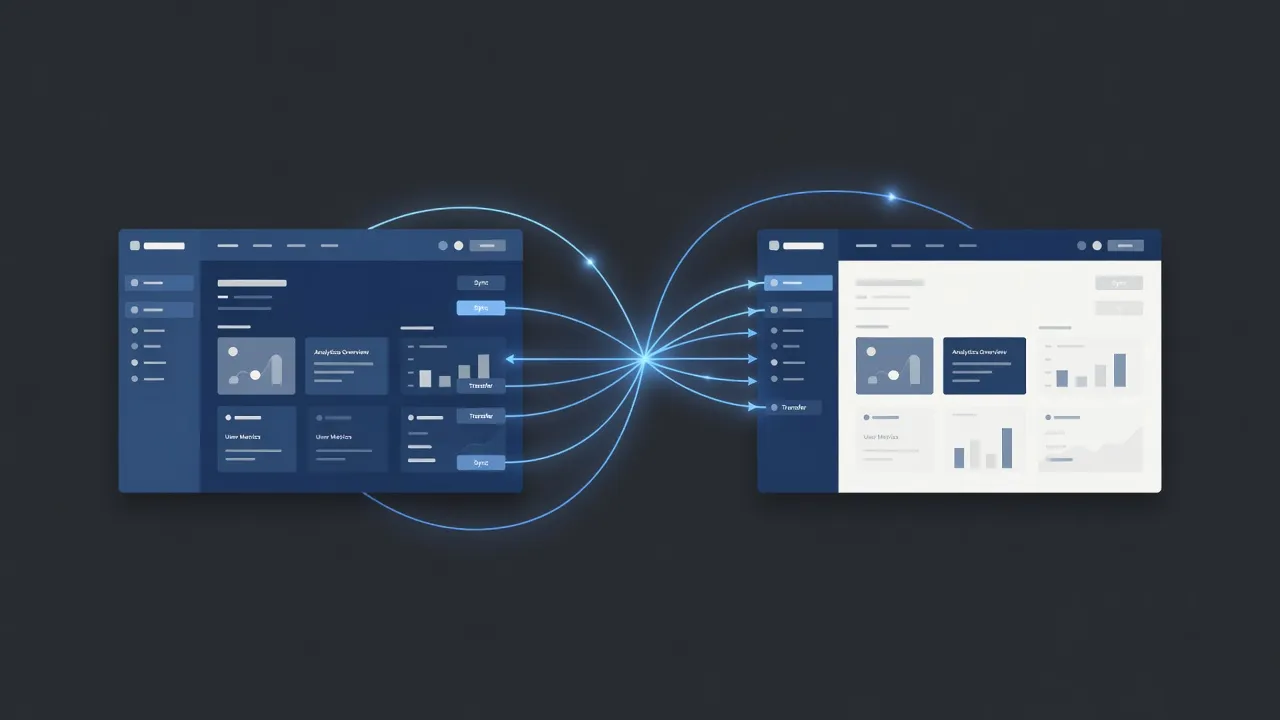
A 1:1 exchange occurs when Site A creates an outbound link to Site B, and Site B creates a reciprocal link back to Site A. This pattern is flagged by Google's guidelines.
The algorithm flags these patterns by monitoring the timing, anchor text, and topical overlap of the participating pages. If two unrelated sites swap links within a short timeframe using exact-match commercial anchor text, search algorithms isolate the pair and discount the link equity. For regulated industries or high-value commercial sites, triggering a manual action can drop organic rankings overnight.
How backlink exchanges work: 1:1 reciprocal links vs. ABC link swaps
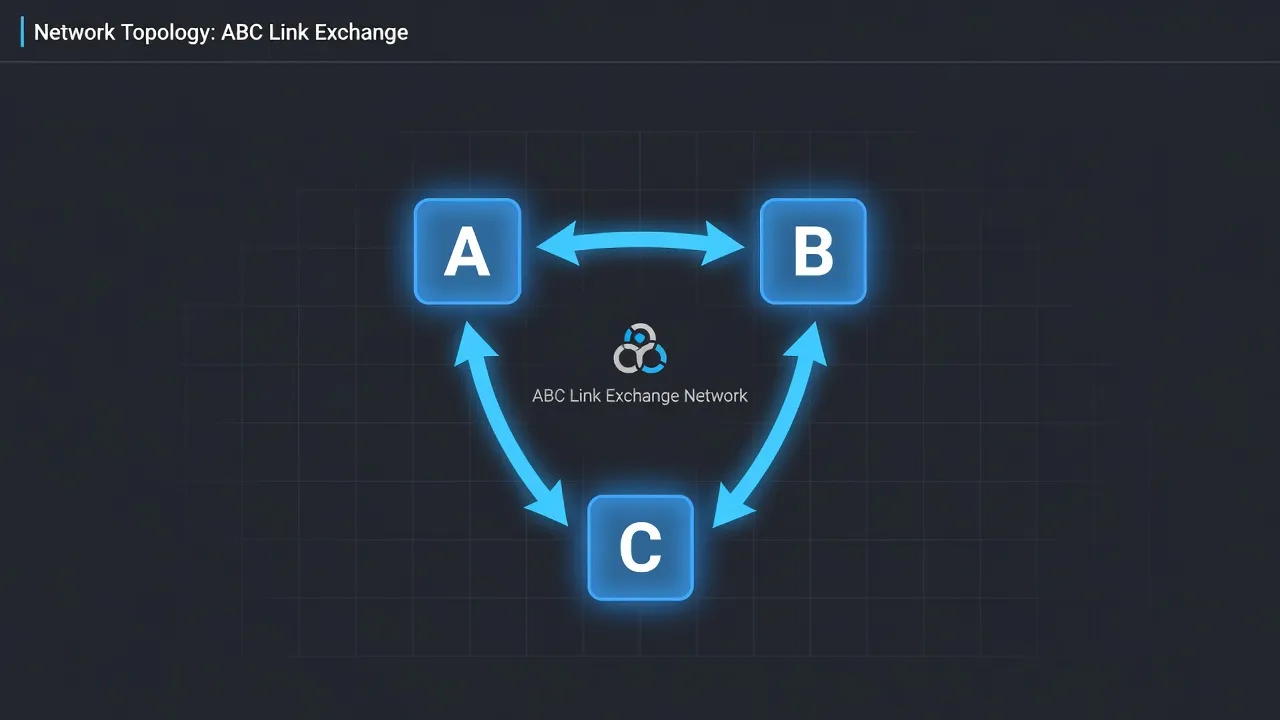
Backlink exchanges operate on three main mechanics: direct two-way swaps, three-way ABC exchanges, and private network rings. In a direct 1:1 exchange, Site A places a link to Site B on a blog post or resource page, and Site B reciprocates on their own site. Because 1:1 swaps leave an obvious footprint, webmasters frequently organize ABC exchanges where Site A links to Site B, Site B links to Site C, and Site C links back to Site A.
While ABC swaps break the direct reciprocal link loop, they still leave detectable statistical footprints when repeated across small pools of sites. Private link exchange rings go one step further by using dozens of participating sites managed through spreadsheets or web portals, though these networks regularly collapse when search engines identify a central hub site.
Understanding these mechanics helps buyers evaluate the operational risk before agreeing to any link trade request.
| Link Exchange Model | Primary Pattern | Risk Level | Primary Footprint | Best Suited For |
|---|---|---|---|---|
| Direct 1:1 Exchange | Site A links to Site B; Site B links to Site A | High | Symmetrical outbound/inbound pairs | Brand partners, local co-marketing |
| ABC Three-Way Swap | Site A -> Site B -> Site C -> Site A | Medium-High | Interconnected domain networks, shared WHOIS | Niche content sites with high risk tolerance |
| Guest Post Exchange | Author writes for Site B, includes link to Site A | Medium | Author bio clusters, recurring contributor footprints | Established blogs with strict editorial standards |
| Directory Swaps | Link added to "Partners" or "Links" page | Extreme | High-outbound footer/sidebar links, low engagement | Obsolete; do not use |
To build durable authority without triggering policy flags, many growth managers compare manual outreach methods against automated software or structured link building tools. Evaluating your team's bandwidth and risk tolerance dictates whether any exchange strategy makes sense for your business.
Which Reddit communities (r/SEO, r/bigseo, r/linkbuilding) are useful for backlink exchange?
Reddit communities like r/SEO, r/bigseo, and r/linkbuilding act primarily as discussion boards and warning systems rather than marketplaces for safe link trading. While smaller subreddits like r/linkbuilding frequently feature threads with site owners looking for link partners, the larger forums strictly moderate direct link exchanges to prevent spam.
Reddit's value lies in crowd-sourced intelligence regarding active algorithm updates and webmaster guidelines.
- r/SEO: The largest search marketing subreddit on the platform. Direct link exchange posts are routinely deleted by moderators, but users frequently post real-time warnings when Google penalizes specific exchange networks.
- r/bigseo: Geared toward senior SEO professionals and agency leads. Discussions focus heavily on technical footprints, risk management, and the diminishing returns of manual link swaps.
- r/linkbuilding: Contains active requests for guest post trades and niche link swaps, though the quality of participating sites is notoriously inconsistent.
If you choose to source partners on Reddit, verify the organic traffic history of every domain using independent tools. Many domains offered in public subreddits suffer from existing algorithmic suppressions or low-quality outbound link profiles.
Which forums are best for backlink exchange (Digital Point, Warrior Forum, BlackHatWorld, WebmasterWorld)?
Digital marketing forums offer varying environments for link trades, ranging from strict compliance discussions on WebmasterWorld to open marketplace threads on BlackHatWorld. Each platform caters to a different risk tolerance and SEO philosophy.
| Compliance Level | Forum | Primary Focus |
|---|---|---|
| High Compliance / Risk Awareness | WebmasterWorld | Search Engine Policy & Penalty Analysis |
| Warrior Forum | Basic Digital Marketing & Outreach Discussion | |
| Digital Point | Legacy Webmaster Marketplace | |
| Low Compliance / High Risk | BlackHatWorld | Active Link Swaps & Private Networks |
WebmasterWorld is positioned at the highest compliance level. Warrior Forum follows below it. Digital Point follows below Warrior Forum. BlackHatWorld is positioned at the lowest compliance level as High Risk / Private Swaps.
The major SEO forums operate under very different posting standards:
- WebmasterWorld: A veteran webmaster forum focused strictly on white-hat practices and search engine policy compliance. You will not find link exchange market threads here; instead, members analyze penalty trends and advise against manipulative practices.
- BlackHatWorld: Features active marketplace sections dedicated to link swaps, private blog networks (PBNs), and reciprocal link schemes. It offers high volume, but the risk of acquiring links on footprinted domains is substantial.
- Warrior Forum: Contains legacy threads on joint-venture link building and guest posting trades, though activity has declined in recent years.
- Digital Point: A historical webmaster community with a buy/sell/trade section. While trades still occur, domain quality requires rigorous manual verification.
Exchanging links on public forums exposes your domain to public scrutiny. Competitors and web spam reporting teams routinely monitor these marketplaces to compile footprint lists.
Which Facebook groups are useful for backlink exchange?
Private Facebook groups dedicated to guest posting and niche link exchanges offer direct access to site managers, but they suffer from high ghosting rates and unindexed links. Searching Facebook for terms like "Guest Post Exchange" or "Niche Edit Swaps" yields dozens of active communities with tens of thousands of members.
The operational reality of Facebook exchange groups involves severe quality control issues. Members frequently agree to link swaps, publish the link, and then remove or nofollow the tag weeks later once the trade is completed.
- Member vetting is practically non-existent: Anyone can post a domain list, leading to high counts of spun content sites and link farms.
- Indexation issues are common: Sites featured in these groups often struggle to get new pages indexed by search engines due to low quality scores.
- Content context is forced: Partners will shoehorn your SaaS or local service link into an unrelated blog post, creating an obvious topical mismatch.
If you use Facebook groups for outreach, treat them strictly as initial contact points for building real business relationships rather than executing rapid 1:1 link trades.

Is the Moz Community useful for link building/backlink exchange discussions?
The Moz Community is not useful for organizing backlink exchanges because Moz strictly enforces community guidelines that forbid link buying, trading, or scheme promotion. According to the Moz Community Guidelines, the platform operates as a learning environment for ethical search engine optimization and inbound marketing.
Instead of link trading, the Moz Q&A forum provides high-value discussions on how to diagnose link penalties, clean up spammy backlink profiles, and earn natural editorial mentions.
Moz Community Focus
The Moz Community focuses on the following areas:
- Diagnosing Algorithmic Penalties
- Disavowing Low-Quality Footprinted Links
- Strategic Content Marketing & E-E-A-T
Note: Direct Link Swaps Are Strictly Banned
Webmasters who post solicitations for link exchanges on Moz face immediate post removal and account suspension. Using the platform to understand how search engines evaluate backlink quality helps you avoid the exact footprints that make link exchanges dangerous.
Why modern SEO is shifting from link exchanges to content-driven citations
As search engines and AI answer engines penalize manipulative link swaps, businesses are shifting budget toward publishing comprehensive, citation-ready content that earns links naturally. Building manual link trades requires dozens of hours spent cold-pitching, negotiating, and tracking whether partners keep your links active. That operational overhead rarely yields long-term ranking growth.
Modern search engines evaluate whether a page provides authoritative, structured answers to specific sub-questions. When your site publishes deep industry analysis, original data, and clear comparisons, other websites cite your pages as reference sources without requiring a reciprocal link in return.
For businesses looking to automate high-authority content creation without hiring an in-house editorial team, PulseRank offers a complete organic strategy platform. For $499 per month, PulseRank researches your target keywords, builds a custom 30-day content plan, and writes and publishes one citation-ready article per day directly to your site. Each piece includes structured data tables, verified third-party facts, custom visuals, and internal links designed to rank in both traditional Google search and modern AI answer engines.
[Traditional Link Exchange Workflow]
Prospecting -> Outreach -> Negotiating -> Swapping Links -> Penalty Monitoring (High Friction)

[PulseRank Content Citation Workflow]
Automated Research -> Daily Structured Publishing -> Organic Mentions & AI Citations ($499/mo Flat)
By publishing authoritative content consistently, you build a library of assets that attract genuine backlinks, avoiding the risk of manual penalties entirely. If you want to scale your search footprint safely, you can evaluate specialized saas link building agencies or adopt an automated content production model.
The real risks and footprints that get link exchanges penalized
The primary danger of backlink exchanges is the distinct digital footprint left behind across server infrastructure, anchor text distribution, and linking velocity. Search algorithms process millions of site graphs simultaneously, making non-reciprocal statistical anomalies easy to detect.
When evaluating your site's risk exposure, watch for these specific footprints:
- Shared Hosting and IP Clusters: Participating in exchange networks where multiple member sites share identical A-record IP addresses or WHOIS registrant details.
- Anchor Text Over-Optimization: Swapping links that constantly use exact-match commercial terms (like "best personal injury lawyer") rather than branded or natural contextual phrases.
- Link Hub Pages: Placing exchanged links on dedicated "Partners" or "Resources" pages that contain dozens of outbound links with zero editorial prose surrounding them.
- Temporal Clustering: Adding 50 exchanged links within a three-day window after months of zero link activity.
According to technical overview documentation on Wikipedia's Backlink page, search engines analyze both the source authority and contextual relevance of every hyperlink. When outbound and inbound links exist solely inside reciprocal loops, search engines discount the PageRank transfer entirely.
If your domain relies heavily on manipulative link swaps, a single search update can devalue those links, leading to a rapid drop in keyword positions. Focusing on long-term organic traffic generation through high-quality assets remains the safest path to sustainable rankings.
Frequently Asked Questions
Are all reciprocal links illegal under Google guidelines?
No, reciprocal links are not illegal or inherently penalized. Google allows natural reciprocal links that occur organically between business partners, clients, or cited resources. Penalties apply only when reciprocal linking is conducted excessively or systematically to manipulate search rankings.
What is an ABC link exchange?
An ABC link exchange is a three-way link swap where Site A links to Site B, Site B links to Site C, and Site C links back to Site A. This structure is designed to avoid direct 1:1 reciprocal link patterns, though search engines can still identify these networks through statistical footprint analysis.
Can reciprocal links harm my website's domain authority?
Yes, if you exchange links with low-quality, spammy, or penalized websites, search engines may view your domain as part of a link neighborhood scheme. This can lead to algorithmic devaluation of your links or a manual spam action.
What is the difference between a guest post swap and a link exchange?
A guest post swap involves writing original educational content for another website in exchange for a contextual link back to your site. A direct link exchange simply places a hyperlink on an existing page without providing new editorial value.
How do search engines detect hidden link exchange networks?
Search engines analyze server IP addresses, WHOIS data, anchor text ratios, publication timestamps, and outbound-to-inbound link paths across millions of sites. Pattern-recognition algorithms identify non-random clusters of websites that continuously link to one another.
Should I disavow links from reciprocal link exchanges I did in the past?
You should disavow links if you participated in large-scale, automated, or low-quality link exchange schemes and received a manual action notice from Google. For minor, historical 1:1 links on decent sites, simply removing the outbound link or letting Google ignore them naturally is usually sufficient.
What is the safest alternative to backlink exchanges?
The safest alternative is publishing high-utility, data-driven content that naturally earns citations from other websites. Creating detailed guides, original research, and clear reference material attracts organic editorial links without policy risk.